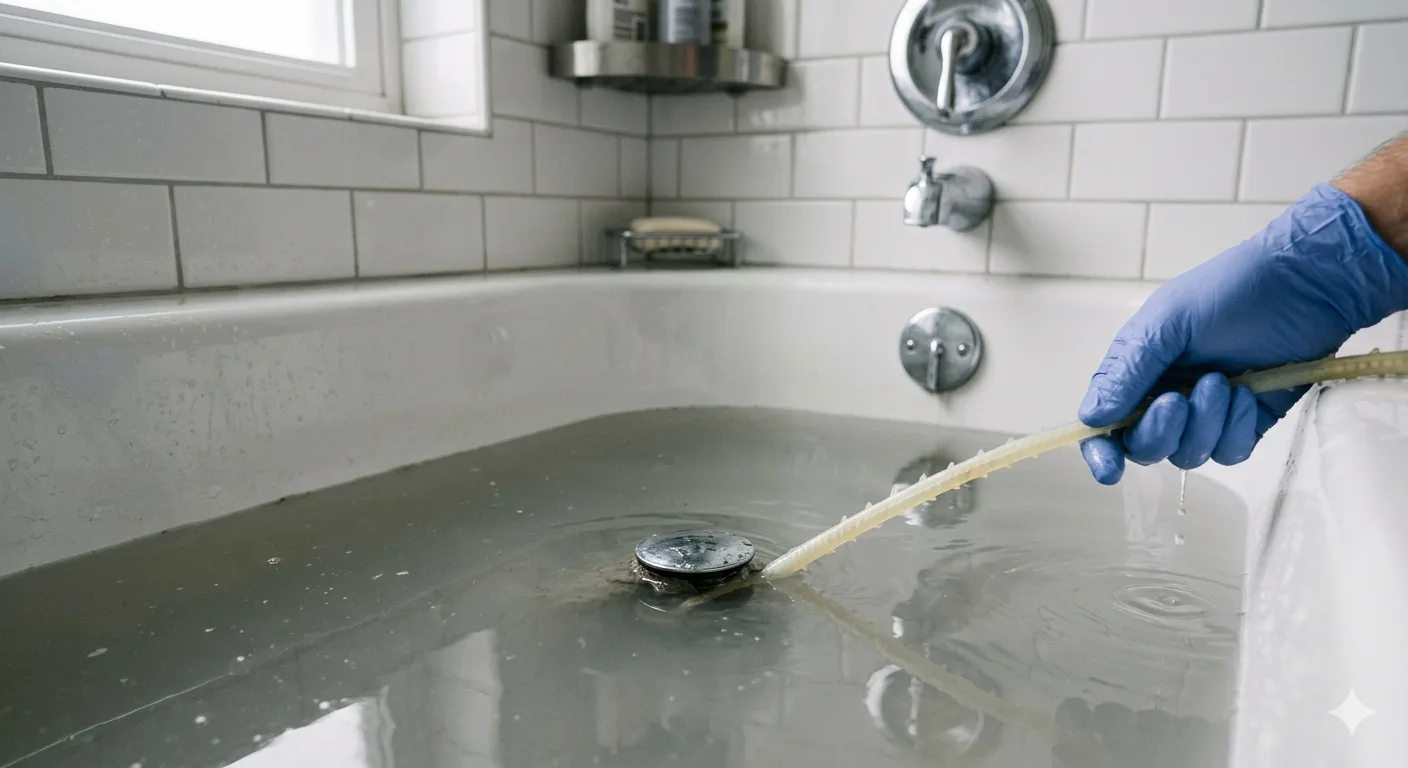
A bathtub drain clogged situation has one signal: standing water that takes hours to drain or doesn't drain at all. Most bathtub blockages are hair and soap accumulation in the P-trap, the stopper or the overflow assembly. All are reachable with basic tools. Chemical drain cleaners rarely dissolve compacted hair and can degrade the rubber parts in the trip-lever assembly you need intact for the mechanical fix.
Quick Answer: A bathtub drain clogged by hair and soap buildup is almost always clearable without chemicals using a drain snake, a zip-it tool or a stopper removal and manual cleaning. Bathtub drains have an overflow plate with a trip-lever stopper mechanism that requires different treatment from a simple shower drain. If standing water remains after mechanical clearing, the blockage is in the main line and a licensed plumber is the correct next step.
How a Bathtub Drain System Works and Why It Clogs Differently
A bathtub drain has two openings: the main drain at the base and the overflow opening on the end wall. Both connect to the same drainpipe through a fitting behind the wall. The overflow houses either a trip-lever mechanism with a brass plunger or a pop-up stopper on a linkage rod.
Hair accumulates on the trip-lever plunger and linkage rod as well as the drain pipe walls. A standard drain snake goes through the main opening but the blockage is often on the trip-lever assembly inside the overflow tube. The EPA identifies bathtub drain systems as among the most frequently misdiagnosed residential blockages for this reason.
6 Proven Fixes for a Bathtub Drain Clogged With Hair and Soap
Fix 1: Remove and clean the stopper and strainer first.
Remove the stopper from the main drain opening. Pop-up stoppers lift out or unscrew counter-clockwise. Lift-and-turn stoppers unscrew as you lift. Toe-touch stoppers push to release then unscrew. With the stopper out, pull any visible hair and soap mass from the drain by hand with rubber gloves. Much of the blockage in most bathtub drain clogged situations sits in the top two inches of the drain and is removable without tools.
Fix 2: Remove the overflow plate and clean the trip-lever assembly.
Unscrew the overflow plate and pull it outward slowly. The trip-lever and linkage rod assembly comes with it. Clean the assembly thoroughly with warm water and dish soap and use a toothbrush to clear matted material from the plunger. Reinstall and test before using any other tool. In many bathtub drain clogged situations, this single step restores normal drainage.
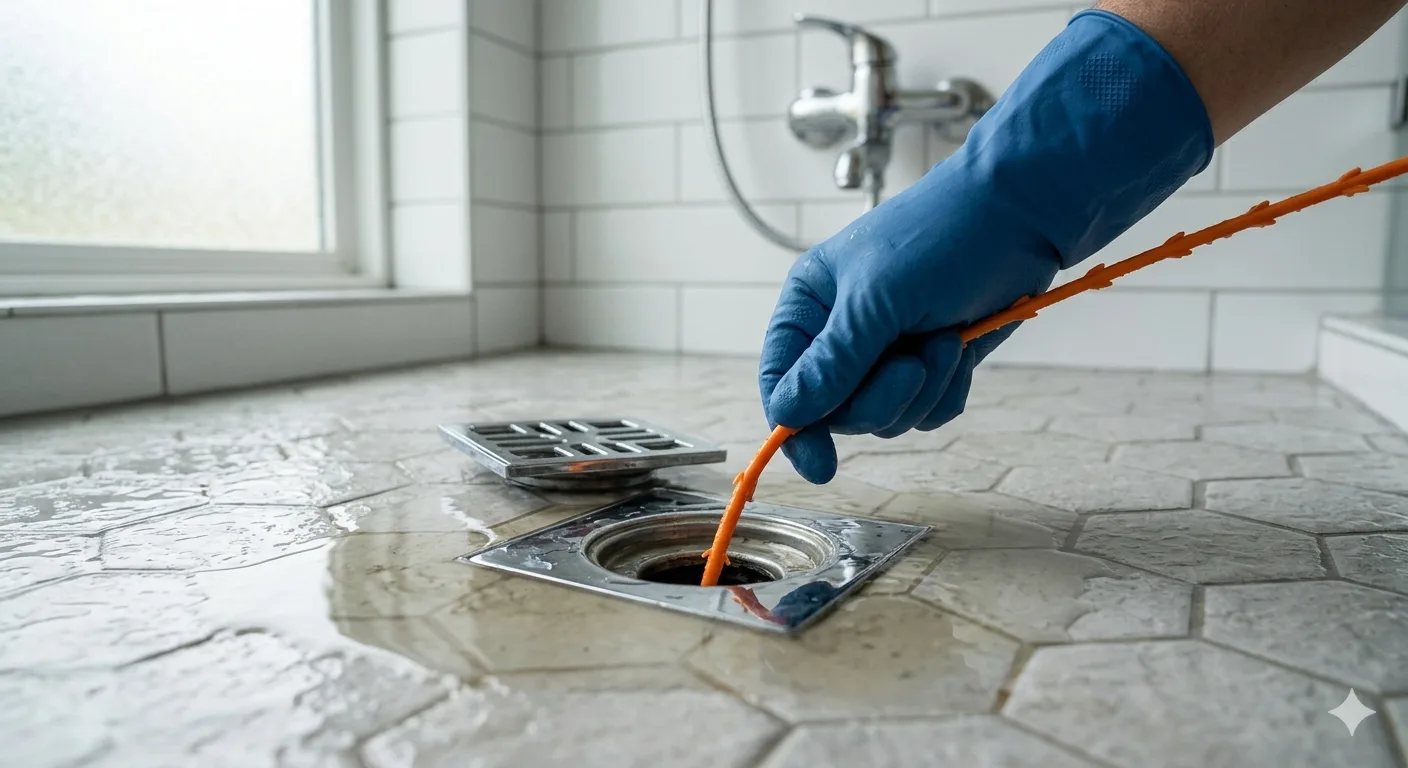
Fix 3: Use a zip-it or flexible drain hook to clear the main drain.
With the stopper removed, feed a zip-it tool or a flexible plastic drain hook down the main drain opening and into the P-trap. Rotate it slowly and pull back with steady pressure. Hair catches on the barbs and comes out in a clump. Run the tool through three or four times. Then run hot water to flush any loosened material through. The PHCC identifies manual drain hook tools as the most effective DIY option for bathtub drain clogged situations where the blockage is within 18 inches of the drain opening.
Fix 4: Snake through the overflow opening for deeper blockages.
If the drain still runs slowly after cleaning the stopper, trip-lever and using the zip-it tool on the main drain, the blockage is deeper in the pipe. Remove the overflow plate again and insert a hand drain snake into the overflow opening rather than the main drain. The overflow opening provides a more direct path to the section of pipe where deeper blockages accumulate. Insert the cable, advance it until it meets resistance and rotate it to break up or retrieve the blockage. This approach reaches blockages that a snake through the main drain opening misses.
Fix 5: Plunge the main drain with the overflow sealed.
Cover the overflow opening tightly with a wet cloth before plunging. Fill the tub with two to three inches of water, place the cup plunger firmly over the drain and plunge with short firm strokes for 15 to 20 seconds. Without sealing the overflow, every plunge pushes air back through it and generates no useful pressure in the drain line.
Fix 6: Use enzyme drain treatment for recurring slow drainage.
If a bathtub drain clogged and slow pattern recurs every few months, a soap scum coating on the pipe walls is the cause. Each new hair strand catches on this coating and accelerates the cycle. Monthly enzyme treatment dissolves the coating without damaging the stopper mechanism or P-trap rubber. Pour it into the drain in the evening, leave overnight and flush in the morning. The CDC notes that organic biofilm in residential drain pipes is a bacterial growth environment that enzyme treatments effectively reduce.
When a Bathtub Drain Clogged Needs a Licensed Plumber
A bathtub drain that remains blocked after all six fixes, or that backs up when other fixtures are used, has a main line blockage beyond the reach of home tools. Any situation where the overflow assembly reveals corroded or broken components in the trip-lever mechanism also requires a licensed plumber to restore the stopper and seal.
Frequently Asked Questions About a Bathtub Drain Clogged Problem
Why does my bathtub drain slowly even after I snake it?
The most common reason is that the snake goes through the main drain but the actual blockage is on the trip-lever assembly inside the overflow tube. Remove the overflow plate and clean the linkage rod. The second most common reason is the snake clearing a path through a hair mass without removing it, allowing it to close back after the snake is withdrawn.
Is it safe to use chemical drain cleaner in a bathtub?
A single use on a drain without standing water is unlikely to cause immediate damage. Repeated use or use with standing water degrades rubber gaskets and the plastic or rubber components of the stopper mechanism over time. Chemical cleaners rarely dissolve compacted hair effectively and leave a corrosive residue that contacts skin during the next bath. Mechanical clearing is safer and more effective for hair and soap blockages.
How do I know if my bathtub drain blockage is in the main line?
If the toilet gurgles or water rises in the shower when the bathtub drains, the blockage is in the main line. If only the bathtub drains slowly while other fixtures work normally, the blockage is local to the bathtub drain system and the six steps above will clear it.
How much does it cost to have a plumber clear a bathtub drain?
A licensed plumber clearing a bathtub drain typically charges $100 to $200. Hydrojetting for stubborn blockages runs $250 to $400. A camera inspection adds $75 to $150.
Find a Trusted Local Plumber for Bathtub Drain Help Today
A bathtub drain clogged situation resolves with home tools in most cases. When the six fixes above don't clear it or the blockage keeps returning, a licensed plumber identifies what the pipe wall or main line condition is doing that home treatment cannot address.
Visit https://plumberlocator.us/emergency/ to find a licensed local plumber near you for bathtub drain clearing. For cost estimates, browse our https://plumberlocator.us/cost-guide/.