Why Bathtub Drain Removal Goes Wrong More Often Than It Should
The most common reason bathtub drain removal fails is a wrong assumption: that all drains come out the same way. They don’t. There are four types found in American homes. The lift-and-turn stopper has a small knob on top you twist. The push-pull opens when you pull it by hand. The trip-lever has no visible stopper and is controlled by a lever on the overflow plate. The pop-up opens with a toe press. Using the technique for one type on another is how threads get stripped and flanges crack. Identify your type before you touch a tool.
What Tool Makes Bathtub Drain Removal Safe for Your Tub?
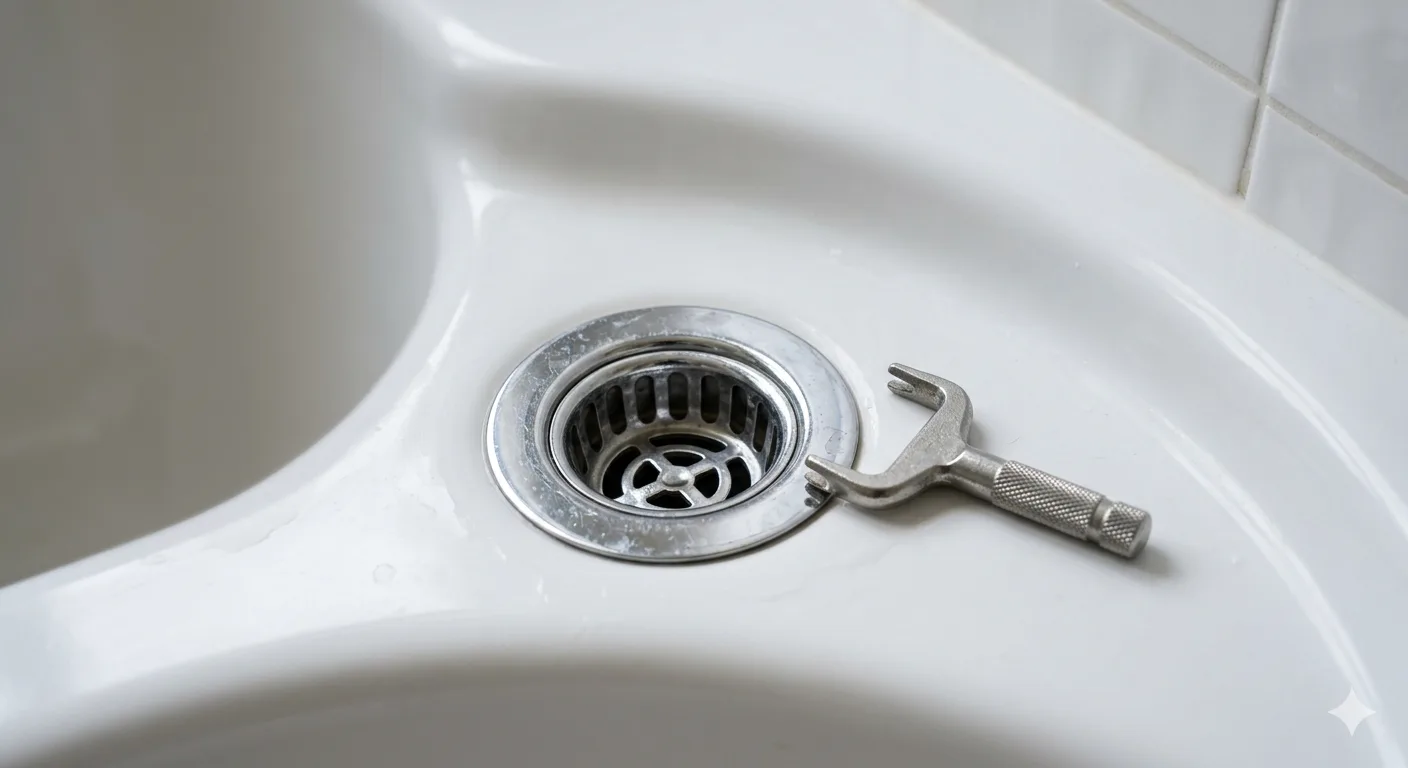
The only correct tool for bathtub drain removal is a drain key, also called a drain extractor. It fits into the crossbars of the drain basket and transfers rotational force cleanly without pressing on the surrounding porcelain or acrylic. Hardware stores sell one for under fifteen dollars. Using a flathead screwdriver instead is how you grind into the tub surface.
You will also need penetrating oil if the drain has been in place for more than a few years. According to the EPA’s guidance on household plumbing, mineral buildup and corrosion in drain fittings is especially common in homes built before 1990. Spray the joint the night before you attempt the job. That soak time is often the difference between a clean removal and a stripped fitting.
How Do You Remove a Bathtub Drain Without Without Damaging the Floor?
Start by removing the stopper, because you cannot reach the drain basket until it’s clear. For a lift-and-turn, grip the stopper body and unscrew counterclockwise while lifting. For a push-pull, unscrew the stopper cap by hand. For a trip-lever, remove the two screws on the overflow plate and pull the linkage assembly out through the overflow opening. For a pop-up, push the drain open and unscrew the crossbar inside the hole.
Insert the drain key into the basket crossbars, fit a wrench onto the square drive end, and turn counterclockwise with steady pressure. Never apply sudden force. Fiberglass tubs flex under torque, and the Plumbing-Heating-Cooling Contractors Association cites impact force as one of the leading causes of fiberglass tub cracking during DIY drain work. A cracked fiberglass tub costs between $300 and $600 to repair, before any plumbing work is counted.
What You Find Under the Drain After Bathtub Drain Removal
Once the basket is out, look before you do anything else. You are looking at the drain shoe, the fitting that connects the drain body to the pipe below. It should be dry. Any moisture, soft wood, or discoloration around the drain shoe means water has been leaking at this joint for some time, possibly long before today.
Subfloor rot is more common than most homeowners expect. The CDC has documented how chronic moisture under flooring creates conditions for mold growth within 24 to 48 hours. If you see darkened wood or soft spots, stop the job. Sealing over active rot accelerates damage. A licensed plumber can assess whether the subfloor and drain shoe both need replacement before the new drain goes in.
What Do You Do When the Basket Absolutely Won’t Move?
If penetrating oil and correct technique haven’t moved the basket after two attempts with several hours of soak time between them, try gentle heat from a hairdryer around the drain rim. Do not escalate to hammering the wrench or using a pipe extension for extra leverage. Torn-out threads in the drain shoe mean accessing the underside of the tub, which in a first-floor installation means opening the ceiling below. A forty-dollar drain swap becomes a repair well over a thousand dollars.
If you are at that point, call a professional. It is the cheaper option by far.
How Do You Ensure New Drain Sealed Correctly After Bathtub Drain Removal?
The new drain needs the right sealant for your tub material. Plumber’s putty works on cast iron and porcelain. It is not appropriate for acrylic or fiberglass, where it causes surface staining over time. For those tubs, use a silicone-based sealant or the rubber gasket supplied with the replacement drain kit.
Thread the new basket in clockwise by hand first, then tighten with the drain key. Firm contact, not maximum torque. Wipe away excess putty from under the flange. Let the sealant cure fully before running water, then test with a full tub fill and check the drain shoe from below if accessible. No drips means the job is done. For more guidance on drain maintenance, visit our plumbing tips page.
Frequently Asked Questions About Bathtub Drain Removal
**Do I need a special tool for bathtub drain removal?**Yes. A drain key or drain extractor is the correct tool. It fits the crossbars of the drain basket and lets you apply rotational force without damaging the tub surface. Improvised tools like flathead screwdrivers increase the risk of cracking porcelain or stripping the drain threads considerably.
**How long does bathtub drain removal usually take?**For a straightforward job with no corrosion, expect 20 to 40 minutes. If the drain is heavily corroded, the job can stretch to several hours once penetrating oil soak time is factored in. Subfloor damage or stripped threads extend the scope considerably.
**Can I replace a bathtub drain without turning off the water?**Yes, in most cases. Removing the drain basket does not require shutting off the water supply because you are working inside the drain opening, not on pressurized supply lines. Cover the open drainpipe while you work to prevent hardware from dropping in.
**When should I call a plumber for bathtub drain removal instead of doing it myself?**Call a plumber if the drain won’t move after penetrating oil and proper tools, if you see subfloor rot or moisture, or if the drain shoe threads are visibly damaged. A licensed plumber can also inspect the drain line condition while the basket is out, which is worthwhile in any home over 20 years old.
How Do You Find a Trusted Local Plumber for Bathtub Drain Removal?
Some bathtub drain jobs are quick. Others reveal problems hiding for years, and how you respond in the next few minutes determines whether you have a clean repair or a major project on your hands. If your drain won’t move, if you’ve spotted moisture, or if you want it done correctly the first time, bring in a professional.
Use PlumberLocator.us to connect with a licensed local plumber who handles bathtub drain removal regularly. These are verified professionals who can tell the difference between a quick swap and a job that needs real attention before you go any further.