It's two in the morning. A storm has been hammering your area for hours. The power flickers and dies. Somewhere in your basement, your primary sump pump goes silent. If you have a battery backup sump pump that's been properly installed and maintained, you sleep through it. If you don't, or if the backup was never tested, you wake up to several inches of water and a call to your insurance company.
Quick Answer: A battery backup sump pump is a secondary pump powered by a 12-volt battery that activates automatically when your primary pump loses power or becomes overwhelmed. According to the PHCC, basement flooding is one of the most expensive and common residential water damage events in the US. A properly installed and maintained battery backup system is the single most effective protection against it.
Why Your Primary Sump Pump Is Not Enough
Most homeowners with a sump pump assume they're covered. They're not, at least not completely. Primary sump pumps run on household electricity, which is exactly what goes out during the heavy storms that cause the flooding in the first place. The EPA identifies power outages during severe weather as a leading cause of basement flooding in homes that already have sump pump systems installed.
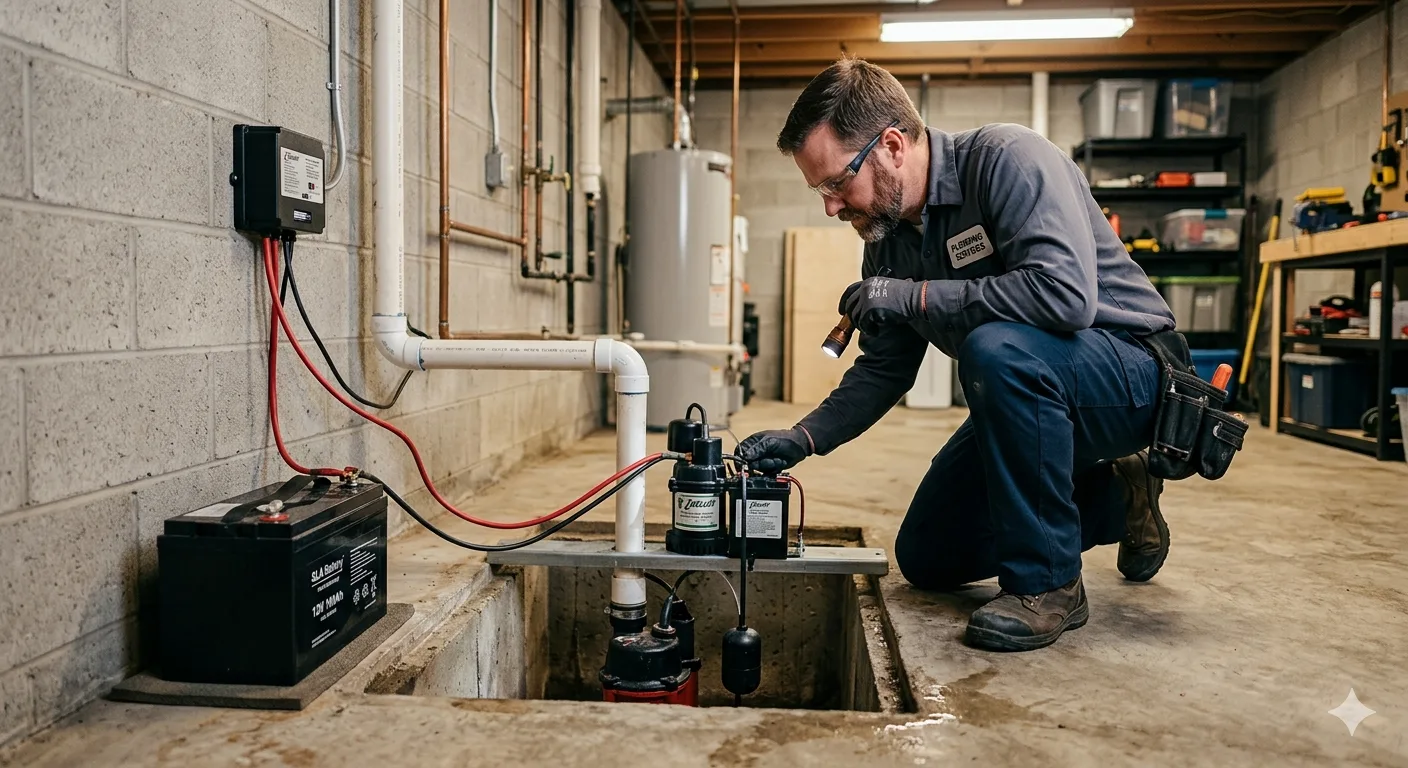
Beyond power outages, a primary pump can fail from a stuck float switch, a burned-out motor or simply being overwhelmed by more water than it can move. A battery backup sump pump sits in the pit alongside the primary and kicks in the moment water rises past where the primary should have caught it. It doesn't care whether the grid is up or the primary is dead. It just runs.
6 Essential Truths About Battery Backup Sump Pumps
The battery is the system's weak point, not the pump.
Most homeowners focus on the pump itself and ignore the battery. That's backwards. A battery backup sump pump is only as good as the battery powering it, and lead-acid batteries, the most common type used, degrade significantly after 3 to 5 years. A battery that tests fine at rest can fail within minutes under pump load. Replace it on a schedule, not when it shows weakness, because by the time it does, it's already too late.
Capacity matters more than most people realise.
Not all battery backup sump pumps move the same amount of water. Budget units may only handle 1,000 to 1,500 gallons per hour, while higher-end systems manage 2,500 gallons or more. If your basement is prone to rapid water ingress during heavy rain, an underpowered backup unit won't keep up. A licensed plumber can assess your pit depth, drainage rate and water volume to recommend the right capacity for your home.
Installation position determines whether it actually works.
The backup pump float switch must be set higher than the primary pump's float switch, not at the same level. If they're set identically, the backup activates at the same time as the primary, running both simultaneously and draining the battery unnecessarily. Set too low, the backup never engages until the primary has already failed and water is rising. This is a common error that makes the backup useless in the exact scenario it was built for. The PHCC recommends professional installation to ensure float switches are calibrated correctly.
Most backup systems go untested for years.
A battery backup sump pump that has never been tested is a false sense of security. The battery may have died, the float may be stuck, or the discharge line blocked. Testing takes five minutes: pour water into the pit until the backup float triggers and confirm it pumps down. Do it every six months.
Hard water silently destroys the pump internals.
Mineral deposits from hard water accumulate inside the pump housing and on the impeller over time, reducing flow rate and eventually seizing moving parts. Water with a mineral hardness above 180 mg/L causes noticeable buildup within two to three years. The CDC notes that hard water affects the majority of US households. If your area has hard water, flushing the pump annually and descaling the housing extends its working life significantly.
The discharge line is an overlooked failure point.
Water has to go somewhere after the pump moves it. The discharge line carries it away from the foundation, and if that line freezes in winter, develops a blockage or terminates too close to the house, water loops straight back into the pit. A frozen discharge line in January can flood a basement as effectively as no pump at all. The line should terminate at least 10 feet from the foundation, slope away continuously and be insulated in climates that experience freezing temperatures.
What a Flooded Basement Actually Costs
The average basement flood costs between $4,500 and $11,000 to remediate, before accounting for damaged belongings, mold treatment or structural repairs. A battery backup sump pump system installed by a licensed plumber runs between $300 and $1,000 including labor. The math isn't complicated.
Homeowner insurance policies vary on flooding coverage. Sudden mechanical failures may be covered, but flooding from a pump known to be failing is often excluded as a maintenance issue. A documented service record from a licensed plumber strengthens any claim.
Frequently Asked Questions About Battery Backup Sump Pumps
How long does a battery backup sump pump run on a single charge?
Runtime depends on battery capacity and pump workload. A fully charged marine-grade battery typically powers a backup for 5 to 12 hours of continuous operation, or up to 3 days of intermittent cycling. For extended outages, a larger battery bank or water-powered backup may be worth considering.
Can I install a battery backup sump pump myself?
The pump itself is manageable for a confident DIYer, but the float switch calibration, discharge line routing and electrical connections are where most errors happen. An incorrectly set float switch can cause the backup to never engage or to run constantly and drain the battery before a storm even arrives. Professional installation is worth the cost.
How often should the battery be replaced?
Every 3 to 5 years regardless of how the battery tests. Lead-acid batteries lose capacity gradually and often appear functional right up until they fail under load. Replacing on a schedule rather than waiting for failure is the only reliable approach.
Does a battery backup sump pump work if the primary pump is overwhelmed rather than failed?
Yes. Most battery backup systems activate based on water level, not pump status. If the primary pump is running but can't keep up with incoming water, the rising level triggers the backup float switch and both pumps run simultaneously, doubling your capacity.
Find a Trusted Local Plumber to Install Your Battery Backup Sump Pump
A battery backup sump pump is not a set-and-forget installation. The battery needs replacing, the float needs testing and the discharge line needs seasonal checks. Getting it right from the start, with a licensed plumber who sizes and calibrates the system correctly, is what separates real protection from a false sense of security.
Visit PlumberLocator.us to find a licensed local plumber in your area. For more guidance on protecting your home's plumbing year-round, browse our plumbing tips section.