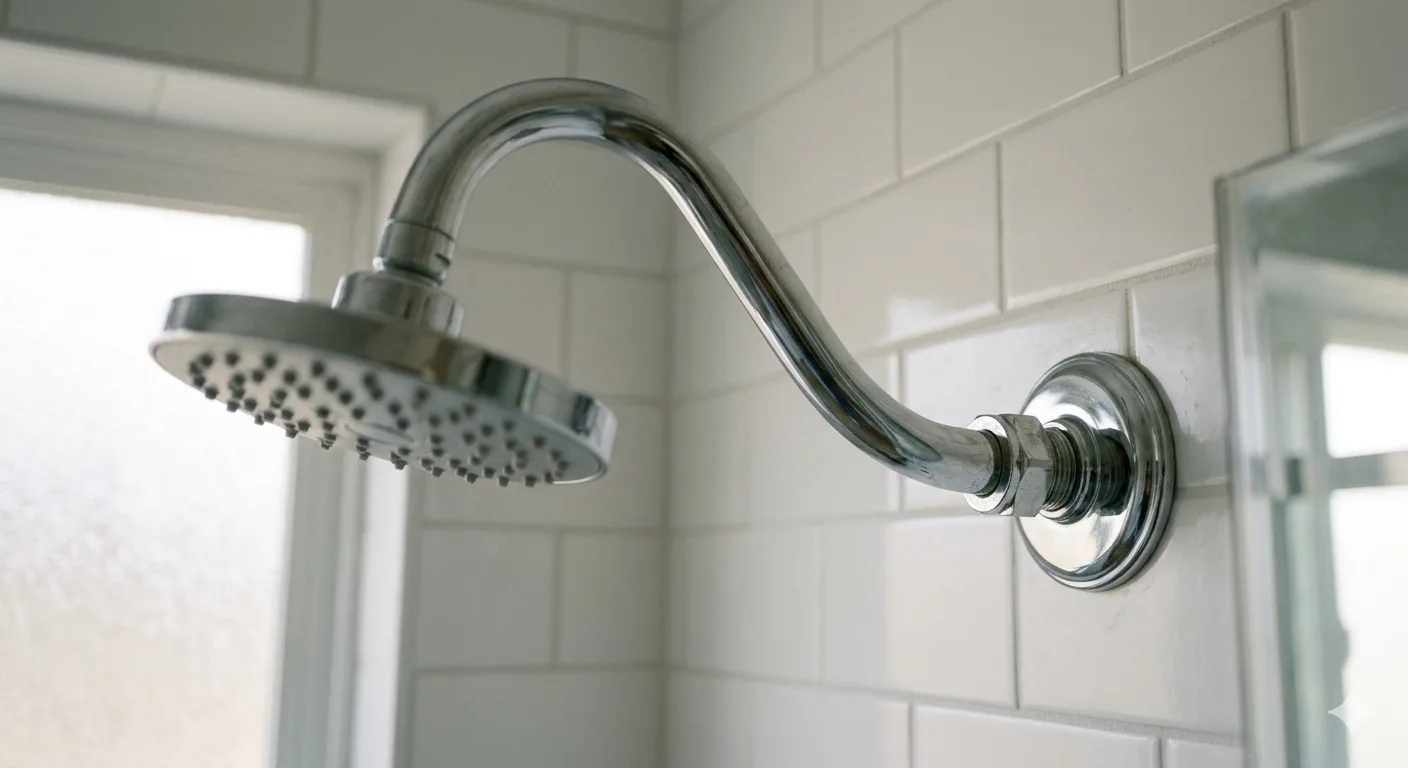
A showerhead that once delivered strong pressure now trickles unevenly. Some nozzles spray sideways. Others have stopped entirely. Before replacing it, know that in most cases when you clean the showerhead properly, full pressure returns within an hour. The method matters because the wrong cleaning approach strips chrome finishes, damages rubber nozzles and cracks plastic faceplate components, turning a free fix into a replacement job.
Quick Answer: To clean the showerhead, remove it and soak it in white vinegar for two to four hours to dissolve mineral scale. For fixed showerheads that can’t be removed, fill a plastic bag with vinegar and secure it over the head for the same duration. Rinse thoroughly and flush the head by running water at full pressure for 30 seconds. In hard water areas, clean the showerhead monthly to prevent scale from hardening into deposits that soaking alone won’t dissolve.
Why Showerhead Nozzles Block and Why It Happens Faster in Some Homes
Calcium carbonate and magnesium deposits from hard water build up on nozzle surfaces and inside the small channels with every shower. The EPA estimates over 85% of US homes have hard water, with the hardest areas in the Southwest and Midwest.
In moderate hard water areas, nozzle blockage builds over months. Above 180 mg/L, visible scale appears within weeks of installation. Rubber flex nozzles resist scale adhesion and can often be cleared by rubbing the face with a damp cloth. Hard plastic and metal nozzles need chemical soaking.
6 Critical Methods to Clean the Showerhead Without Damage
Method 1: White vinegar soak for a removable showerhead.
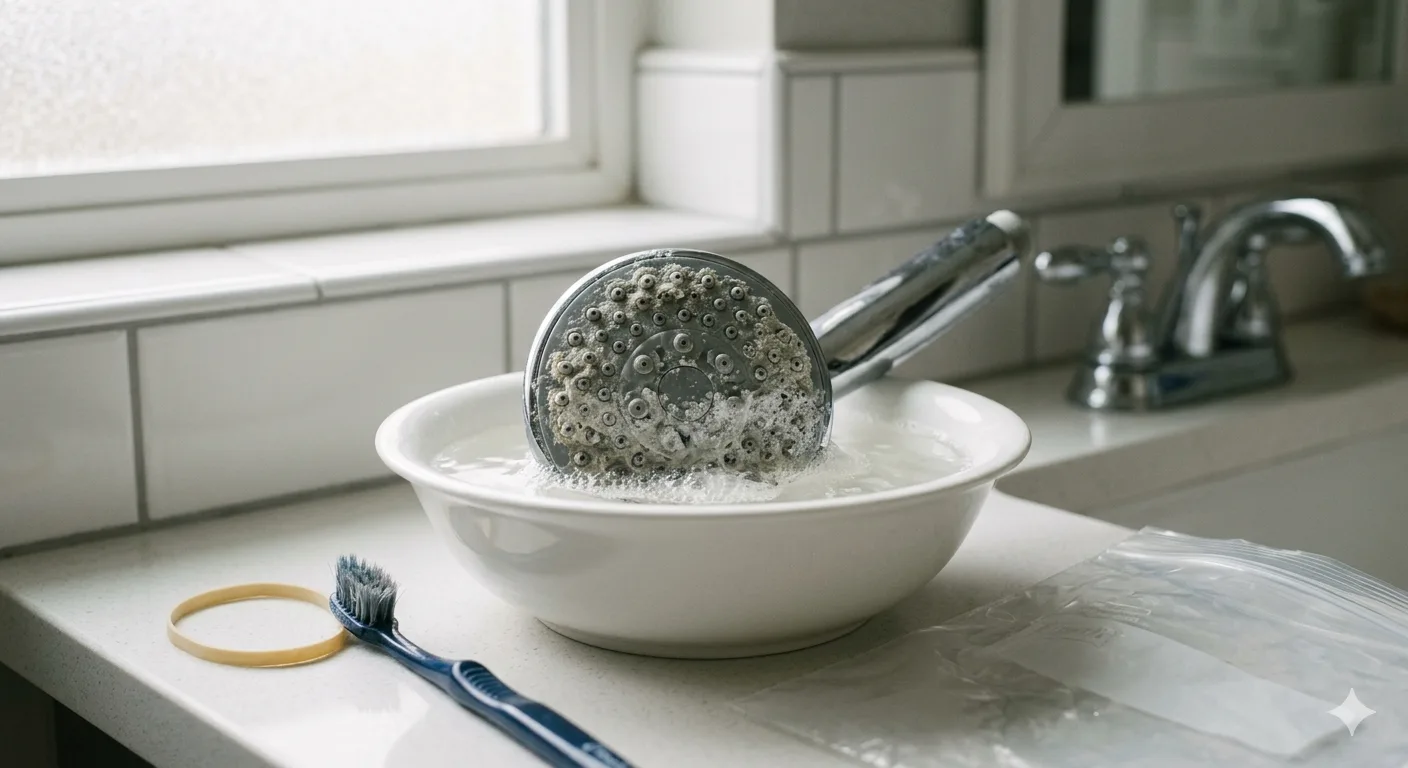
This is the most effective method to clean the showerhead when you can remove it. Unscrew the showerhead from the arm by turning it counter-clockwise. It usually comes off by hand or with a strap wrench wrapped in a cloth to protect the finish. Submerge the head in undiluted white vinegar for two to four hours. For severe buildup, extend the soak overnight. Rinse under running water, scrub the nozzle face with an old toothbrush and reinstall. Run full pressure for 30 seconds to flush loosened debris from the internal passages.
Method 2: Plastic bag soak for a fixed showerhead.
Fill a zip-lock bag with white vinegar and secure it over the showerhead with a rubber band so the nozzle face is fully submerged. Leave it for two to four hours, then remove the bag and run full pressure to flush. This works well in rental properties or when the connection hasn’t been touched in years and risks stripping if forced.
Method 3: Baking soda paste for surface deposits.
For scale that has hardened on the exterior of the nozzle face without penetrating the channels, a paste of baking soda and white vinegar applied directly to the surface and left for 15 to 30 minutes dissolves the calcium bond without requiring a full soak. This is a faster method when you only need to clean the showerhead of light surface deposits between deeper soaks. Apply the paste with an old toothbrush, work it into the nozzle openings and rinse thoroughly.
Method 4: Commercial descaler for severe buildup.
White vinegar at 5% acetic acid dissolves moderate scale reliably. Scale from years of hard water forms a dense crystalline structure that 5% acid breaks down slowly. Commercial citric acid descalers work at higher concentrations and dissolve heavy buildup faster. The PHCC recommends citric acid-based descalers over hydrochloric acid formulas, as hydrochloric acid damages chrome, brushed nickel and matte black finishes on contact.
Method 5: Rubber nozzle scrubbing for flex-nozzle showerheads.
Many showerheads use flexible silicone nozzles because scale doesn’t adhere to silicone the way it does to plastic or metal. Run the showerhead under warm water and rub each nozzle row firmly with a damp cloth. Scale cracks off the silicone surface in seconds. A soft toothbrush clears any remaining deposits in the channels.
Method 6: Filter replacement for ongoing pressure problems.
Many showerheads include an internal mesh filter screen that sits inside the connection point where the head meets the arm. This screen catches sediment from the supply line and prevents it from exiting through the nozzles. When the screen is clogged with sediment, pressure drops even with clean nozzles. To clean the showerhead fully, remove it, locate the small mesh screen inside the inlet and clean it under running water with a toothbrush. Replace the screen if it is torn or corroded. The CDC notes that sediment in residential water supply lines is a common cause of reduced flow at fixtures and is often the overlooked source of pressure issues after nozzle cleaning has already been performed.
Which Finishes Need Special Care When You Clean the Showerhead?
Chrome and polished nickel handle vinegar soaking up to 12 hours without damage. Brushed nickel and matte black are more sensitive; limit vinegar contact to two hours and rinse immediately. Never use abrasive scrubbing pads on any metal finish.
Oil-rubbed bronze has a living patina that acid strips unevenly. For oil-rubbed bronze, use only warm water and a soft cloth to clean the showerhead exterior. For blocked nozzles, a brief vinegar rinse at the nozzle face only is the safest approach.
Frequently Asked Questions About How to Clean the Showerhead
How often should I clean the showerhead?
Monthly cleaning prevents scale from bonding firmly enough to require long soaking. In very hard water areas above 180 mg/L, every two to three weeks is more effective. A whole-home water softener reduces cleaning frequency dramatically by removing the calcium and magnesium that form scale before water reaches the fixtures.
Can I use bleach to clean the showerhead?
Bleach removes biological growth such as mould and biofilm from showerhead nozzles but does not dissolve mineral scale. In areas with hard water, scale is the primary cause of nozzle blockage and bleach does nothing to address it. Vinegar dissolves scale. Bleach does not. Using both simultaneously produces a harmful chlorine gas reaction and should never be done.
What if the showerhead still has low pressure after cleaning?
If cleaning the nozzles and filter screen doesn’t restore pressure, the problem is upstream of the showerhead. Check whether pressure is low at other bathroom fixtures. If it is, the issue is in the supply line or a failing pressure reducing valve, not the showerhead. A licensed plumber can diagnose low pressure at the source.
When should I replace rather than clean the showerhead?
Replace when the nozzle face or faceplate is cracked, when the swivel connection has stripped threads that leak, when scale has permanently deformed the nozzle openings or when the showerhead is more than 10 years old and no longer delivers satisfactory pressure even after thorough cleaning.
When Should You Call a Trusted Local Plumber If Cleaning Doesn’t Restore Pressure?
Knowing how to clean the showerhead correctly solves most weak pressure complaints without spending anything. When the problem survives thorough cleaning, a licensed plumber can identify whether the issue is in the supply line, the pressure reducing valve or elsewhere in the system.
Visit PlumberLocator.us to find a licensed local plumber in your area who can diagnose persistent pressure problems. For more practical plumbing guidance, browse our our plumbing tips section.