You’re standing in water that isn’t going anywhere. A shower drain clogged situation is one of those problems where the right fix takes five minutes and the wrong one takes five weeks. Chemical drain cleaners dumped into standing water often do nothing useful and can damage the pipes you need intact for mechanical clearing to work. This post works through the fixes in order of what actually clears a shower drain clogged with hair, soap and organic buildup, starting with the simplest and moving toward what a licensed plumber does.
Quick Answer: A shower drain clogged by hair and soap residue is the most common residential drain problem and is usually clearable without professional help using a drain snake or hair removal tool. Chemical cleaners are rarely effective on compacted hair clogs and can degrade pipe seals with repeated use. If the drain doesn’t clear after mechanical clearing, or if water backs up in other fixtures at the same time, a licensed plumber and professional drain clearing are the correct next steps.
Why Does My Shower Drain Keep Clogging in the Same Spot?
The P-trap sits directly below the drain opening and is the first low point where hair, soap scum and body oils accumulate into a dense mass. In most shower drain clogged situations, that mass is in or just below the trap, which is reachable with basic tools. The exception is a drain that re-clogs despite regular clearing, indicating wall buildup further down.
Most shower drain clogged events are local, in the trap, and clearable by hand. Some are deeper and need hydrojetting. A few are symptoms of a main line issue affecting multiple fixtures.
How Do You Unclog a Shower Drain Clogged With Hair?
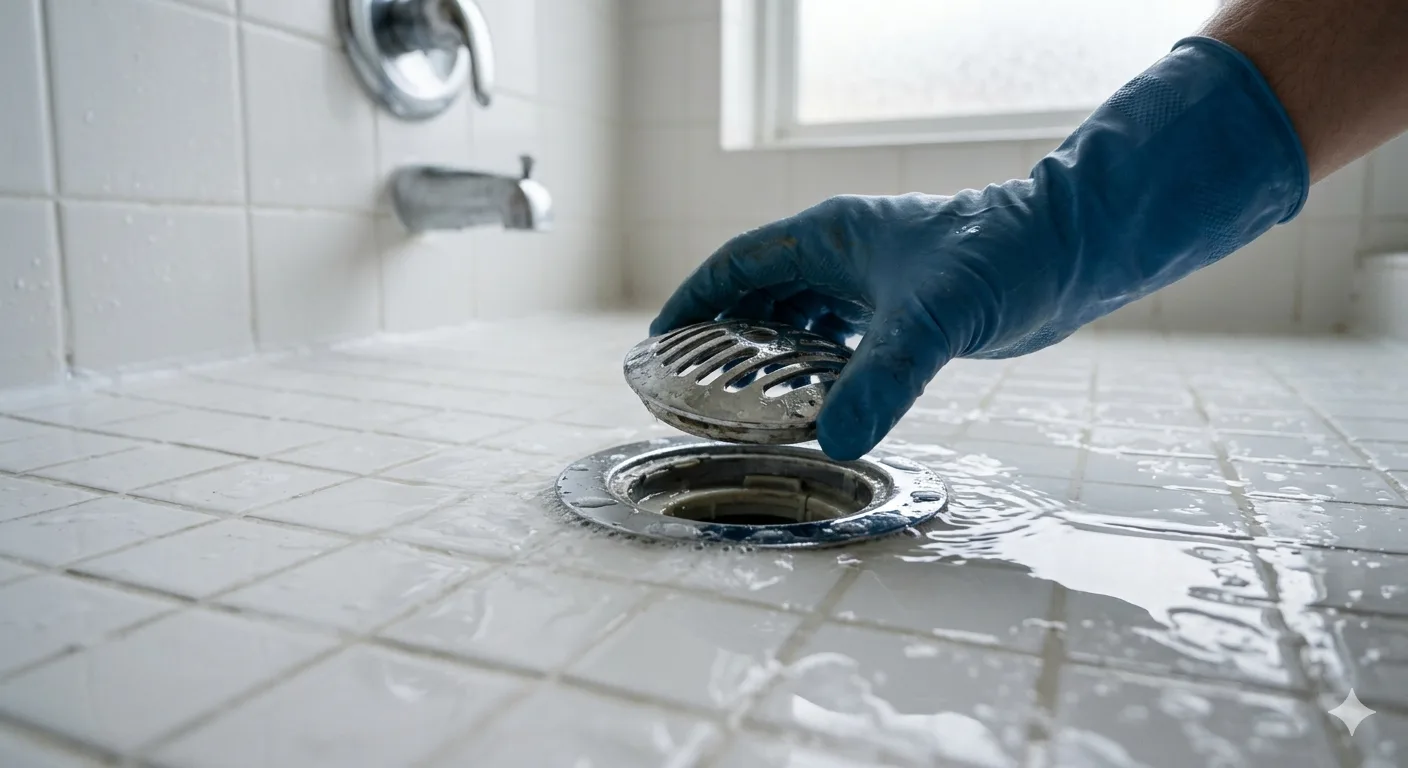
Fix 1: Remove the drain cover and pull out what you can by hand.
Remove the drain strainer and reach into the opening with rubber gloves. Pull out any hair mass at or near the surface. A shower drain clogged by a single session’s hair accumulation usually sits at the strainer level. A bent wire or needle-nose pliers extend your reach by another inch or two. If water flows freely after this, you’re done.
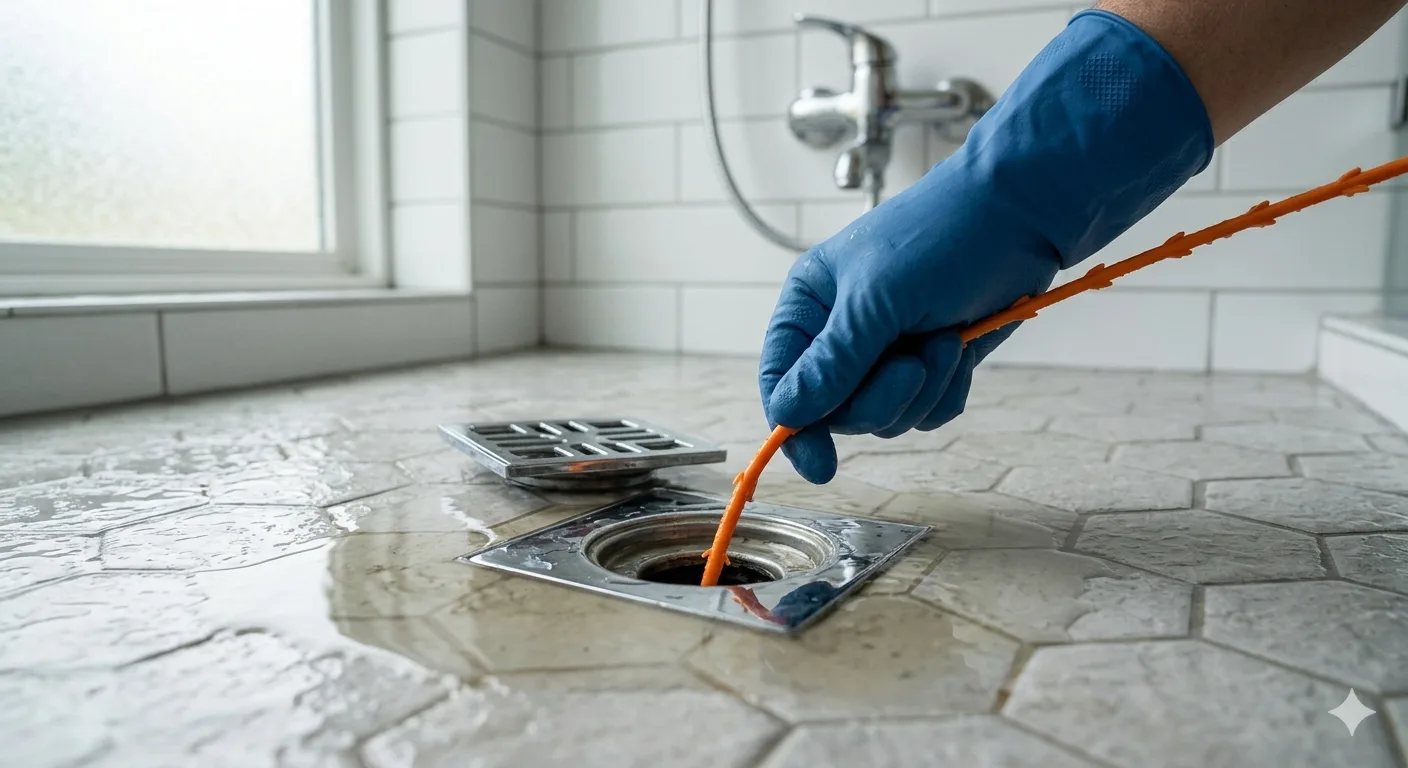
Fix 2: Use a dedicated hair drain snake.
A flexible plastic drain snake with barbed edges reaches further into the P-trap than fingers can. Insert it, rotate slowly and pull back with steady pressure. The barbs catch hair and pull it out in a clump. Run it through two or three times and flush with hot water. The PHCC identifies mechanical snaking as the most effective first-line approach for shower drain blockages caused by organic material.
Fix 3: Try baking soda and white vinegar before chemical cleaners.
Pour half a cup of baking soda into the drain, follow with half a cup of white vinegar, cover and wait 15 minutes, then flush with hot water. This loosens soap scum coating pipe walls near the blockage. It works on soap and oil film, not compacted hair, and is safe for all pipe types. The EPA recommends mild treatments over caustic chemical cleaners to protect pipe integrity.
Fix 4: Use a cup plunger on the shower drain.
Remove the strainer, cover the drain with a cup plunger and plunge with firm steady strokes. Add a few inches of water first if the floor has already drained, since suction works better with water present. Don’t use excessive force on older tile floors as it can crack grout around the drain flange.
Fix 5: Apply enzyme drain treatment and leave it overnight.
Enzymatic drain treatments break down organic material, including hair and soap residue, without corroding pipe walls or damaging seals. Pour the treatment down the drain in the evening, avoid using the shower until morning and flush thoroughly with hot water. One application may not fully clear a shower drain clogged with substantial buildup, but weekly enzyme treatment over two to three weeks clears the pipe wall coating that causes recurring slow drains.
Fix 6: Use a powered drain auger for deeper blockages.
If the blockage doesn’t respond to a hand snake, it sits deeper than the trap. A powered drain auger from a tool hire shop extends further and applies more torque. Feed the cable in until it meets resistance, then run the auger to break up or retrieve the clog. This clears most shower drain clogged situations that survive hand snaking. If it still doesn’t clear, the problem is in the main drain line and a licensed plumber with hydrojetting equipment is the correct call.
When Should You Call a Plumber for a Clogged Shower Drain?
A drain that fills during use but drains slowly after is usually a local clog. A shower drain clogged so severely that water stands for hours has a blockage most DIY tools won’t reach. If it re-clogs within a week or two, the pipe wall has a coating only professional hydrojetting removes completely.
When the toilet gurgles as the shower drains, or water rises in the tub when the washing machine runs, the blockage is in the main sewer line. This isn’t a hair clog. The CDC identifies sewage backup as a Category 3 contamination event with direct health risks. A licensed plumber with a camera and hydrojetting equipment is the only correct response.
Frequently Asked Questions About Shower Drain Clogged Fixes
Why does my shower drain clog so frequently?
A silicone hair catcher captures hair before it enters the pipe. Empty it after every shower and the clog rate drops dramatically. Homes with hard water also accumulate mineral scale that creates a rough pipe surface where hair catches more easily. Monthly enzyme treatment combined with a hair catcher prevents most shower drain clogged events.
Is it safe to use chemical drain cleaners on a shower drain?
Occasional use on a drain without standing water is unlikely to cause immediate damage. Repeated use degrades rubber seals and can soften PVC fittings. Chemical cleaners don’t penetrate compacted hair masses effectively; they dissolve the outer layer and restore flow briefly before the mass re-blocks. A mechanical tool is more effective and safer.
How do I know if the clog is in the P-trap or further down?
A shower drain clogged in the P-trap usually clears within a minute or two of hand snaking. A drain that doesn’t respond or that clears briefly and re-blocks has the obstruction further down where the snake isn’t reaching. A powered auger or professional hydrojetting is needed.
How much does professional shower drain clearing cost?
A licensed plumber clearing a shower drain typically charges $100 to $200 for a standard drain snake clearing. Hydrojetting, which clears the full pipe circumference, runs $250 to $450. If a camera inspection is included to diagnose the blockage cause, add $75 to $150 to either service.
How Do You Find a Trusted Local Plumber for Shower Drain Clogged Help?
Most shower drain clogged situations resolve with a hand snake and ten minutes. The ones that don’t are trying to tell you something about the pipe wall or the main line that a plumber needs to assess.
Visit PlumberLocator.us to find a licensed local plumber who can clear your drain and inspect the line condition. For more practical plumbing guidance, browse our plumbing tips section.