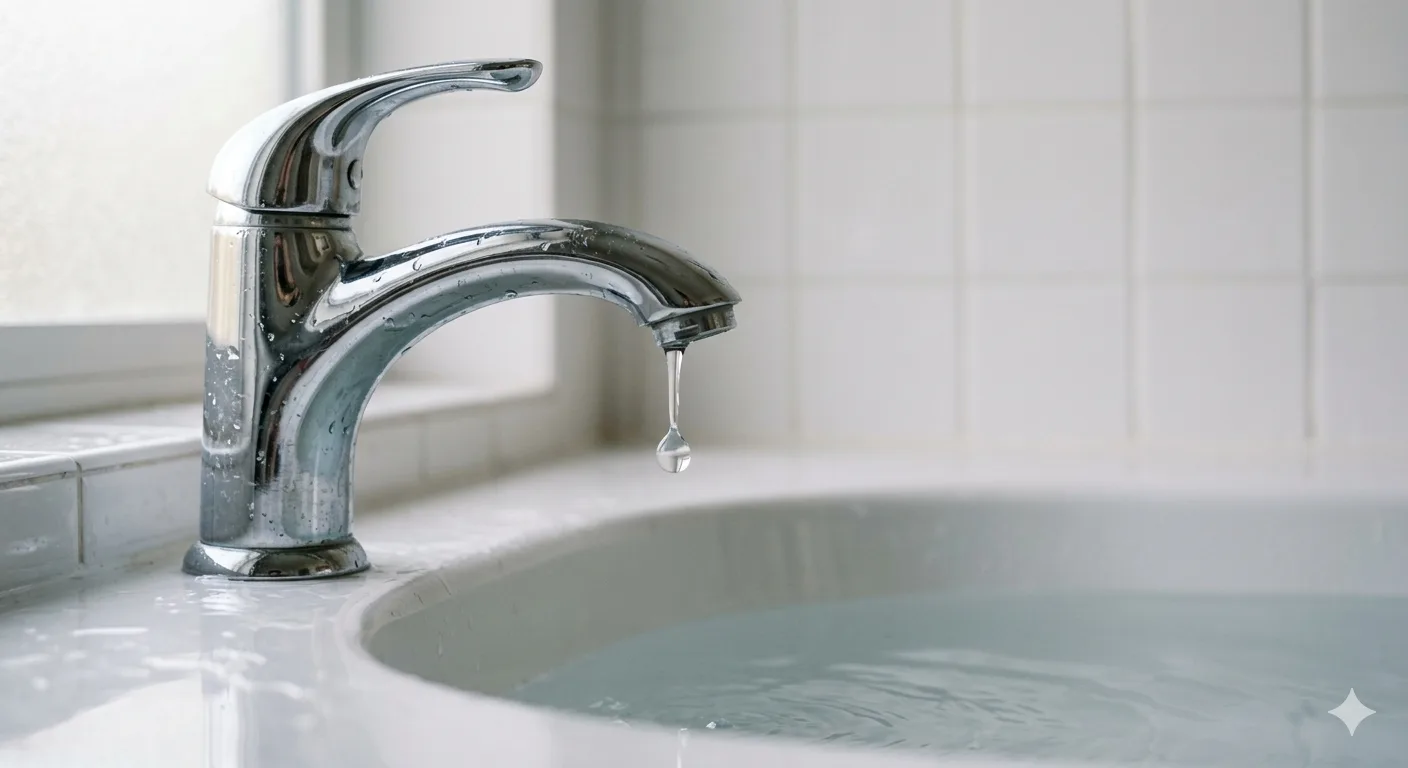
The faucet cartridge controls water flow and temperature inside a single or double-handle faucet. When it fails, the faucet drips, the handle feels stiff or the temperature control stops working. Replacing it sounds simple until you’re at the hardware store looking at a wall of cartridges that all look broadly similar. Install the wrong one and the drip comes back within days. Install it incorrectly and you’ve created a leak that wasn’t there before.
Quick Answer: A faucet cartridge is a self-contained valve assembly that slides into the faucet body and controls the flow and mixing of hot and cold water. Cartridges are brand and model-specific components, meaning a Moen cartridge does not fit a Delta faucet even if the dimensions look close. Symptoms of cartridge failure include persistent dripping, stiff or loose handle action, and temperature control that no longer works correctly. A licensed plumber sources the correct cartridge and installs it without damaging the valve body.
What a Faucet Cartridge Actually Does
The cartridge controls both water volume and temperature. It does this through ceramic discs or a machined plastic sleeve with ports that align at different angles depending on handle position.
When new, the ports align perfectly and the sealing surfaces are smooth. Over time, mineral scale coats the ceramic surfaces, grit scratches the seals and the O-rings on the outer body harden and crack from heat. Any of these failures produces a faucet cartridge that can no longer fully seal, causing the drip or the stiff handle.
6 Critical Facts About Faucet Cartridges Every Homeowner Should Know
Every faucet brand uses a proprietary cartridge.
Moen, Delta, Kohler, Price Pfister and every other major manufacturer designs their valve body around a proprietary faucet cartridge that is not interchangeable with any other brand. The Moen 1225 fits only Moen faucets that use the 1225. A Delta RP19804 fits only the specific Delta valve bodies it was designed for. A generic cartridge produces a faucet that leaks immediately because the port alignment and sealing dimensions are not correct.
The faucet model number is on the faucet, not the cartridge box.
The faucet brand and model number are usually stamped under the decorative handle cap or on a label inside the cabinet below the sink. The PHCC notes that incorrect cartridge selection is the leading cause of repeat faucet service calls. Photographing the model number or bringing the old cartridge to a plumbing supply house is the most reliable way to get the right part.
A faucet cartridge can be cleaned rather than replaced in some cases.
Mineral scale from hard water is a common cause of cartridge failure that doesn’t always require replacement. Removing the cartridge and soaking it in white vinegar for two to four hours dissolves calcium deposits from the ceramic disc surfaces and ports. After soaking, flush with clean water and reinstall. If the faucet functions normally after this, the cartridge is still serviceable. If the drip returns within a few weeks, the ceramic discs or O-rings are genuinely worn and replacement is needed.
Hard water significantly shortens faucet cartridge life.
The EPA estimates over 85% of US households have hard water. At hardness above 180 mg/L, mineral scale builds up on ceramic surfaces within two to three years, shortening faucet cartridge life from 10 to 15 years down to 4 to 7. A whole-home water softener extends cartridge life as effectively as any other maintenance practice.
Installing a cartridge incorrectly is as damaging as the wrong cartridge.
Ceramic disc cartridges are directional. Installed reversed, hot and cold supplies swap, which is confusing but harmless. More seriously, a cartridge without the retaining clip properly seated can be pushed back out by supply pressure, creating a sudden internal leak. Overtightening the bonnet can crack the cartridge body. The CDC notes water damage from plumbing failures is among the most common residential property damage events.
When the cartridge seat is damaged, replacement won’t fix the drip.
A faucet cartridge seals against a machined seat surface inside the faucet body. If that seat surface has been scored by grit, corroded by hard water or damaged by a previous incorrect cartridge, a new cartridge will leak because it has no undamaged surface to seal against. This is the scenario where DIY cartridge replacement fails and a licensed plumber is needed. The plumber can assess whether the valve body seat is salvageable or whether the entire faucet body needs replacing.
How to Remove and Replace a Faucet Cartridge
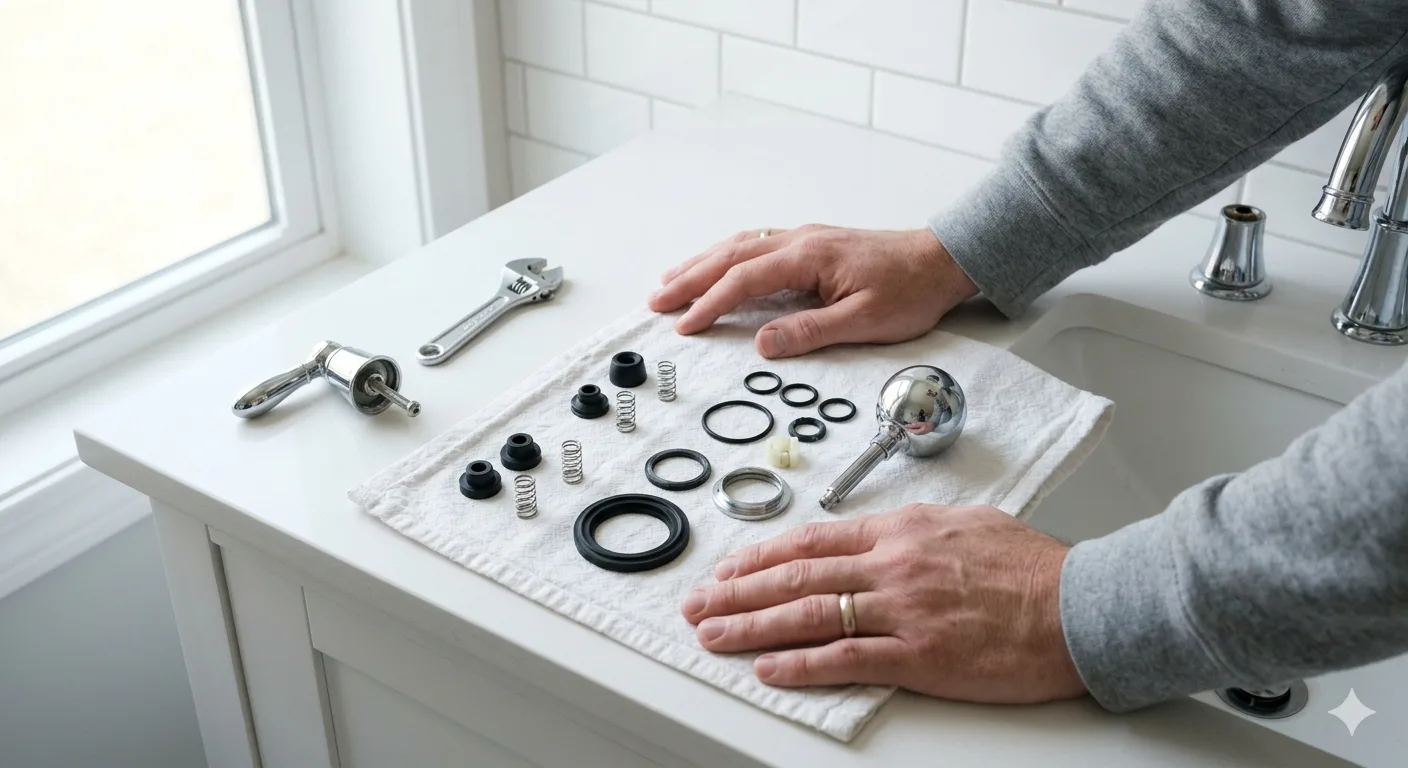
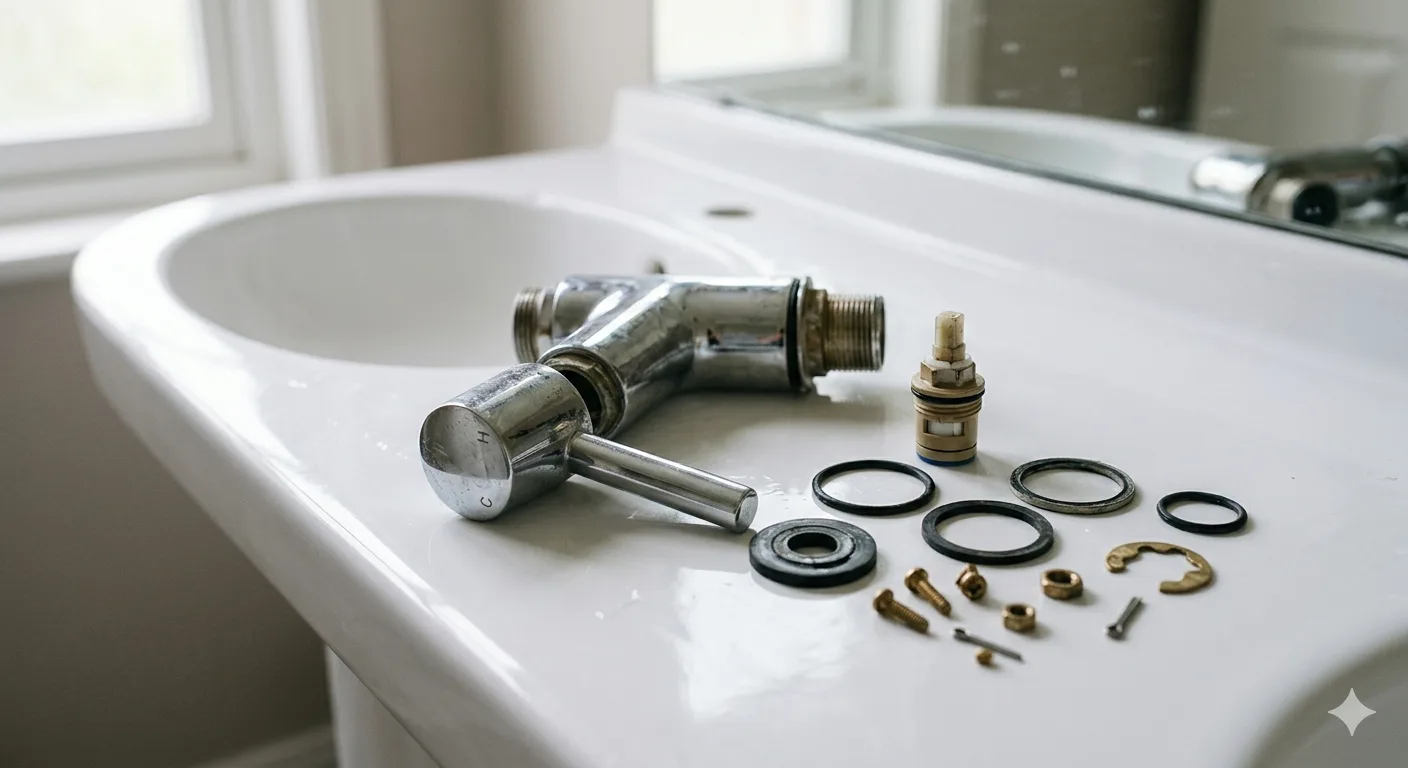
Shut off the supply valves, open the faucet to release line pressure, then remove the decorative cap, handle screw and handle. The faucet cartridge is visible inside the valve body, secured by a retaining clip or nut. Some cartridges require a cartridge puller tool rather than forcing them out.
Note the orientation before removing. Install the new cartridge in the same orientation, seat the retaining clip fully, reassemble in reverse and turn the supply on slowly. Check for drips at the handle base and spout before replacing the cap.
Frequently Asked Questions About Faucet Cartridges
How do I know if my faucet has a cartridge or a compression mechanism?
Turn the handle slowly. A cartridge faucet has a smooth lift-and-rotate action with a quarter-turn or half-turn range. A compression faucet requires multiple full turns to fully open or close, and you feel physical resistance at the end of the range as the washer compresses. Knowing which type you have determines what repair parts you need.
Can I reuse an old faucet cartridge after cleaning it?
Yes, if the ceramic discs and O-rings are intact and undamaged and cleaning restores normal function. Cartridges with visibly cracked discs, deformed O-rings or scratched ceramic surfaces should be replaced. A cartridge that leaked after cleaning still has serviceable surfaces but the O-rings on the outer body may need replacement.
How long should a new faucet cartridge last?
A manufacturer-specified cartridge lasts 10 to 15 years in a home with average water quality. In hard water areas without a softener, expect 4 to 8 years. Annual cleaning by removing and soaking the cartridge extends service life significantly in hard water homes.
When should I call a plumber instead of replacing the cartridge myself?
Call a licensed plumber if you cannot identify the correct replacement cartridge, if the retaining clip or valve body is damaged, if the faucet continues to drip after a new cartridge is installed, or if the water supply valves under the sink won’t close fully before you start work. Any of these situations makes the repair more complex than a standard cartridge swap.
How Do You Find a Trusted Local Plumber for Faucet Cartridge Replacement?
Getting the right faucet cartridge and installing it correctly the first time is faster and cheaper than discovering the wrong one was installed after the fact. A licensed plumber who works with faucets regularly knows the correct part for your valve and installs it without risking the valve body.
Visit PlumberLocator.us to find a licensed local plumber in your area who can identify and replace your faucet cartridge correctly. For more practical plumbing guidance, browse our plumbing tips section.