Why the Garburator Reset Button Exists and What It’s Protecting
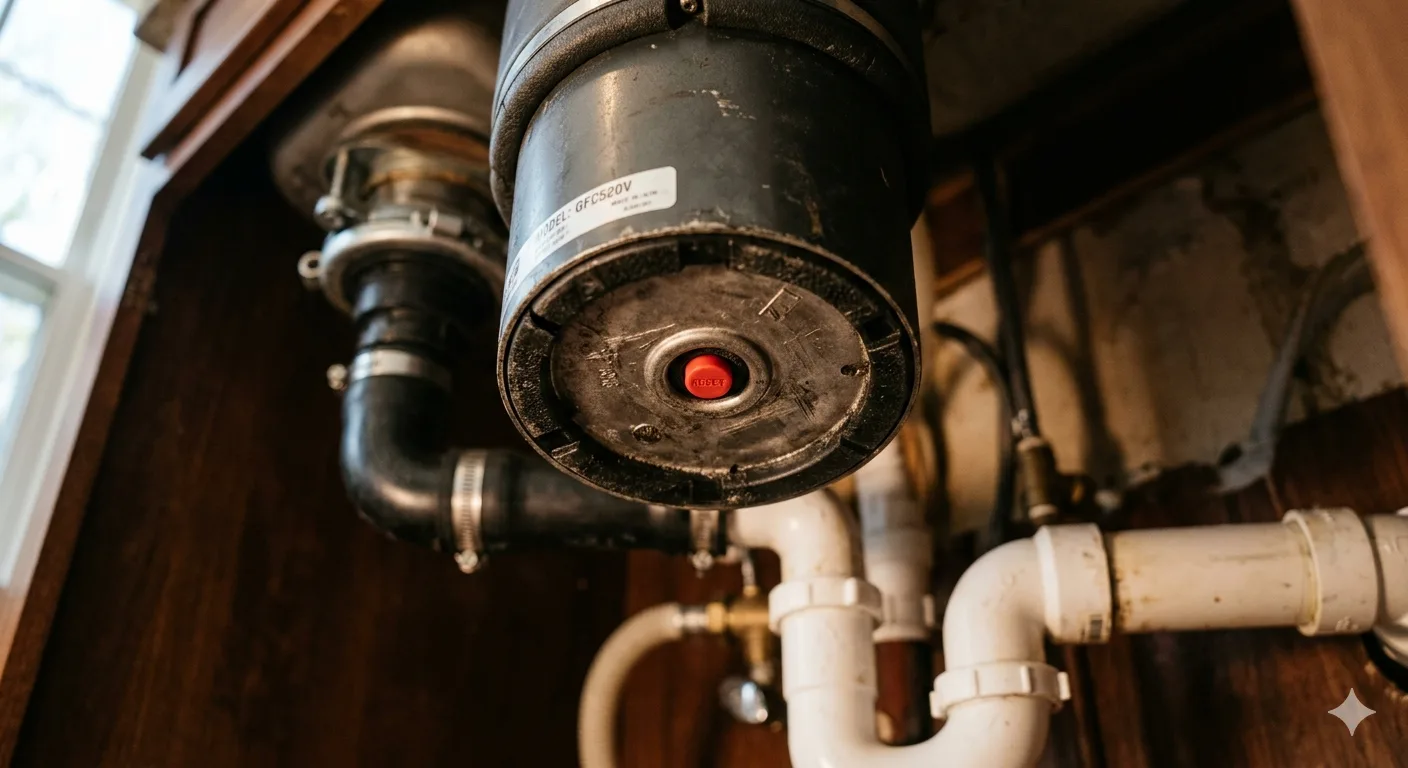
The reset button is not a fix. It is a circuit breaker built into the disposal’s motor housing. When the motor draws too much current because it’s overheating or seized, the thermal overload trips and cuts power before anything burns out. The button pops out about a quarter inch, and the unit won’t run again until you push it back in.
Most homeowners treat it as the solution rather than the signal. One trip after grinding through potato peels is usually harmless. Repeated trips with no obvious overload means the motor is struggling under normal conditions. According to the Plumbing-Heating-Cooling Contractors Association, disposal motors typically last 10 to 12 years, but chronic overheating from ignored warning signs cuts that lifespan significantly.
What Causes the Garburator Reset Button to Keep Tripping
A one-off trip is easy to explain. Sustained tripping is a different story, and the causes fall into distinct categories worth knowing before you reach under the sink again.
The most common culprit is a partial jam. Food waste gets lodged in the grinding chamber, forcing the motor to strain without stopping entirely. It runs at reduced capacity, draws excess current, and eventually trips the thermal overload. Fibrous foods like celery and artichoke leaves are notorious for wrapping around the grinding plate and creating exactly this kind of slow-burn problem.
Worn motor bearings are another frequent cause, especially in units older than eight years. Once the bearings wear down, the motor works harder to maintain speed and generates excess heat. You’ll often hear a low hum or grinding noise before the reset trips. That noise is the motor fighting itself, and it won’t stop until the root cause is fixed.
How Does the Garburator Reset Button Relate to Electrical Problems You Shouldn’t Ignore?
Not every reset trip is mechanical. Electrical issues account for a significant share of repeat failures and carry a higher safety risk than a worn motor. The most common cause is a loose or corroded wire connection inside the unit or at the outlet beneath the sink.
Disposal units draw between 4 and 8 amps during normal operation, with spikes above that during startup. A loose connection that handles 4 amps may fail at 7, tripping the thermal overload even though the motor is fine. The EPA reports that faulty electrical connections in kitchen appliances are a leading cause of preventable household damage. A licensed plumber can inspect the dedicated circuit safely.
How to Use the Garburator Reset Button the Right Way
When your unit goes silent, there is a correct sequence that protects the motor. Skipping steps is how people create a second problem while trying to fix the first.
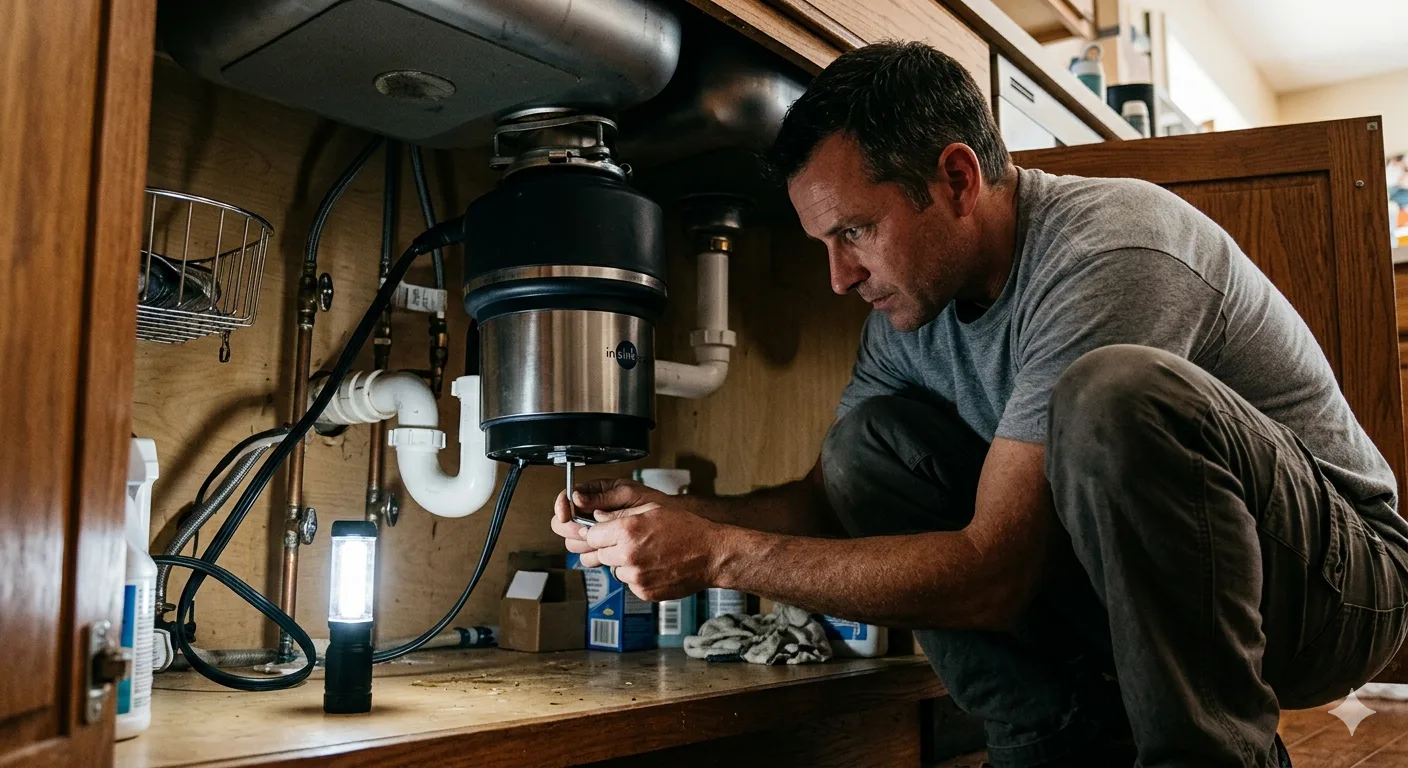
Turn the unit off and wait at least fifteen minutes. The thermal overload will not reset while the motor is still hot. While you wait, use the hex wrench slot at the bottom center of the unit to manually turn the grinding plate. If the plate won’t budge, clear the jam first. Once it moves freely and the motor has cooled, press the reset button firmly until you feel it click. Then run cold water and power the unit on. The American Society of Plumbing Engineers recommends running cold water for at least thirty seconds before and after grinding, a simple habit that meaningfully extends motor life.
Why Is the Garburator Reset Button Not a Substitute for a Drain Inspection?
One thing homeowners miss is the drain line below the disposal. The unit can grind food waste well and still overheat if the discharge pipe is partially blocked. When ground waste can’t flow freely, it backs up into the grinding chamber and forces the motor to work against resistance it was never designed to handle.
A partial clog produces symptoms identical to a motor problem. The unit runs, trips the reset, and restarts normally. Nothing looks wrong from outside. But the motor is cycling between overload and reset because waste has nowhere to go. A plumber who checks the full drain path often finds fat, grease, and food solids 12 to 18 inches down the line. That buildup is preventable with regular cold water flushing, but once established it needs professional clearing.
When a Garburator Reset Button That Won’t Stay In Signals Full Replacement
There comes a point where resetting is no longer the right call. If the button trips within seconds of restarting, the motor has reached thermal failure. A loud hum with no grinding motion means the plate is seized. Both are signs the unit has reached end of life.
Units older than ten years that trip repeatedly are almost always more cost-effective to replace than repair. Disposal repair costs run between $75 and $200 for a service call and parts. A new mid-range unit installed by a licensed plumber costs between $200 and $450 fully fitted, and comes with a fresh warranty. Newer units that still trip are a stronger case for repair, since the motor should have years left. A professional assessment is the only way to know which path makes sense.
Frequently Asked Questions About Garburator Reset Button
**Why does my garburator reset button keep popping out?**Repeated tripping means the motor is overheating due to a jam, worn bearings, or an electrical fault. A one-time trip after heavy use is normal. If it happens regularly, a professional inspection will find the cause.
**Can I fix the garburator reset button myself?**You can push the reset button yourself after clearing a jam and letting the motor cool. Motor repairs and wiring issues inside the unit require a licensed plumber or electrician. Opening the housing yourself can void the warranty.
**How long should I wait before pressing the garburator reset button?**Wait at least fifteen minutes after the unit stops. The thermal overload needs time to cool before it will engage again. Pressing it too soon means it will trip immediately.
**Is a tripping garburator reset button dangerous?**The thermal overload itself is a safety feature. However, the conditions behind repeated tripping, such as electrical faults or a seized motor, can be hazardous. Get a plumber to look at it promptly if the cause isn’t obvious.
How Do You Find a Trusted Local Plumber for Garburator Reset Button?
A disposal that keeps cutting out is not a minor inconvenience. Left alone, it becomes a failed motor, a blocked drain, or an electrical fault that takes out more than just the unit. Visit PlumberLocator.us to connect with a licensed local plumber who can diagnose the root cause, not just push the button again.
For broader kitchen plumbing guidance, head over to our plumbing tips section. The right information up front is always cheaper than an emergency call.