Your water heater is one of those appliances you never think about until the moment it stops working. Hot showers disappear, dishes pile up, and suddenly a piece of equipment you never paid much attention to becomes the most urgent problem in your home. If you have been asking yourself how long water heaters last, you are in the right place.
This complete guide covers the average lifespan of every major water heater type, the warning signs that yours is reaching the end of its life, what affects how long a water heater lasts, and what you can do to extend its performance for as many years as possible.
How Long Do Water Heaters Last on Average?
The lifespan of a water heater depends heavily on the type of unit you have installed in your home. Different technologies age at different rates, and understanding where your unit falls on that spectrum helps you plan ahead rather than react to an emergency.
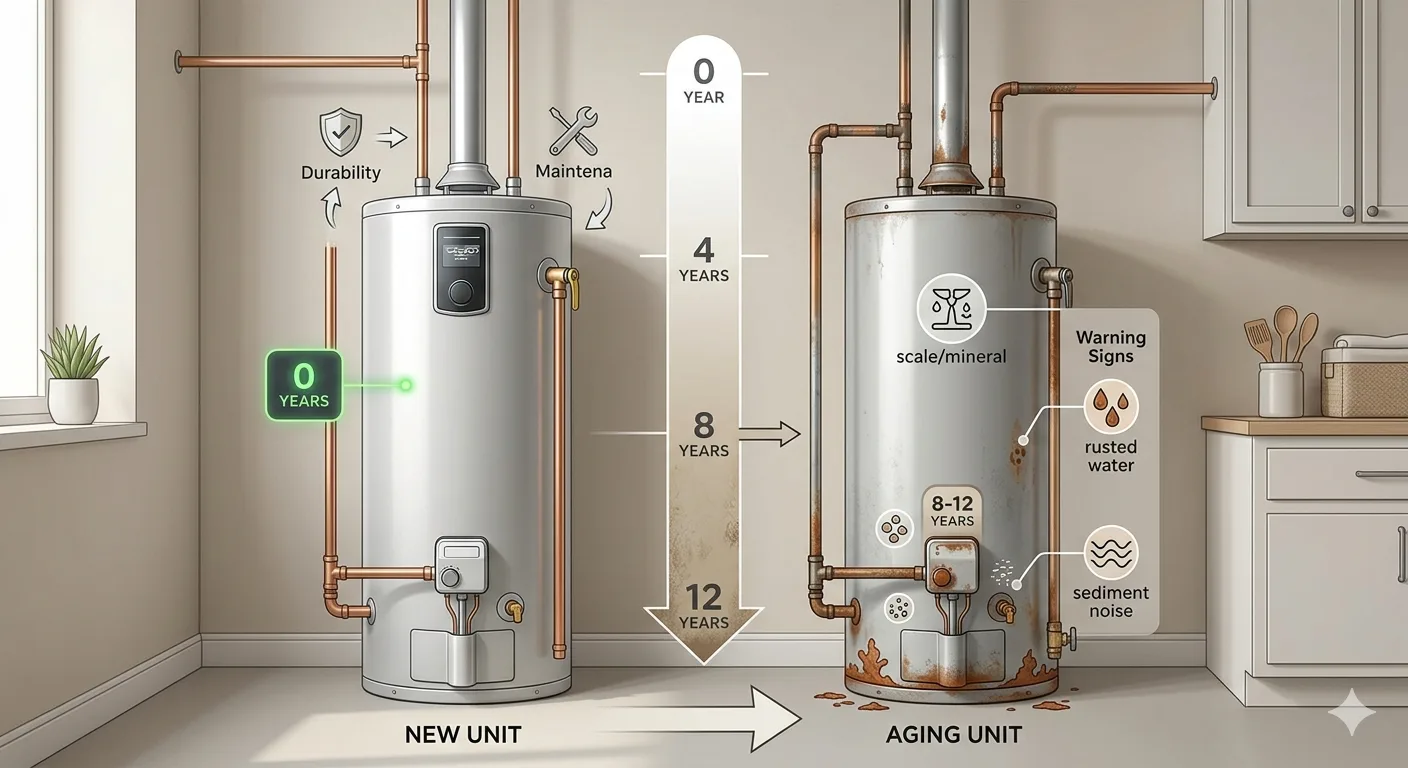
Traditional Tank Water Heaters are the most common type found in homes across the country. These units store a large volume of hot water in an insulated tank and keep it heated continuously until it is needed. A conventional tank water heater typically lasts between 8 and 12 years. Some units reach 15 years with excellent maintenance, but most homeowners begin experiencing problems and reduced efficiency well before that point.
Tankless Water Heaters, also called on demand water heaters, heat water directly as it flows through the unit rather than storing it in a tank. Because there is no standing water constantly heating and cooling inside a tank, tankless units experience far less corrosion and wear. A well maintained tankless water heater can last between 20 and 30 years, making it a significantly longer term investment despite the higher upfront cost.
Heat Pump Water Heaters use electricity to move heat from the surrounding air into the water rather than generating heat directly. These energy efficient units typically last between 10 and 15 years, performing better than traditional tank models while consuming considerably less electricity.
Solar Water Heaters are paired with roof mounted solar collectors that capture energy from the sun to heat water. The solar components of these systems generally last 20 years or more, while the backup tank or storage unit connected to them follows a lifespan similar to conventional tank models.
What Affects How Long a Water Heater Lasts?
Knowing the average lifespan is only part of the picture. Several factors influence whether your specific unit reaches or exceeds that average.
Water Quality plays a major role in water heater longevity. Hard water, which is water with a high concentration of minerals like calcium and magnesium, causes scale and sediment to build up inside the tank and on the heating elements over time. This buildup forces the unit to work harder, reduces efficiency, and accelerates wear. Homes with hard water often see water heaters fail earlier than the average lifespan suggests.
The Anode Rod is a component inside tank water heaters that most homeowners have never heard of, yet it is one of the most important factors in how long the unit lasts. The anode rod is a metal rod, usually made of magnesium or aluminum, that attracts corrosive minerals and sacrifices itself to protect the steel interior of the tank from rusting. When the anode rod is fully consumed, corrosion attacks the tank directly. Replacing the anode rod every three to five years is one of the single most effective things you can do to extend the life of a tank water heater.
Installation Quality matters enormously. A water heater that was installed correctly by a licensed plumber, with proper venting, the right sized unit for the home, and all connections made to code, will almost always outlast a unit that was improperly installed. Poor installation creates stress on components from day one and can void manufacturer warranties.
Usage and Demand directly affect wear and tear. A water heater in a home with six people running back to back showers, multiple loads of laundry, and a dishwasher cycling daily will age faster than the same unit in a home with two people and moderate usage. Sizing your water heater correctly for your household demand reduces unnecessary strain on the system.
Maintenance Frequency is perhaps the most controllable factor of all. Water heaters that receive annual inspections, regular tank flushes to remove sediment, and timely anode rod replacements consistently outlast those that are installed and completely forgotten.
What Are the Warning Signs Your Water Heater Is Failing?
Even if you do not know the exact age of your water heater, certain symptoms tell you that the end of its life is approaching. Catching these signs early gives you time to plan a replacement before you are left without hot water entirely.
Rusty or Discolored Water coming from your hot water taps is a strong indicator that the inside of your tank has begun to corrode. Once rust appears in the water, the tank is deteriorating from within and replacement is typically the only viable solution.
Rumbling or Popping Sounds during heating cycles are caused by sediment that has hardened at the bottom of the tank. As the heating element works to heat water through this layer of buildup, it creates noise and uses significantly more energy. Flushing the tank can sometimes help, but in older units, this level of sediment accumulation usually signals the end of the unit’s useful life.
Water Pooling Around the Base of the unit is a serious warning sign. Small leaks can develop as the metal tank expands and contracts through thousands of heating cycles over the years. Once a tank begins leaking, there is no repair. The unit must be replaced before the leak worsens and causes water damage to the surrounding area.
Inconsistent Hot Water or water that does not get as hot as it once did points to a failing heating element, a broken thermostat, or a tank so full of sediment that it can no longer heat water efficiently.
Age of the Unit is itself a warning sign. If your water heater is approaching or has passed the 10 year mark, it is worth having a plumber assess its condition even if it appears to be working normally. Most failures in aging units happen suddenly and without much prior warning.
How to Find the Age of Your Water Heater
The age of your water heater is encoded in its serial number, which is printed on the label attached to the side of the unit. Different manufacturers use different formats, but in most cases the first two digits or the first letter followed by digits represent the year and month of manufacture. If you are unsure how to read your unit’s serial number, a quick search of the manufacturer’s name along with the phrase “serial number decoder” will give you the answer within seconds.
How to Extend the Life of Your Water Heater
Whether your water heater is brand new or approaching middle age, these maintenance habits will help it perform reliably for as long as possible.
Flush the tank once a year to remove sediment buildup from the bottom of the unit. This simple task takes about thirty minutes and significantly reduces strain on the heating elements. Check and replace the anode rod every three to five years. This is the single most impactful maintenance task for tank water heaters and is often overlooked entirely. Set the thermostat to 120 degrees Fahrenheit. Temperatures higher than this accelerate mineral buildup and put unnecessary stress on the tank and components. Insulate the first few feet of hot and cold water pipes connected to the unit to reduce heat loss and improve efficiency. Schedule an annual inspection with a licensed plumber who can catch developing problems before they become expensive failures.
When to Repair and When to Replace
As a general rule, if your water heater is under eight years old and the repair cost is less than half the price of a new unit, repair is usually the right choice. If the unit is over ten years old, if it has begun to leak, or if it requires a repair that costs more than half the replacement price, investing in a new unit almost always makes more financial sense in the long run.
Modern water heaters are significantly more energy efficient than units manufactured ten or fifteen years ago. Replacing an aging unit with a new energy efficient model often results in lower monthly utility bills that help offset the upfront cost of replacement over time.
What Are the Key Takeaways?
So how long do water heaters last? The honest answer is that it depends on the type of unit, the quality of your water, how well the system has been maintained, and how much demand it handles on a daily basis. A conventional tank water heater lasts 8 to 12 years on average, while a tankless unit can serve your home reliably for 20 to 30 years with proper care.
The best thing any homeowner can do is learn the age of their current unit, watch for the warning signs of failure, and commit to a simple annual maintenance routine. Being proactive about your water heater means you will never be caught off guard by a cold shower or a flooded utility room.
Need help assessing your current water heater or planning a replacement? Contact a licensed plumber in your area today for a professional inspection and honest recommendation tailored to your home and budget.