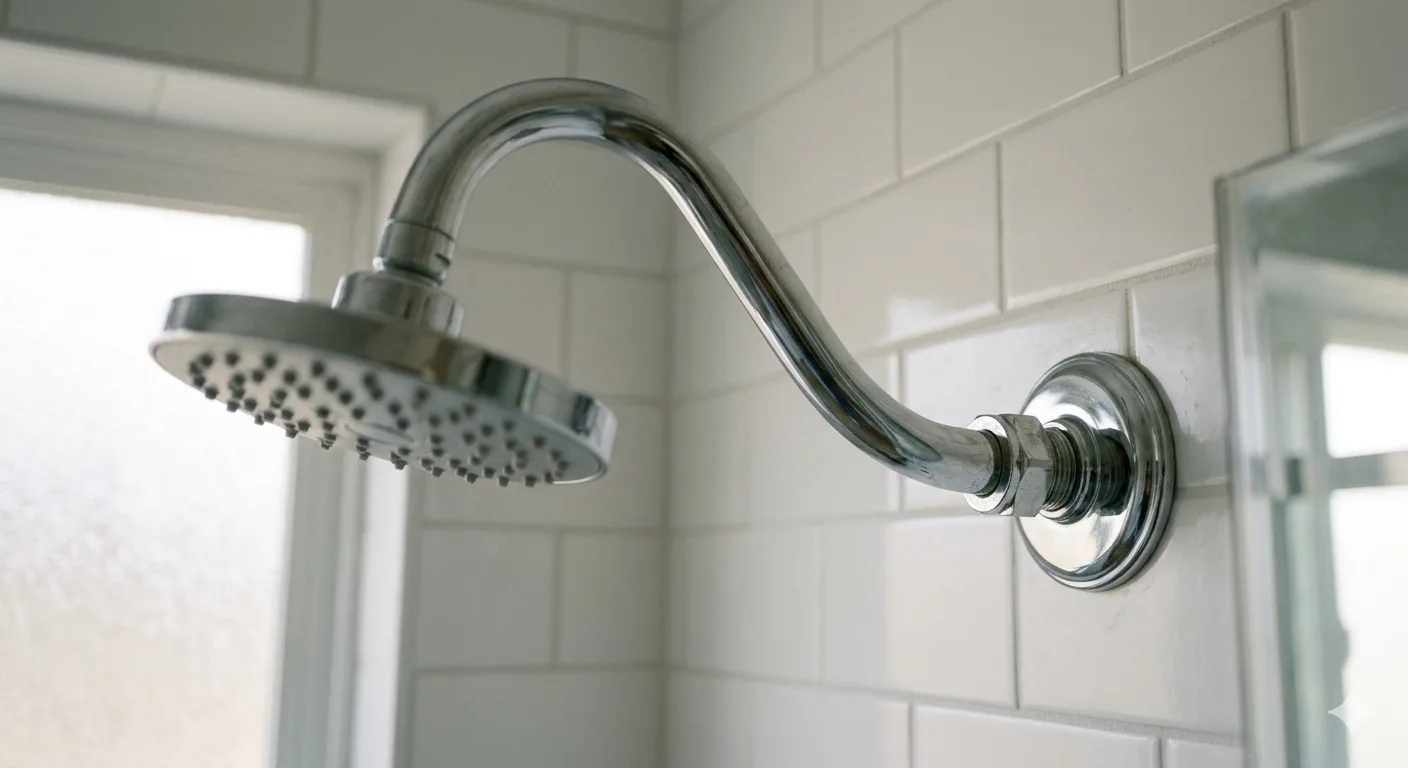
If your shower pressure has dropped or water sprays in odd directions, a dirty shower head is almost certainly the cause. Mineral deposits and limescale clog the spray nozzles over time, but cleaning a shower head is one of the easiest home maintenance tasks you can do, with results you will feel immediately with the Plumberlocator guide
Why does a shower head get clogged?
Every time water passes through your shower head, it leaves behind trace minerals, primarily calcium and magnesium. Over weeks and months, these deposits build up inside and around the spray nozzles, gradually restricting flow and causing uneven spray patterns. This is especially common in areas with hard water, where mineral concentration is high.
Beyond water pressure, a dirty shower head can harbor bacteria, including Legionella, if left uncleaned for extended periods. Regular cleaning is both a comfort and a hygiene issue.
What you will need
- White distilled vinegar (the most effective natural cleaner for mineral deposits)
- A large zip-lock bag or a plastic bag
- Rubber band or zip tie
- Old toothbrush or small scrub brush
- Toothpick or pin (for stubborn nozzles)
- Adjustable wrench and plumber’s tape (if removing the shower head)
- Microfibre cloth
What Are the Two Methods — with or without removing the shower head?
Method 1: Bag of vinegar (no removal)
Soak the shower head in place using a bag filled with vinegar. No tools needed. Best for regular maintenance cleans.
Easiest · ~$1 · 30 min soak
Method 2: Remove and soak
Unscrew the shower head and submerge it fully in vinegar. Best for heavy buildup or a thorough deep clean.
Moderate · ~$1 · 1–8 hr soak
Method 3: Baking soda paste
Scrub nozzles with a baking soda and vinegar paste for spot treatment of stubborn mineral deposits.
Easy · ~$1 · 15 min
Method 4: Commercial descaler
Use a dedicated limescale remover like CLR for extreme buildup that vinegar alone cannot dissolve.
Easy · $8–$12 · 2 min contact
How to clean a shower head without removing it (vinegar bag method)
Fill a plastic bag with white vinegar. Use enough vinegar to fully submerge all the spray nozzles on the shower head face, usually about one to two cups.
Secure the bag over the shower head. Place the bag over the shower head so the nozzles are completely immersed in vinegar. Wrap a rubber band or zip tie tightly around the neck of the shower head to hold the bag in place.
Soak for at least 30 minutes. For light buildup, 30 minutes is sufficient. For moderate mineral deposits, leave it for one to two hours. For heavy limescale, soak overnight.
Remove the bag and scrub the nozzles. Use an old toothbrush to scrub around and between the spray nozzles. For any nozzles still blocked, use a toothpick or pin to gently clear the opening.
Run the shower on full for 1–2 minutes. This flushes loosened deposits out through the nozzles. You may notice discolored water for the first few seconds. This is normal.
Wipe dry with a microfibre cloth. Buff the shower head face to remove water spots and any remaining residue. Your shower head should now spray evenly and powerfully.
Do not have white vinegar? Apple cider vinegar works almost as well. Avoid using bleach on shower heads it can damage rubber nozzles and internal components, and it does not dissolve mineral deposits effectively.
How to clean a shower head by removing it
For a deeper clean, removing the shower head and fully submerging it in vinegar gives far better results on heavy buildup.
Wrap the connector nut with a cloth and unscrew counterclockwise using an adjustable wrench. The cloth protects the finish from scratches. Most shower heads unscrew easily by hand once started.
Remove and rinse the filter screen. Just inside the connection point is a small mesh filter screen. Remove it carefully, rinse under running water, and set it aside.
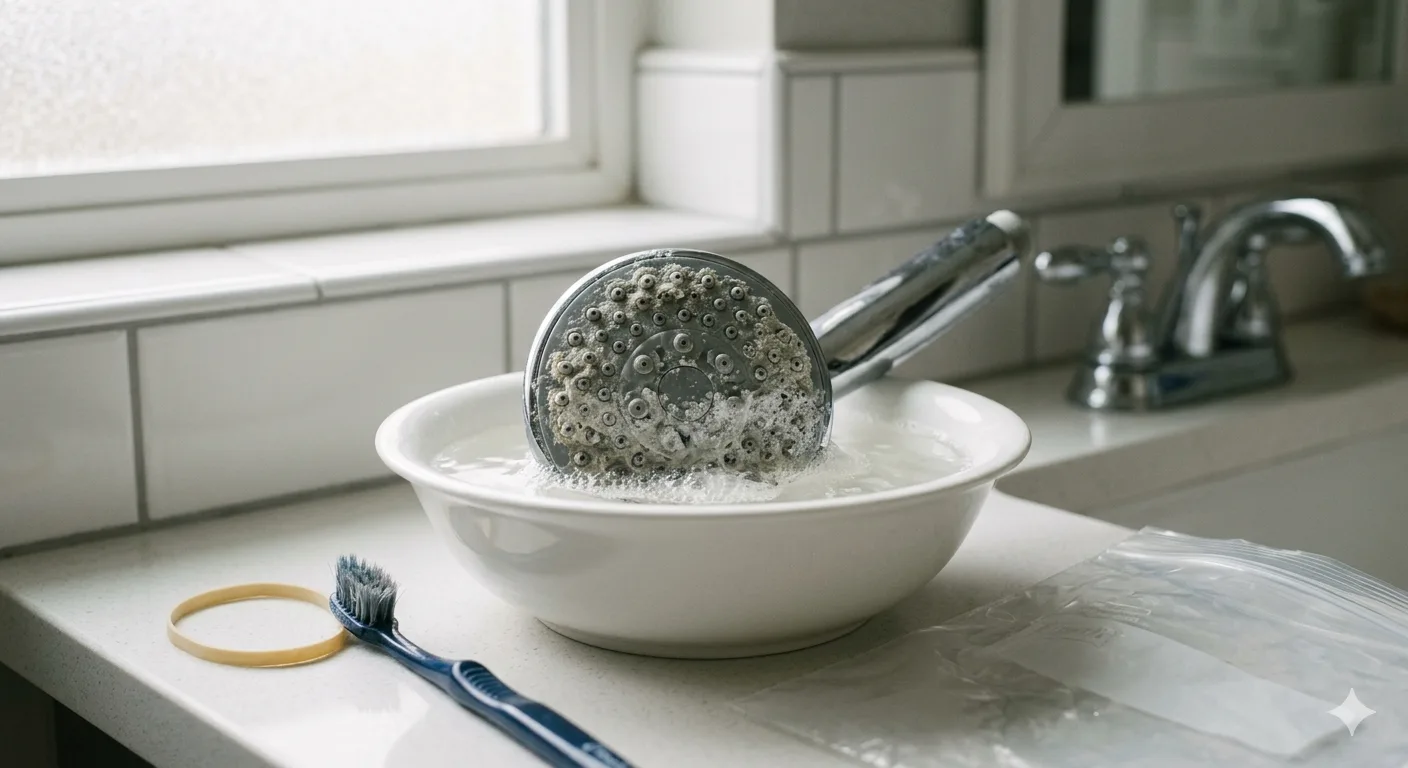
Submerge the shower head in a bowl of undiluted white vinegar. Make sure the nozzle face is fully covered. Soak for a minimum of one hour for heavy limescale, soak for up to eight hours or overnight.
Scrub with an old toothbrush. After soaking, scrub all surfaces, paying close attention to each nozzle. Use a toothpick to clear any that remain blocked.
Rinse thoroughly under running water. Make sure no vinegar residue remains inside the shower head before reinstalling.
Wrap the threads with fresh plumber’s tape and reattach. Wind two to three layers of Teflon tape clockwise around the pipe threads, then hand-tighten the shower head, followed by a quarter turn with a wrench. Do not overtighten.
Never use undiluted CLR or harsh chemical descalers on chrome, brushed nickel, or oil-rubbed bronze finishes; they can strip and permanently damage the coating. Always check the manufacturer’s instructions before using any chemical cleaner on a finished shower head.
How often should you clean your shower head?
A quick visual check tells you when it is time: if you see white or brown crusty deposits around the nozzles or notice reduced pressure, it is time to clean.
How Do You Prevent to keep your shower head clean longer?
-
Wipe the shower head dry after each use
— a quick 10-second wipe with a cloth prevents mineral deposits from forming in the first place.
-
Install a shower filter
— reduces mineral content in the water before it reaches the shower head, dramatically slowing buildup.
-
Do a monthly vinegar spray
— keep a spray bottle of undiluted white vinegar in the shower and spritz the nozzles once a month, then rinse after a few minutes.
-
Consider a water softener
— if hard water is a persistent problem throughout your home, a whole-house water softener addresses the root cause.
Frequently asked questions
How long should I soak my shower head in vinegar?
For light buildup, 30 minutes is enough. For moderate deposits, soak for one to two hours. For heavy limescale, leave it overnight up to eight hours. The longer the soak, the more effectively the acid dissolves mineral deposits.
Can I clean a shower head with baking soda?
Yes. Mix baking soda with enough white vinegar to form a paste and scrub it onto the nozzles with a toothbrush. The fizzing reaction helps lift deposits. However, soaking in vinegar alone is generally more effective for heavy buildup.
Will cleaning my shower head improve water pressure?
Yes, in most cases significantly. Clogged nozzles are one of the most common causes of reduced shower pressure. If pressure remains low after a thorough clean, the issue may be with your home’s water pressure or supply line rather than the shower head itself.
Is it safe to use CLR on a shower head?
CLR is effective on heavy limescale but must be used carefully. Dilute it according to the label, limit contact time to two minutes, and avoid using it on chrome, brushed nickel, or decorative finishes. Rinse thoroughly afterward.
How do I clean a shower head without vinegar?
Use a commercial limescale remover like CLR or a citric acid solution (two tablespoons of citric acid powder dissolved in a cup of warm water). Both are effective at dissolving mineral deposits. Lemon juice also works for light buildup due to its natural citric acid content.
What Is the Bottom Line?
Cleaning a shower head takes less than five minutes of actual effort; most of the time is just waiting for the vinegar to work. Do it every three to six months, and you will maintain strong, even water pressure, extend the life of your shower head, and keep your bathroom hygiene in check. A bag of vinegar, a rubber band, and 30 minutes is all it takes.