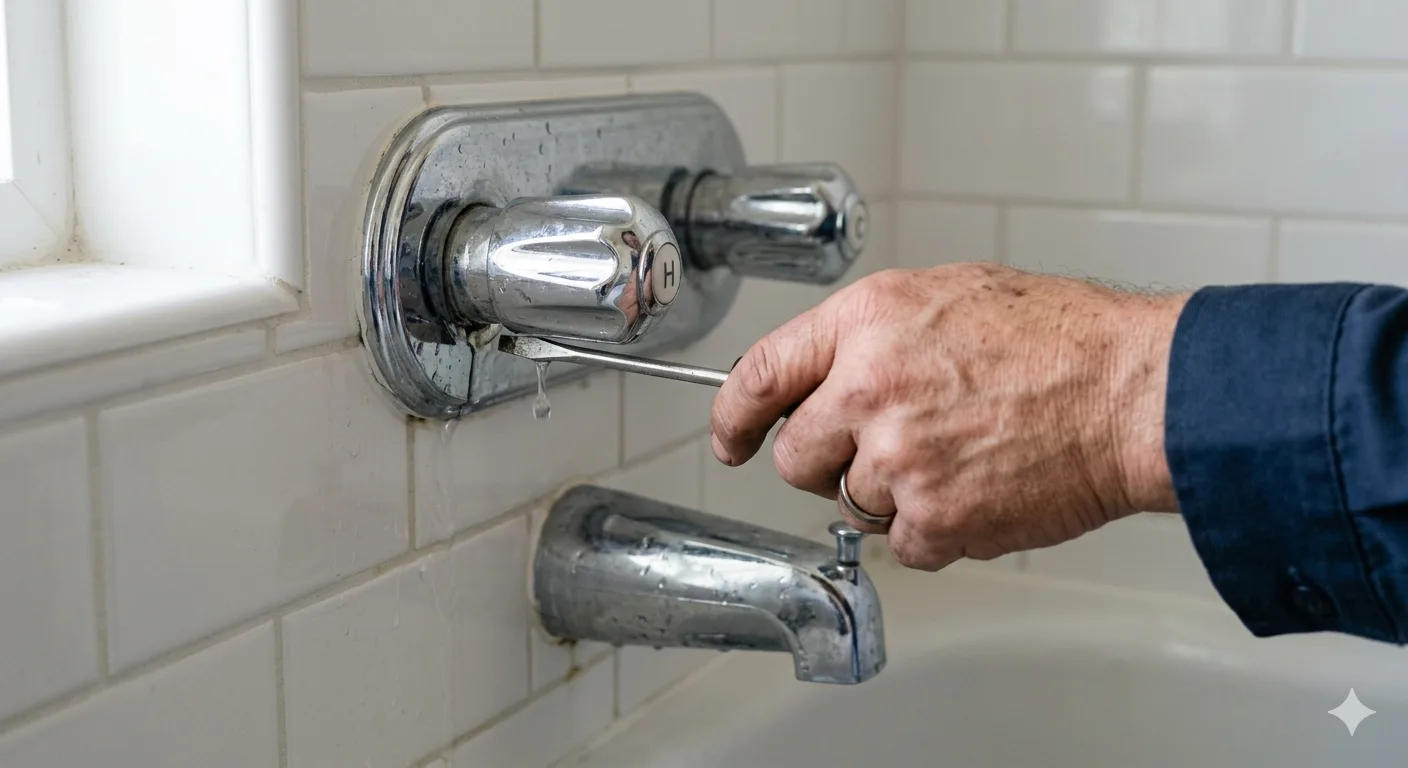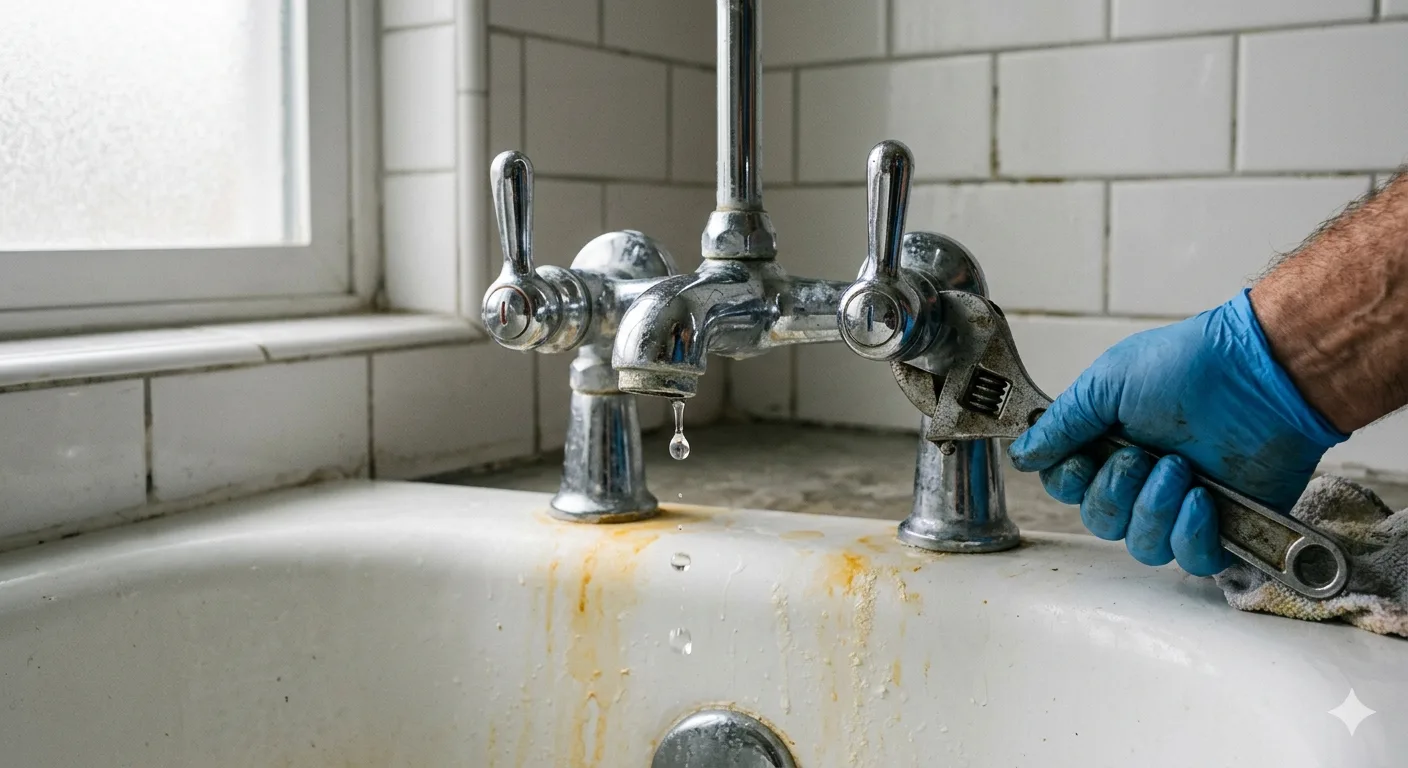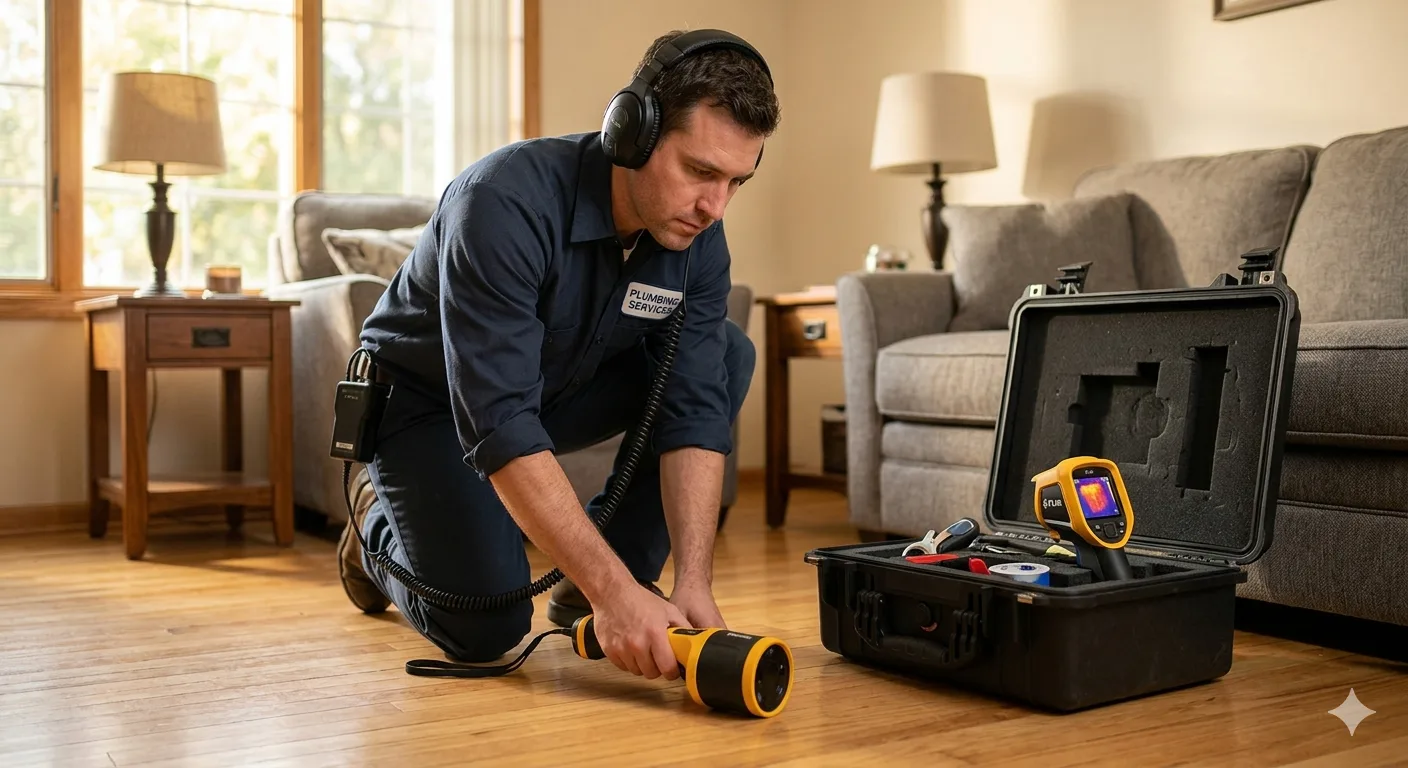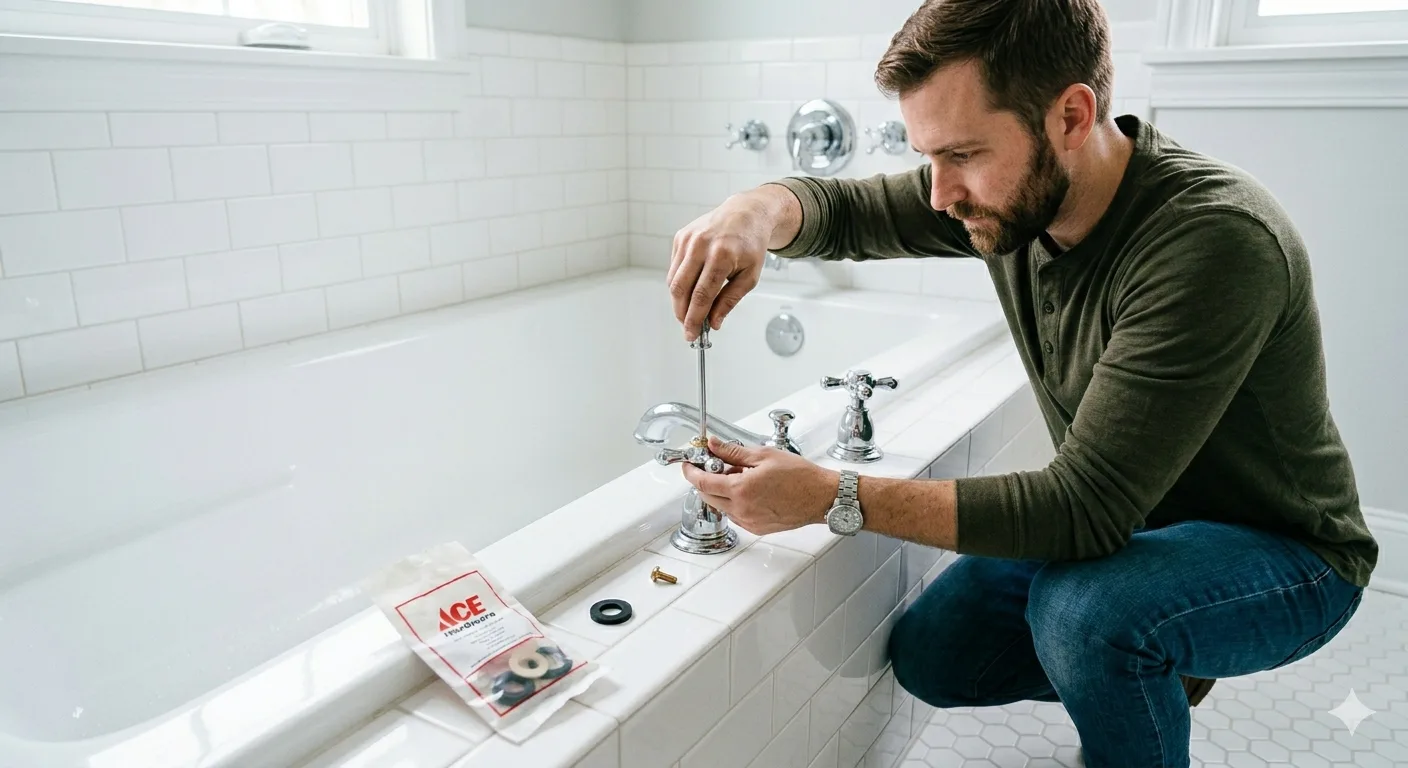
The first thing to know about how to fix a leaky bathtub faucet is that there is no single fix. There are six different failure points, four different faucet types and a correct repair for each combination. Getting it right starts with a two-minute diagnosis before you touch anything.
Quick Answer: How to fix a leaky bathtub faucet depends on where the leak originates. Dripping from the spout means worn washers or a failed cartridge. Leaking around the handles means deteriorated stem packing or O-rings. Leaking at the wall behind the valve means a valve body or connection failure inside the wall. Each location points to a different component and a different repair approach. A licensed plumber can identify the correct cause and fix it in a single visit.
How to Fix a Leaky Bathtub Faucet: Identify Your Type First
Knowing how to fix a leaky bathtub faucet starts with identifying your faucet type. Compression faucets have two handles requiring multiple turns. Cartridge faucets have a smooth quarter-turn action with one or two handles. Ball faucets have a single handle rotating in all directions. Ceramic disc faucets have a single lever over a wide cylindrical body.
The internal components and repair approach differ completely for each type. Mixing up the approach wastes time and often damages the valve body. Identify what you have before buying any parts.
6 Critical Causes of a Leaky Bathtub Faucet and How to Fix Each
Cause 1: Worn rubber washer in a compression faucet.
In a compression faucet, a rubber washer compresses against a seat each time the handle closes. When it wears, the faucet drips from the spout. Shut off the supply valves, remove the handle, unscrew the packing nut, pull the stem and replace the washer at its base. Match the replacement washer exactly by size and profile. The PHCC notes that washer replacement is the most common DIY bathtub faucet repair in US homes.
Cause 2: Worn valve seat in a compression faucet.
If the faucet drips again within a few days of a washer replacement, the valve seat is the problem. A pitted seat scores the new washer immediately. A seat wrench removes and replaces the seat in faucets with removable seats. In faucets without one, a seat grinder resurfaces it in place. This step is what separates a repair that lasts from one that doesn't.
Cause 3: Failed cartridge in a single or double-handle faucet.
Shut off the supply, remove the handle screw under the decorative cap and lift the handle off. The cartridge is secured by a retaining clip or nut. Note the orientation before pulling it straight out. The replacement must be the manufacturer-specified part for your exact faucet model. A generic cartridge that is close but not exact will leak from day one.
Cause 4: Worn stem packing or O-rings around the handle.
Leaking around the base of the handle rather than from the spout means the packing has failed. In compression faucets, the packing is behind the packing nut directly below the handle. Tightening the packing nut one-eighth of a turn sometimes stops a minor weep without further work. If that doesn't hold, the packing string or rubber washer behind the nut needs replacing. In cartridge faucets, worn O-rings on the outer cartridge body cause the same symptom. These come in a repair kit for the specific cartridge model. The EPA estimates stem leaks are among the most common and most overlooked sources of residential water waste.
Cause 5: Cracked or failed valve body inside the wall.
This leak appears as moisture on the wall near the controls, crumbling grout, soft drywall or a musty smell. The valve body is directing water into the wall cavity rather than to any visible outlet. The valve body needs to be accessed from the wall, either by cutting through tile or through an access panel. This is when knowing how to fix a leaky bathtub faucet moves beyond DIY territory. A licensed plumber assesses whether the valve body can be repaired or needs full replacement.
Cause 6: Failed tub spout connection at the wall.
A drip from the back of the spout where it meets the wall is a connection failure, not a faucet valve failure. If the spout has worked loose or the sealant has failed, water escapes at the wall connection. Removing the spout and reinstalling with fresh PTFE tape on the nipple threads often resolves this. If the nipple is corroded or cracked, a licensed plumber replaces it. Never overtighten a spout onto plastic pipe.
How to Fix a Leaky Bathtub Faucet: When to Call a Plumber
Most spout drips and handle leaks are manageable for a confident DIYer with the right parts. The job becomes a plumber's when the shut-off won't close, the valve body is cracked, tile needs cutting or a previous attempt has stripped threads inside the valve.
The CDC notes moisture behind bathroom tile is a leading cause of mold and structural damage. A repair that stops the spout drip but leaves an internal leak is worse than the original problem. Have a licensed plumber verify the valve body before closing any access.
Frequently Asked Questions About How to Fix a Leaky Bathtub Faucet
How do I shut off the water supply to my bathtub faucet?
Most bathtubs have supply shut-off valves accessible inside a panel in the adjacent room wall or inside a hallway closet. If your tub doesn't have dedicated shut-off valves, the water to the whole house needs to be shut off at the main valve near the meter before any faucet work begins.
How long does a bathtub faucet repair take?
A washer or stem packing replacement on a compression faucet takes 30 to 60 minutes. A cartridge replacement on a single-handle faucet takes 45 to 90 minutes. Valve body work or repairs requiring tile access are a multi-hour job that's better handled by a licensed plumber.
Can I fix a leaky bathtub faucet without turning off the water?
No. Working on any faucet component with live water pressure risks a sudden release when the packing nut or cartridge is removed. Always confirm the supply valves are fully closed and open the faucet to release line pressure before removing any internal components.
What if the repair doesn't stop the drip?
If the faucet still drips after replacing the washer or cartridge, either the valve seat is damaged and needs resurfacing or replacement, or the wrong part was installed. A licensed plumber can diagnose whether the seat, the valve body or another component is the remaining cause and address it in a single visit.
Find a Trusted Local Plumber for Bathtub Faucet Repair Today
Knowing how to fix a leaky bathtub faucet gets you most of the way there. Getting the right part, confirming the valve body is intact and making sure the repair is complete is what takes a drip from persistent to solved.
Visit PlumberLocator.us to find a licensed local plumber who can diagnose and repair your bathtub faucet correctly. For more practical plumbing guidance, browse our plumbing tips section.