Most garbage disposal problems take less than five minutes to fix and cost nothing. A completely silent unit may just need a reset button pressed. One that hums without spinning has a jammed plate that an Allen wrench clears in seconds. Knowing how to fix garbage disposal faults by matching the symptom to the correct response is the difference between a free fix and an unnecessary replacement.
Quick Answer: How to fix garbage disposal problems depends on the symptom. A completely silent unit needs the reset button pressed or power checked. A humming unit with no movement has a jammed impeller that needs manual unjamming. A unit that spins but doesn’t grind has worn grinding components. A leaking unit has a failed seal at the sink flange, drain connection or bottom of the housing. A licensed plumber handles disposals that leak from the bottom housing or require full replacement.
What Should You Do Before Safety Steps That Cannot Be Skipped?
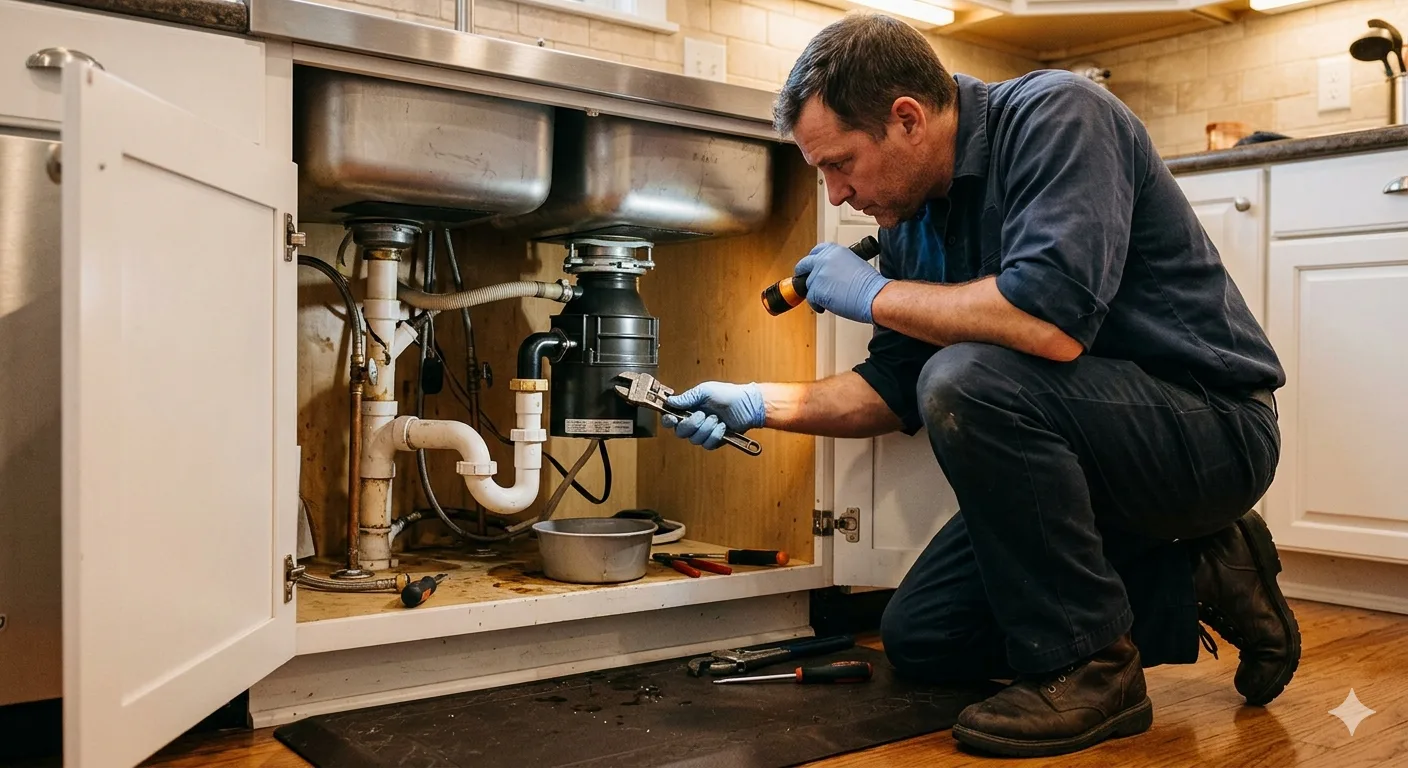
Before any how to fix garbage disposal work: switch the unit off, then unplug it from the outlet under the sink or switch off the dedicated breaker. Confirm it is dead by pressing the switch before reaching into the grinding chamber.
Never feel for obstructions with the power on. The motor can restart if a jam clears unexpectedly. Use tongs or a wooden spoon to retrieve any object from the chamber.
6 Proven Steps for How to Fix Garbage Disposal Problems
Step 1: Press the reset button on a completely silent unit.
A disposal that makes no sound at all has tripped its thermal overload protection. The reset button is a small red or black button on the underside of the unit under the sink. Press it firmly until it clicks, wait 10 minutes and try the switch. If the unit comes on normally, the reset was all that was needed. If it trips again immediately, there is a persistent jam or a failing motor. The PHCC notes thermal overload trips are the most common symptom in how to fix garbage disposal calls that resolve without parts replacement.
Step 2: Check the power supply before assuming the unit has failed.
If the reset button produces no result, check the outlet by plugging in another device. If it is dead, find the kitchen GFCI outlet near the sink and press its reset button. A tripped GFCI cuts power to multiple outlets on the same circuit. If the outlet is live but the disposal still does nothing, the motor has failed and replacement is needed.
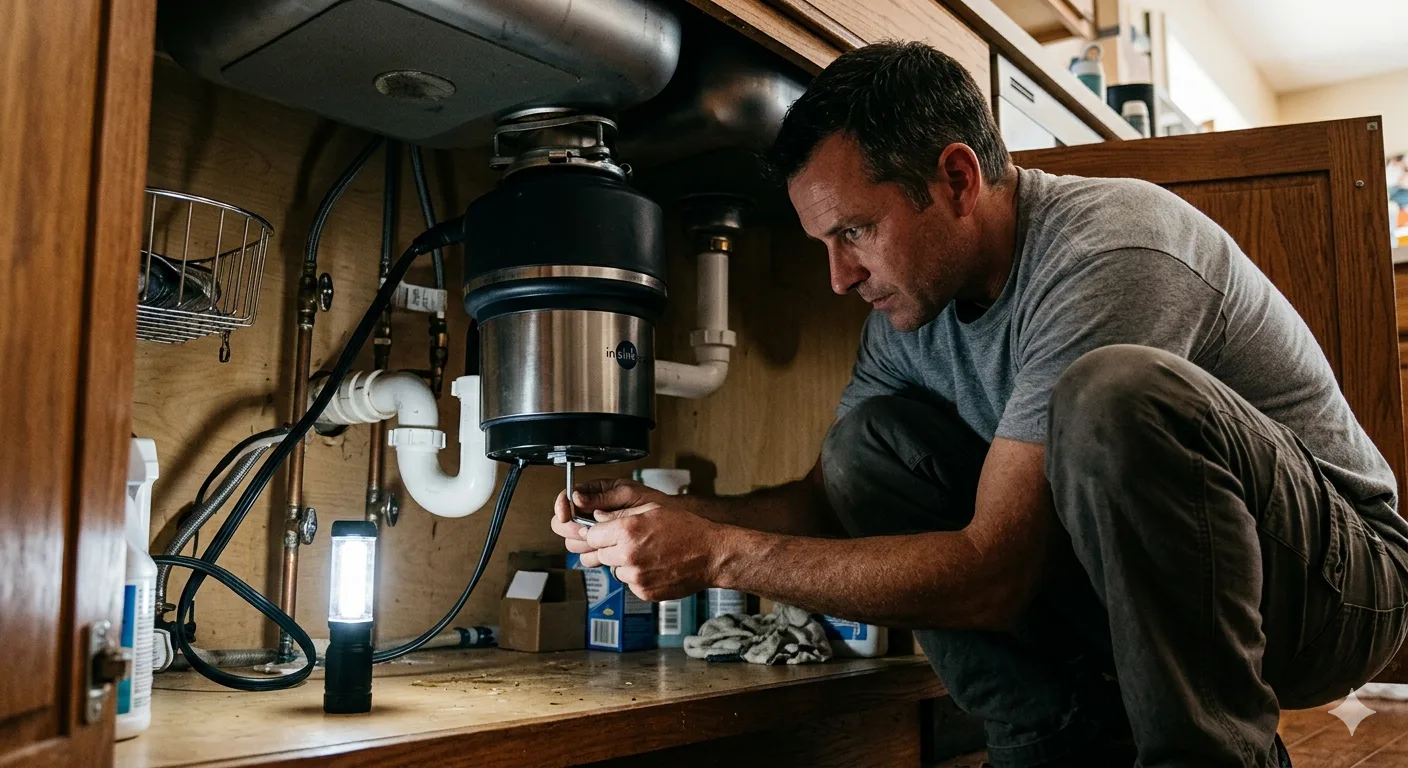
Step 3: Unjam a humming unit using the Allen wrench port.
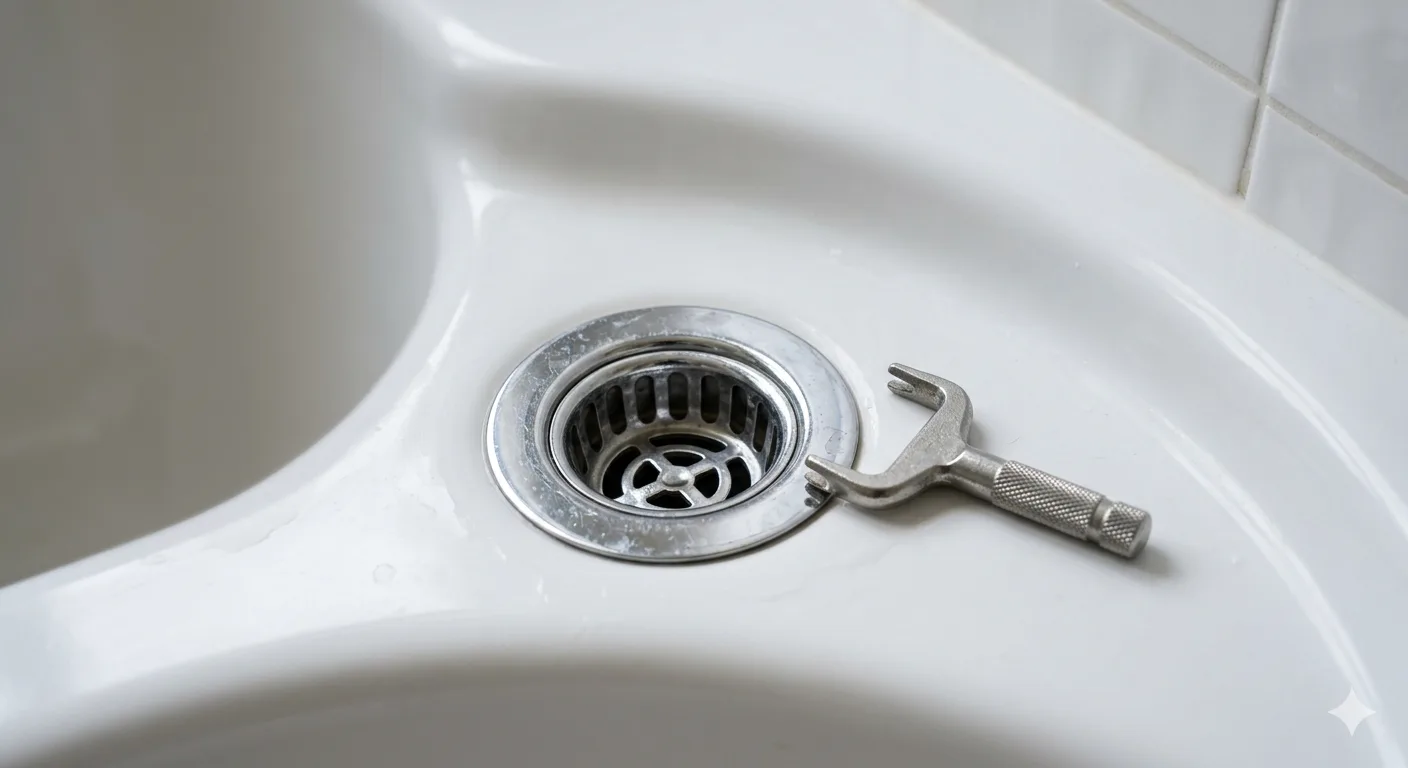
A humming unit has power to the motor but a jammed plate it cannot turn. Switch off immediately. Find the Allen wrench port at the centre of the disposal’s underside and work a 1/4-inch Allen wrench back and forth to free the jam. Once the plate rotates freely, remove the obstruction with tongs, press reset and test the unit. Most disposals ship with a small Allen wrench clipped to the unit for this purpose.
Step 4: Remove a stuck object from the grinding chamber.
If the Allen wrench step confirms the plate rotates freely but the unit still trips or hums, an object is likely caught between the grinding ring and the impeller rather than under it. With the power isolated, use a flashlight to look into the grinding chamber from above and use tongs to retrieve any visible object. Fruit pits, bottle caps, small cutlery and broken glass are the most common items found. The EPA advises against putting fibrous materials such as celery, onion skins and artichokes into disposals as these wrap around the impeller and cause jams that require the plate to be manually cleared.
Step 5: Address leaks by locating the exact source.
Identify the leak location first. A leak at the top, at the sink flange, means the putty seal has failed. Tightening the mounting ring or replacing the flange putty resolves this. A leak at the side, at the drain or dishwasher connection, means a loose hose clamp or failed gasket. A leak from the bottom means the internal motor shaft seal has failed. That seal is not serviceable and a bottom-leaking unit needs replacement.
Step 6: Run cold water before, during and after every use.
Cold water before switching on lubricates the grinding chamber and cools the motor. It solidifies grease so it is ground and flushed rather than coating the grinding ring. Hot water melts fat into the drain line where it re-solidifies. Run cold water for 15 seconds after grinding stops to flush all material through the trap.
When How to Fix Garbage Disposal Means Calling a Plumber
A bottom-leaking unit, a motor that has tripped and failed from repeated jamming, and a unit over 10 years old with diminishing performance are all situations where replacement beats repair. The CDC notes that standing water from a leaking disposal creates bacterial growth conditions within 24 to 48 hours. A bottom seal failure needs same-day attention.
Replacement units cost $100 to $400. Installation by a licensed plumber runs $100 to $200. A plumber who inspects the drain connection during replacement prevents the compatibility issues that frequently follow a disposal swap.
Frequently Asked Questions About How to Fix Garbage Disposal Problems
Why does my garbage disposal smell even after cleaning?
Odour comes from organic material trapped in the grinding ring grooves and under the rubber splash guard. Lift the splash guard flaps and wipe underneath with dish soap. Pour half a cup of baking soda followed by half a cup of white vinegar into the chamber, wait 10 minutes and flush with cold water. Grinding ice cubes and citrus peel clears residue from the ring.
Can I sharpen garbage disposal blades?
Disposals use a spinning impeller plate with lugs that grind food against a stationary ring, not blades. These wear down and cannot be sharpened. Grinding ice cubes helps clean the components but does not restore worn surfaces. A unit noticeably less effective than two years ago has worn grinding components and is approaching end of life.
How long should a garbage disposal last?
A quality residential garbage disposal lasts 8 to 15 years. Early failure is usually caused by running the motor against a seized plate without immediate reset, putting fibrous foods through regularly or using hot water instead of cold. A unit under 10 years old and failing has typically experienced one of these repeatedly.
Is it safe to reset a garbage disposal multiple times?
Once or twice is normal. Resetting a disposal multiple times in one day indicates a persistent jam or a motor drawing excess current. A motor that trips more than twice in a short period needs professional assessment.
How Do You Find a Trusted Local Plumber for Garbage Disposal Help?
Knowing how to fix garbage disposal problems at home handles the majority of failure modes without any cost. A unit that leaks from the bottom, has a failed motor or needs replacement requires a licensed plumber to do the job correctly the first time.
Visit https://plumberlocator.us/emergency/ to find a licensed local plumber in your area for disposal repair or replacement. For cost estimates on kitchen plumbing services, browse our https://plumberlocator.us/cost-guide/.