Small fuzzy moths cluster around your bathroom drains. You spray them, they disappear for a day, then more appear. The adults you're killing are not the problem. The problem is the gelatinous biofilm inside your drain pipes, where sewer fly larvae hatch in an unbroken cycle. Understanding how to get rid of sewer flies permanently means treating the source inside the drain, not the adults flying around the room.
Quick Answer: Sewer flies, also called drain flies or moth flies, breed exclusively in the organic biofilm that accumulates inside drain pipes. To eliminate them permanently, the biofilm must be physically removed or destroyed using mechanical cleaning or enzyme drain treatments. Killing adult flies with sprays does not break the breeding cycle. A licensed plumber can clear severe drain buildup with professional hydrojetting when home treatments fail.
Why Knowing How to Get Rid of Sewer Flies Starts With the Drain
Sewer flies have a life cycle of 8 to 24 days. The female lays 30 to 100 eggs at a time in the biofilm layer inside drains and P-traps. Larvae hatch within 48 hours and feed on the biofilm for one to three weeks. Every adult you kill is replaced by a new cohort hatching from eggs already in the pipe.
The CDC classifies drain fly infestations as an indicator of organic buildup that can also support bacterial growth. Chemical sprays kill adults on contact but do not penetrate the biofilm where eggs and larvae develop.
6 Proven Methods for How to Get Rid of Sewer Flies
Method 1: Confirm which drain is the source.
Place sticky tape over each suspect drain at night and check it in the morning. Adult flies emerge after dark. A tape with flies stuck to the top confirms that drain is an active breeding site. Treat every confirmed source drain simultaneously before expecting results.
Method 2: Mechanical cleaning of the drain and pipe walls.
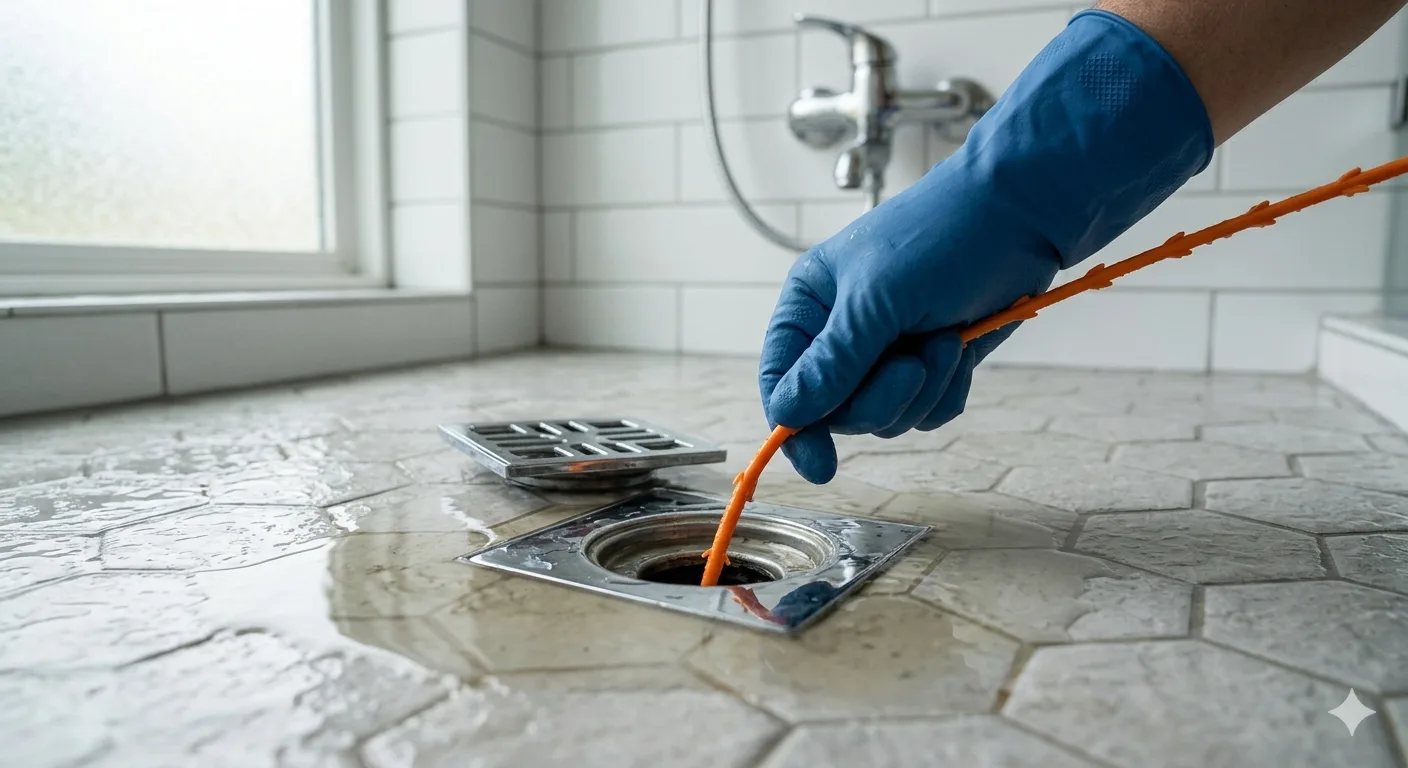
This direct approach to how to get rid of sewer flies uses a drain brush to scrub the drain opening and as far into the pipe as it reaches. Follow with very hot water to flush dislodged material through. Repeat for three consecutive days. For sink drains, removing the P-trap entirely and cleaning it in a bucket reaches the section with the heaviest accumulation.
Method 3: Enzyme drain treatment to dissolve biofilm.
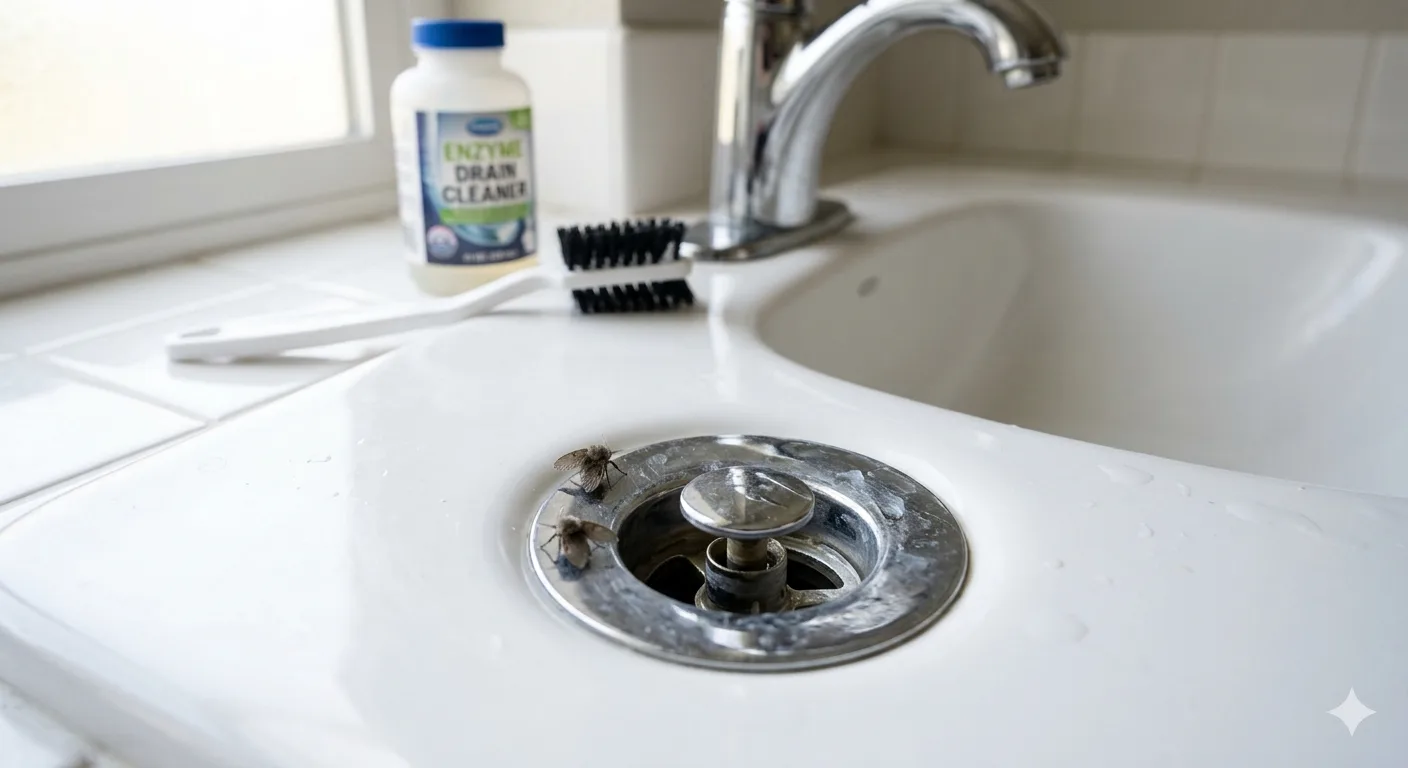
Enzyme-based drain cleaners contain bacterial cultures that digest the organic material in the biofilm without harming pipe walls or seals. Pour the recommended amount down each affected drain in the evening, allow it to work overnight and avoid running water for at least six hours. Repeat nightly for five to seven days. The EPA recommends enzyme drain treatments over caustic chemical drain cleaners for routine drain maintenance because they address the organic accumulation rather than simply clearing a path through it. Enzyme treatment alone rarely eliminates a severe sewer fly infestation in a single application but clears the breeding environment over a week of consistent use.
Method 4: Baking soda, salt and white vinegar flush.
Pour half a cup of baking soda and table salt into the drain, follow with half a cup of white vinegar and wait 15 minutes, then flush with boiling water. The fizzing dislodges material from the pipe walls near the opening. This method works as a maintenance flush between enzyme treatments but is not powerful enough to eliminate a heavy biofilm layer alone.
Method 5: Gel drain cleaner for the drain trap area.
Gel drain cleaners cling to pipe walls longer than liquid formulas, giving more contact time with the biofilm. Apply at night, dwell for the time specified on the label and flush with hot water in the morning. The PHCC notes gel formulations penetrate drain wall accumulation more effectively than standard liquid drain products. Limit use to once per week as heavy chemical exposure degrades rubber seals over time.
Method 6: Address seldom-used drains with dry traps.
A sewer fly infestation that appears in a bathroom that is rarely used is often coming from a dry P-trap rather than an active biofilm accumulation. When a P-trap dries out from non-use, the water seal that blocks sewer gases and insects from entering through the drain evaporates. Pour a cup of water followed by a tablespoon of mineral oil into each seldom-used drain to refill and seal the trap. The mineral oil floats on the water and slows evaporation between uses. Run water in unused fixtures at least once a week to maintain the trap seal.
How to Get Rid of Sewer Flies When Home Treatment Fails
If seven days of consistent treatment does not reduce adult fly numbers, the biofilm is either deeper than home tools reach or is in a pipe section that needs professional access.
Hydrojetting at 2,000 to 4,000 PSI clears the full pipe circumference at any accessible depth, removing biofilm that home treatment has failed to reach. A licensed plumber can also camera-inspect the drain to identify whether a cracked pipe section is sustaining the conditions that allow biofilm to persist.
Frequently Asked Questions About How to Get Rid of Sewer Flies
How long does it take to get rid of sewer flies?
With daily mechanical cleaning and enzyme treatment, adult fly numbers typically drop significantly within five to seven days as the breeding population hatches out without new eggs being laid in clean pipes. How to get rid of sewer flies fully takes ten to fourteen days to account for the full life cycle. If flies persist beyond two weeks, a licensed plumber should assess the drain.
Are sewer flies dangerous?
Sewer flies do not bite or sting and are not known to transmit disease directly. However, their presence in large numbers and their association with decomposing organic material and drain biofilm means they can carry bacteria on their bodies. The CDC notes that heavy infestations in kitchens near food preparation surfaces represent a sanitation concern.
Can sewer flies come from outside?
Sewer flies prefer dark, moist organic environments and rarely breed outdoors in normal residential conditions. The vast majority of household sewer fly infestations originate from indoor drains. If flies appear near a window with no drain source nearby, check for standing water in plant saucers, condensate drain pans on air conditioning units or any other indoor moisture accumulation point.
Will bleach kill sewer flies in drains?
Bleach kills adult flies and surface bacteria on contact but does not penetrate the gelatinous biofilm where eggs and larvae develop. Pouring bleach down a drain produces a brief reduction in adult numbers before the next generation hatches from eggs already in the pipe. Enzyme treatment is significantly more effective against biofilm than bleach and safer for pipe seals.
Find a Trusted Local Plumber If Home Treatment Fails
Knowing how to get rid of sewer flies with the methods above resolves most infestations within two weeks. When the source is deeper in the system or when a damaged pipe is sustaining the conditions that allow biofilm to persist, professional drain service is the reliable solution.
Visit https://plumberlocator.us/emergency/ to find a licensed local plumber who can diagnose and clear persistent drain fly infestations. For cost estimates, browse our cost guide.