Here's what usually happens: someone notices the tub is draining slowly, grabs a screwdriver, and starts prying without knowing what type of drain they have. Twenty minutes later there's a stripped crossbar or a cracked flange. Understanding how to remove bathtub drain parts correctly is the part that saves a simple job from becoming an expensive one.
Quick Answer: How to remove bathtub drain depends on the drain type. Lift-and-turn and push-pull stoppers unscrew counterclockwise by hand or flathead. Toe-touch stoppers have a setscrew at the base. Trip-lever drains access from the overflow plate on the tub wall. The drain flange requires a drain wrench inserted into the crossbars. Force on the wrong part strips threads and cracks porcelain.
How to Remove Bathtub Drain Stoppers: Identify Your Type First
Knowing how to remove bathtub drain parts starts with identifying which stopper type you have, because each has a completely different removal method. The five most common are lift-and-turn, push-pull, toe-touch, roller-ball, and trip-lever. Using the wrong approach damages the mechanism before you've even started.
Lift-and-turn stoppers have a knob on top and rotate to open. Push-pull stoppers move straight up and down. Toe-touch stoppers spring open when pressed. Trip-lever and roller-ball drains have no stopper visible in the drain opening at all because the mechanism sits in the overflow assembly on the tub wall. The Plumbing-Heating-Cooling Contractors Association notes that misidentifying stopper type before removal is the leading cause of stripped drain hardware in residential bathtubs. Confirm what you have before reaching for a tool.
How to Remove Bathtub Drain Lift-and-Turn and Push-Pull Stoppers
How to remove bathtub drain lift-and-turn stoppers starts by lifting the stopper to the open position and turning it counterclockwise while holding the body. In most cases it unscrews completely. If it stops, look for a small setscrew on the knob that must be loosened first. Once the stopper is off, the shaft screws out of the drain crossbars by hand or with a flathead.
Push-pull stoppers remove similarly. Lift to the open position, turn the cap counterclockwise, and the cap threads off. The post beneath then unscrews from the brass insert in the drain crossbars. Use steady counterclockwise pressure. If the post resists, penetrating oil left for fifteen minutes loosens corrosion without risking the threads. Visit plumbing tips for guidance on choosing the right penetrating oil for bathroom fixtures.
How to Remove Bathtub Drain Toe-Touch Stoppers Without Stripping the Base
How to remove bathtub drain toe-touch stoppers requires finding the setscrew at the base of the stopper body. Press the stopper to the open position. A small brass cylinder sits in the drain opening, and on its side is a setscrew. Loosen that with a flathead or Allen key, then turn the stopper body counterclockwise to unscrew it from the drain strainer below.
The strainer that remains can be removed with a drain wrench or needle-nose pliers if the crossbars are accessible. The American Society of Plumbing Engineers notes that overtightening setscrew-mounted stoppers causes thread damage in toe-touch assemblies, which means removal should rely on the setscrew, not rotational force on the stopper body. If the setscrew is stripped or missing, a plumber can extract the stopper without damaging the flange beneath it.
How to Remove Bathtub Drain Trip-Lever and Roller-Ball Assemblies
How to remove bathtub drain trip-lever mechanisms starts at the overflow plate on the tub wall, not at the drain opening. Remove the two screws holding the overflow plate and pull it away slowly while withdrawing the attached linkage rod. In trip-lever drains, a brass plunger on the end of the rod blocks flow. In roller-ball drains, the linkage connects to a ball mechanism in the shoe fitting below.
The plate, linkage, and stopper mechanism all come out together. Attempting to access a trip-lever drain from the tub floor achieves nothing because there's no stopper there to remove. If the linkage is corroded and won't withdraw cleanly, a plumber should assess it. Forcing a seized linkage rod can score the drainpipe during extraction, turning a simple removal into a pipe repair.
How to Remove Bathtub Drain Flange Without Stripping the Crossbars
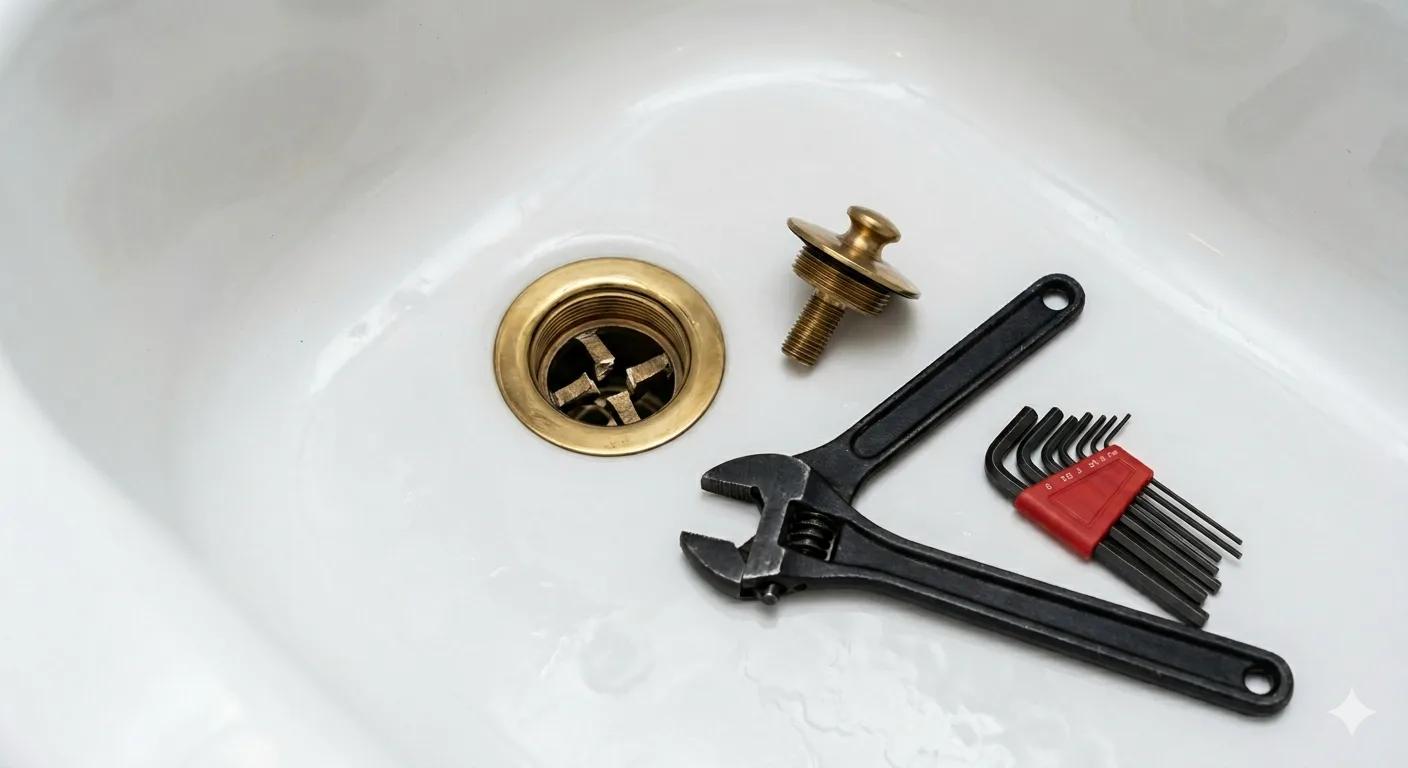
How to remove bathtub drain flange, the threaded metal ring at the bottom of the tub opening, requires a drain wrench or tub drain extractor. The flange threads into a drain shoe beneath the tub and turns counterclockwise to remove. The drain wrench has a four-point crosshair head that fits into the drain crossbars and applies even rotational force.
Using a screwdriver jammed into the crossbars destroys them. The crossbars are thin cast brass and can't withstand lateral torque. For a flange in place for decades, apply heat from a heat gun for thirty seconds to soften old plumber's putty before attempting removal. According to EPA guidance on plumbing fixture replacement, replacing old drain assemblies with modern equivalents can reduce bathtub water use by up to 30 percent per fill cycle.
Why How to Remove Bathtub Drain Jobs End Up Calling a Plumber
How to remove bathtub drain jobs that start as simple stopper swaps become plumber calls when the flange crossbars are completely stripped, leaving nothing for a drain wrench to grip. In those cases, a screw extractor or oscillating tool cuts through the old flange so it can be broken out without damaging the drain shoe below.
The second common reason is a cracked drain shoe, which causes leaks into the subfloor discovered as ceiling stains in the room below. The CDC's residential moisture guidance notes that subfloor water damage creates mold conditions within 24 to 48 hours. Use our plumber directory to connect with a licensed plumber who can replace the flange correctly and confirm the shoe is watertight before finishing.
Frequently Asked Questions About How to Remove Bathtub Drain
What tools do I need to remove bathtub drain parts correctly?
A drain wrench handles the flange. A flathead screwdriver, Phillips screwdriver, and small Allen key set cover most stopper setscrews. Penetrating oil helps with corroded threads. Needle-nose pliers assist with crossbars in tight openings.
How do I know if my bathtub drain flange is stripped?
If a drain wrench slips without catching on the crossbars, they're stripped. You may also see visible rounding of the crossbar edges. A stripped flange requires a screw extractor or cutting tool for removal without damaging surrounding porcelain.
Can I remove a bathtub drain without a drain wrench?
For stoppers, yes. For the flange, improvised tools like a screwdriver almost always strip the crossbars. A drain wrench costs $10 to $20 and prevents far more expensive damage to the flange and surrounding porcelain.
When should I call a plumber to handle bathtub drain removal?
Call a plumber if the flange is already stripped, if you suspect a cracked drain shoe, if the trip-lever linkage is seized, or if water has been leaking beneath the tub. These situations need tools and assessment beyond standard removal.
Find a Trusted Local Plumber for How to Remove Bathtub Drain Help Today
Removing a bathtub drain is straightforward when the hardware cooperates. When it doesn't, things escalate quickly. A licensed plumber has the right extraction tools, protects surrounding porcelain, and verifies the drain shoe seal before finishing. Use our plumber directory to connect with a licensed local plumber in your area who handles bathtub drain removal and replacement from start to finish.
Our plumbing tips page covers stopper identification, drain maintenance, and what to tell a plumber before the visit.