A tap that trickles or stops entirely when the temperature has been below freezing means you have a frozen pipe. The clock starts immediately because expanding ice builds enormous pressure that eventually finds the pipe’s weakest point. How to unfreeze pipes safely and quickly without making things worse is what this post covers.
Quick Answer: How to unfreeze pipes involves applying gentle, indirect heat to the frozen section until water flow is restored. Safe methods include a hair dryer, a heat lamp, warm towels or electrical heating tape. Never use an open flame, a propane torch or a heat gun at full output. The risk of bursting increases with every minute the pipe stays frozen, and any pipe that has already burst needs a licensed plumber immediately.
What Should You Do Before Locate the Frozen Section?
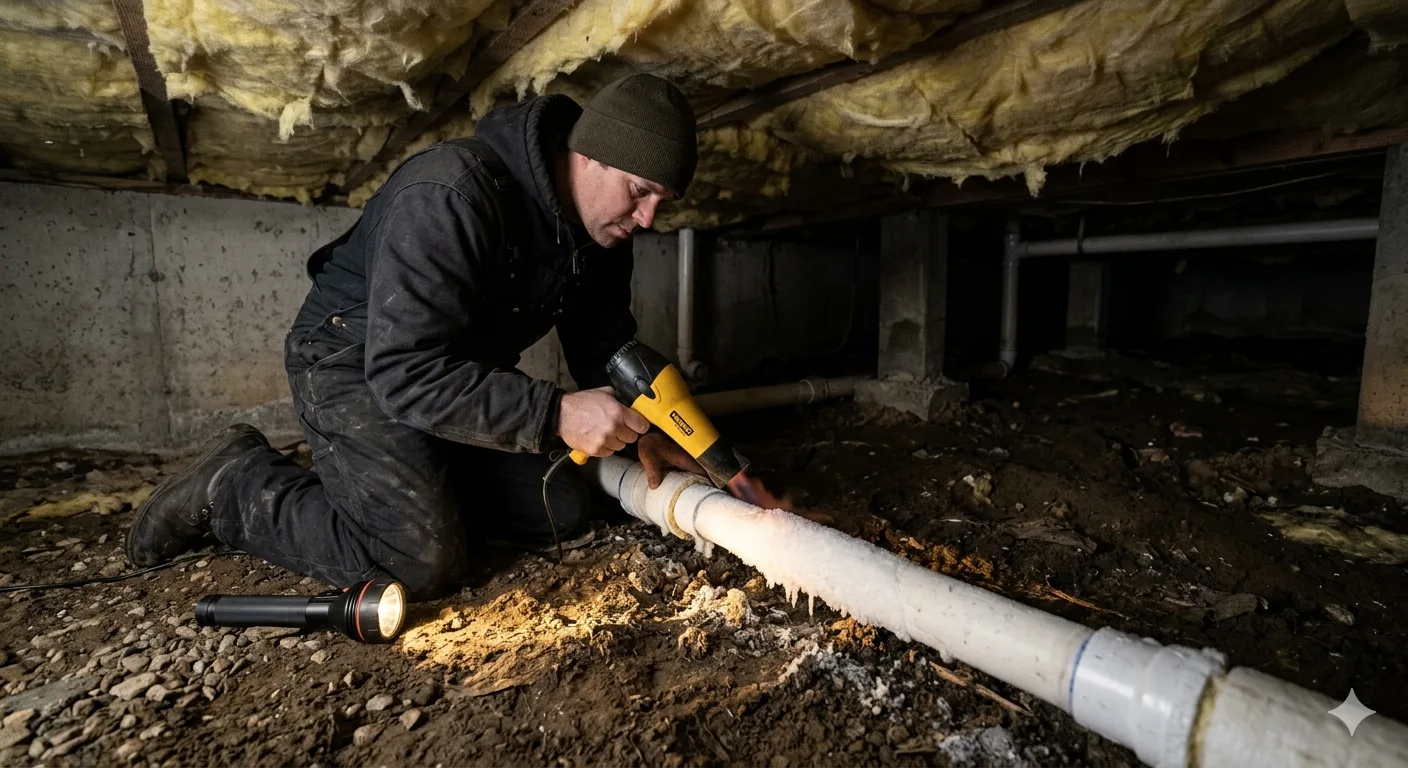
The most likely frozen pipe locations are exterior walls, crawl spaces, unheated basements, garage areas and pipes near windows or insulation gaps. Feel along the pipe until you find a section that is unusually cold, has visible frost or feels rigid. The frozen section is almost always the coldest, most exposed part of the run.
Before applying any heat, open the tap that the frozen pipe supplies. As the ice melts, water needs somewhere to go. An open tap also tells you when the thaw is working. The EPA notes that water expands approximately 9% when it freezes, which is what creates the internal pressure that bursts pipes. Allowing the melted water to move freely through the open tap reduces pressure during thawing.
5 Proven Methods for How to Unfreeze Pipes
Method 1: Hair dryer.
Set the dryer to medium heat and hold it six to eight inches from the pipe, moving back and forth along the frozen section. Work from the tap end toward the frozen middle so melted water can escape as you thaw. Never hold the dryer close enough to generate visible steam, as rapid temperature change can crack copper or split a weakened joint.
Method 2: Electric heating tape or cable.
Thermostat-controlled heating tape designed for pipe thawing is the safest electrical method for how to unfreeze pipes, particularly for pipes in difficult-to-reach areas. Wrap the tape along the pipe following the manufacturer’s direction, plug it in and allow the controlled heat to thaw the section gradually. The PHCC recommends thermostat-controlled heating tape over other electrical heating methods because it prevents overheating the pipe, which can damage solvent-welded PVC joints and cause steam build-up in sealed sections.
Method 3: Hot towels.
Soak towels in hot water and wrap them around the frozen section. The heat transfers gradually and safely. Replace them as they cool. This is slower than a hair dryer but useful when electricity isn’t accessible or when working near water makes an electrical device inadvisable.
Method 4: Heat lamp or infrared space heater.
Directing a heat lamp toward the frozen section from a safe distance warms the surrounding air and the pipe together. This works well in a crawl space or basement where you can position and monitor the heater. Keep it at least two feet from the pipe and any combustible materials. Never leave it unattended.
Method 5: Increase the ambient temperature.
If the frozen pipe is in an interior space that has dropped below freezing due to a heating failure or an unheated area, increasing the temperature in that space resolves the problem without direct pipe contact. Open cabinet doors under sinks on exterior walls to allow warm household air to reach the pipes behind them. Set portable heaters in crawl spaces or basements. The CDC notes that pipes in unheated interior spaces are among the most common freeze locations in US homes during winter cold snaps.
How to Unfreeze Pipes: What You Must Never Do
Open flames are the most dangerous mistake. A propane torch causes water inside to flash to steam, building explosive pressure within seconds, and can ignite insulation or framing behind walls. It has no place in any pipe thawing attempt.
Boiling water poured directly onto a frozen pipe creates the same rapid temperature problem. PVC, CPVC and older copper pipes can crack under sudden thermal shock. Use warm water in a towel, not boiling water poured directly onto the surface.
How to Unfreeze Pipes: When to Stop and Call a Plumber
Stop and call a licensed plumber if you hear cracking or popping from the pipe while applying heat. If water flows from a point other than the open tap, the pipe has burst. If the pipe is inside a wall or ceiling where heat cannot be safely applied, professional equipment is needed. If the frozen section is on your main supply line and multiple areas are affected, this is beyond DIY territory.
A burst pipe causes $5,000 to $15,000 or more in water damage. A licensed plumber called before the burst costs far less.
Frequently Asked Questions About How to Unfreeze Pipes
How long does it take to unfreeze a pipe?
With a hair dryer or heating tape, a frozen section typically thaws in 30 to 90 minutes depending on pipe diameter, how long it has been frozen and the ambient temperature. Pipes that have been frozen for many hours take longer to thaw than those frozen overnight in a brief cold snap.
Can frozen pipes thaw on their own?
Sometimes. If the outdoor temperature rises above freezing and the pipe is in a minimally exposed location, it may thaw without intervention. However, waiting on a frozen pipe to self-thaw is a gamble because a burst can happen at any point in the thawing process as internal pressure shifts. Active thawing with controlled heat is always safer than waiting.
How do I prevent pipes from freezing again?
Insulate exposed pipes in crawl spaces, exterior walls and garages with foam pipe insulation. Let cold water trickle from taps on exterior walls during extreme cold. Keep cabinet doors under sinks open during very cold nights to allow warm air to reach the pipes behind them. A licensed plumber can identify your home’s most vulnerable pipe locations and recommend targeted insulation.
Will home insurance cover a burst pipe from freezing?
Most standard homeowner policies cover sudden and accidental water damage from a burst frozen pipe. They typically require that the home was adequately heated at the time. If you left for a holiday and shut off the heat entirely, coverage may be denied. Document the temperatures and conditions at the time of the freeze and call your insurer immediately after the plumber has addressed the burst.
How Do You Find a Trusted Local Plumber for Frozen Pipe Help?
Knowing how to unfreeze pipes safely gets you through most frozen pipe events. When the situation goes beyond what a hair dryer can handle, or when a pipe has already burst, a licensed plumber is the fastest and most reliable path to a dry home.
Visit PlumberLocator.us to find a licensed local plumber in your area who can thaw, repair or replace frozen pipes. For more practical guidance on protecting your home’s plumbing through winter, browse our plumbing tips section.