Your drain was snaked six months ago. Now it's slow again. You book another snake job, it clears for a few weeks, and then you're back to square one. That cycle isn't bad luck. It's a sign that snaking was never the right tool for your problem. Hydrojet drain cleaning works differently. It doesn't punch a hole through a clog and move on. It scours the entire interior wall of the pipe clean, which is why problems that keep coming back after snaking often disappear entirely after a single hydrojet service.
Quick Answer: Hydrojet drain cleaning uses water pressure between 1,500 and 4,000 PSI to blast grease, scale, tree roots and debris from drain and sewer lines. Unlike mechanical snaking, which creates a channel through a blockage, hydrojetting clears the full circumference of the pipe. A licensed plumber performs a camera inspection first to confirm the pipe can handle the pressure, then clears it completely in a single visit.
Why Snaking Only Solves Half the Problem
A drain snake is a metal cable with a cutting head. It drills through the softest part of a blockage and restores flow. What it doesn't do is clean the pipe walls on either side of where it passed. Grease coats the interior of kitchen drain lines in layers, and a snake slices through the middle of that buildup without touching the walls. The remaining coating traps food particles, narrows the line further and creates the same blockage again within weeks.
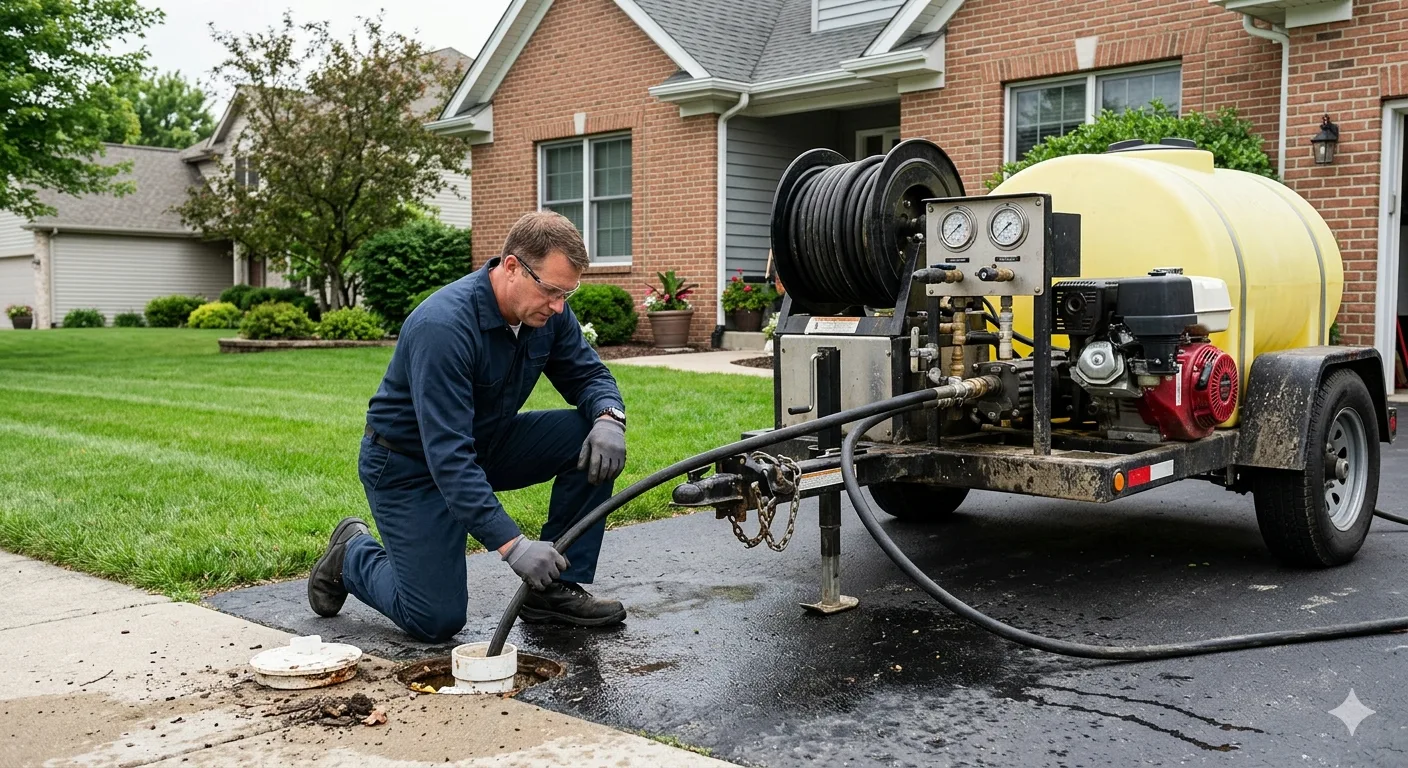
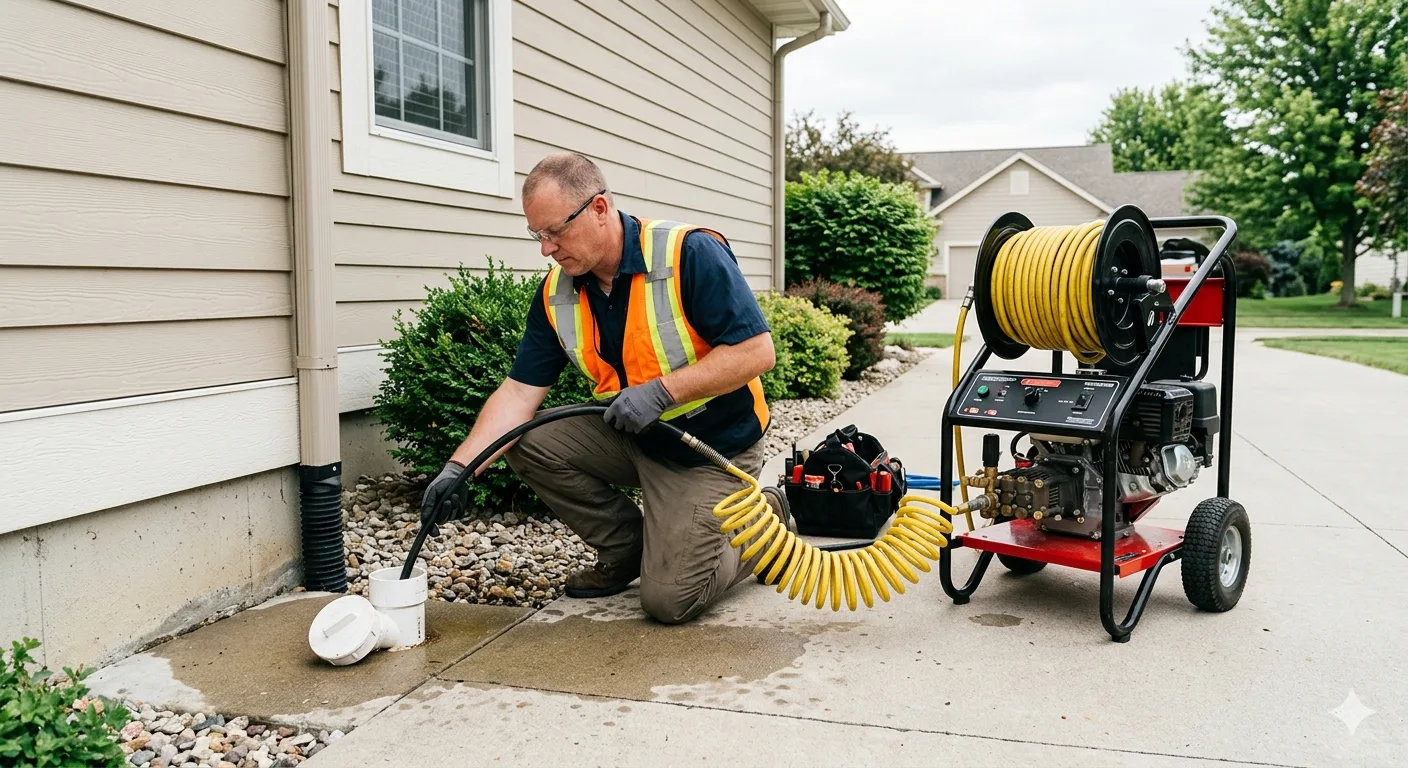
Hydrojet drain cleaning works from a completely different principle. A high-pressure nozzle is fed into the line and spins as it moves, directing jets of water at the pipe wall in every direction simultaneously. It strips grease, dissolves mineral scale, breaks apart tree root intrusions and flushes all of it downstream and out of the system. When it's done, the pipe is as close to its original internal diameter as it can be without replacement.
6 Critical Signs You Need Hydrojet Drain Cleaning
The same drain keeps blocking every few months.
A drain that clears and re-blocks on a short cycle has buildup on the pipe walls that snaking is not removing. Each time the snake clears it, the residual coating catches debris again faster than before. Hydrojet drain cleaning breaks that cycle by removing the coating itself, not just the accumulation sitting in the middle of it.
Multiple drains in the home are running slowly at the same time.
A single slow drain usually points to a localised clog. When two or more fixtures drain slowly together, the problem is in the main line that serves all of them. Main sewer lines accumulate grease, root intrusions and scale over years of use. The PHCC recommends hydrojetting for main line cleaning because mechanical snaking cannot clear the full diameter of a 4-inch sewer lateral effectively.
There is a persistent sewage smell with no visible backup.
A foul smell that lingers without an obvious source often means organic buildup has accumulated on pipe walls deep in the drain system. That material ferments and off-gasses into the home. A snake may not even reach it depending on the line configuration, and chemical drain cleaners don't penetrate thick grease deposits. Hydrojet drain cleaning reaches and removes that material at its source.
Your home is over 20 years old and the lines have never been serviced.
Pipes that have never been cleaned carry years of accumulated grease, scale and debris. Cast iron lines common in homes built before the 1980s develop internal corrosion scale that progressively narrows the pipe bore. A camera inspection combined with hydrojet drain cleaning gives you a clear picture of the line's condition and restores capacity that has been gradually lost over decades.
Tree roots are entering the line.
Roots find drain lines through hairline cracks at pipe joints and grow toward the moisture and nutrients inside. A snake cuts through root masses but leaves the root fragments behind, and root regrowth follows quickly. Hydrojetting at 3,000 to 4,000 PSI tears roots from the pipe wall and flushes the debris clear. The EPA identifies tree root intrusion as one of the primary causes of residential sewer line failure in established neighbourhoods.
You are preparing to reline or sell the property.
Before a pipe relining, the line must be completely clean or the liner won't adhere correctly to the host pipe. Before listing a property, a clean sewer line and camera inspection report gives buyers confidence and removes a common negotiating point. Hydrojet drain cleaning is the standard preparation step in both cases.
What Hydrojet Drain Cleaning Actually Involves
A licensed plumber doesn't simply connect a hose and turn on the pressure. The process starts with a camera inspection to identify the blockage type, its location and the pipe's condition. Hydrojetting at full pressure inside a cracked or compromised pipe can cause a collapse. The CDC flags sewage exposure from damaged drain lines as a direct health risk, which is why the inspection step is not optional.
Once the pipe is confirmed safe, the plumber selects the nozzle and pressure for the pipe material and blockage type. PVC, cast iron and clay tile all have different tolerances. The nozzle moves through the line methodically, cleaning as it goes, and a follow-up camera pass confirms the result. Most jobs are completed in one to two hours.
Frequently Asked Questions About Hydrojet Drain Cleaning
How much does hydrojet drain cleaning cost?
Most residential hydrojet drain cleaning jobs run between $300 and $600 depending on line length, blockage severity and access. Main sewer line jetting typically falls toward the higher end. That compares to $100 to $250 for a standard snake job that may need repeating several times before the underlying problem is addressed.
Is hydrojetting safe for older pipes?
It depends on the pipe's condition, which is exactly why a camera inspection comes first. Pipes in good structural condition handle hydrojetting without issue. Pipes with cracks, corrosion or offset joints may need repair or relining before high-pressure cleaning is appropriate. A licensed plumber assesses this before any pressure is applied.
How often should hydrojet drain cleaning be done?
For most households, once every two to three years is sufficient for main line maintenance. Homes with large trees close to the sewer lateral, heavy cooking output or older clay tile pipes benefit from annual service. A plumber can advise based on what the camera inspection shows.
Can hydrojetting damage pipes?
Not when performed correctly on pipes in reasonable condition. The risk comes from applying high pressure to already-compromised pipes, which is why the camera inspection step exists. A licensed plumber won't proceed with hydrojetting if the inspection reveals structural issues that need addressing first.
Find a Trusted Local Plumber for Hydrojet Drain Cleaning Today
If your drains keep coming back after snaking, you're not dealing with bad luck. You're dealing with a buildup problem that snaking was never designed to solve. One hydrojet drain cleaning service from a licensed plumber can clear what years of snaking and chemical treatments couldn't.
Visit PlumberLocator.us to find a licensed local plumber in your area who offers hydrojet drain cleaning services. For more practical guidance on keeping your plumbing in good shape, browse our plumbing tips section.