When a water heater fails, you're making a major purchase under pressure. The instant water heater vs tank debate involves two fundamentally different technologies, two different upfront costs and two different long-term calculations. Neither is universally better. Each is the right choice for a specific type of home and household.
Quick Answer: An instant water heater, also called a tankless or on-demand heater, heats water only when a tap is opened, eliminating standby heat loss. A tank heater stores 40 to 80 gallons of pre-heated water ready at all times. Tankless units cost more upfront, last longer and use less energy but require adequate gas line capacity or electrical service to operate. Tank units cost less to install but have shorter lifespans and continuous energy use. A licensed plumber can assess your home's infrastructure and help you choose correctly.
The Core Difference Between Instant and Tank Water Heaters
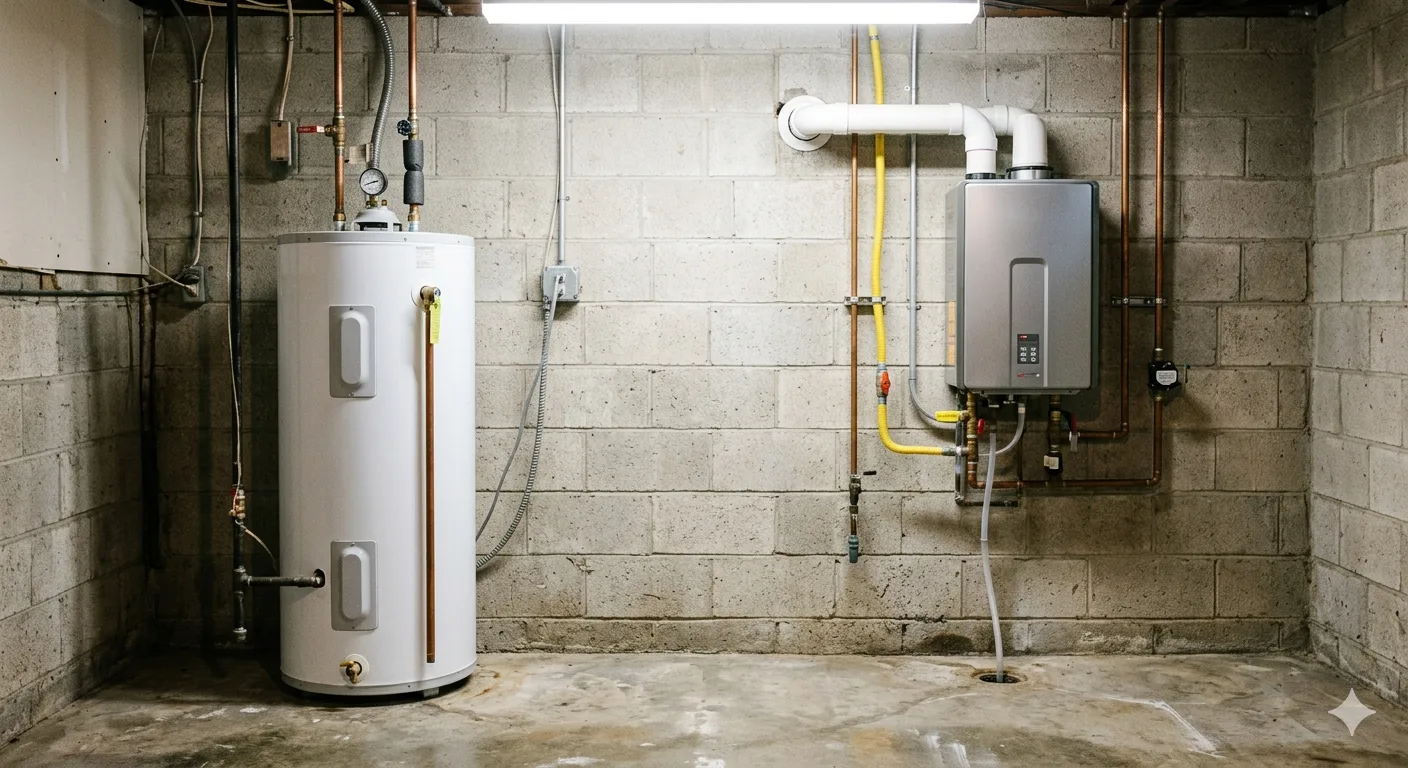
A tank heater keeps 40 to 80 gallons heated around the clock. The EPA WaterSense programme estimates standby heat loss accounts for 10 to 20% of a home's annual water heating energy cost.
An instant water heater eliminates standby loss by heating water only when a tap calls for it. The tradeoff is that the unit must produce hot water fast enough to meet simultaneous demand from all fixtures being used at once, which depends on its flow rate rating.
Instant Water Heater vs Tank: 6 Trusted Facts to Know
The upfront cost difference is substantial.
A 50-gallon gas tank heater with installation runs $900 to $1,500. A whole-home gas tankless unit runs $1,500 to $3,500, potentially more if the gas line needs upgrading. Electric tankless units often require a dedicated 200-amp circuit and sometimes an electrical panel upgrade. The higher upfront cost is why many homeowners stick with tank units, particularly when replacing a failed unit under pressure.
The long-term energy savings are real but take years to materialise.
A gas tankless unit uses 24 to 34% less energy than a comparable tank heater for households using 41 gallons or less daily. Annual energy savings from switching run $70 to $150 per year at typical US gas rates. At a cost premium of $1,000 to $2,000, the payback period is 7 to 15 years. For a homeowner staying long-term, that math works. For someone selling in 5 years, it often doesn't.
Tankless units require adequate gas supply capacity.
A high-efficiency gas tankless water heater typically requires a gas supply line capable of delivering 150,000 to 199,000 BTU per hour. Many older homes have a main gas line and metre sized for a tank water heater drawing 36,000 to 50,000 BTU per hour. Upgrading to tankless may require a larger gas supply line, a higher-capacity metre or both. The PHCC notes that gas infrastructure upgrades are one of the most frequently underestimated costs in tankless water heater installations. A licensed plumber assesses the existing gas supply before quoting a tankless installation.
Tank water heaters are simpler to install and service.
A tank replacement takes most licensed plumbers two to three hours. A tankless installation involves mounting the unit, connecting gas or electrical supply, installing the venting system and configuring sensors. The complexity is higher, service calls take longer and specialised components cost more. For homeowners who value simplicity and lower service costs, tank units have a clear advantage.
Hard water affects both types differently.
In the instant water heater vs tank debate, hard water is often overlooked. Hard water above 180 mg/L deposits scale inside a tank heater's lower section and on the electric heating element, reducing efficiency and shortening service life. In a tankless unit, scale accumulates on the heat exchanger and can cause significant damage if not addressed with annual descaling. The CDC notes that hard water affects the majority of US households and accelerates wear on water heating components regardless of type. In hard water areas, a water softener or descaling filter is worth including in any water heater installation quote.
A tankless unit cannot be undersized for the household.
The most common mistake in the instant water heater vs tank switch is selecting a tankless unit based on price rather than flow rate capacity. A tankless unit rated at 6 gallons per minute cannot simultaneously supply a shower running at 2 GPM, a dishwasher at 1.5 GPM and a washing machine at 2 GPM. The result is a temperature drop whenever demand exceeds capacity. Correctly sizing a tankless unit requires calculating peak simultaneous hot water demand across all fixtures, which varies by household size, climate zone and fixture types. A licensed plumber performs this calculation rather than guessing at a size.
Instant Water Heater vs Tank: Which Is Right for Your Home
The instant water heater vs tank decision comes down to four questions: How long will you stay in the home? Does existing infrastructure support tankless without major upgrades? Do multiple fixtures run simultaneously during peak hours? And does your water quality need additional treatment?
A two-person household with a high-capacity gas line planning to stay long-term is an excellent tankless candidate. A five-person household in an older home with a small gas metre may be better served by a high-efficiency tank that won't struggle during peak demand.
Frequently Asked Questions About Instant Water Heater vs Tank
Does a tankless water heater provide truly unlimited hot water?
Yes, in theory. As long as the unit is sized correctly for the demand being placed on it, hot water continues without running out. The limitation is flow rate capacity. An undersized unit doesn't run out of hot water in the tank sense, but it does drop temperature when demand exceeds what the burner can heat in real time.
Can I replace a tank unit with a tankless unit in the same location?
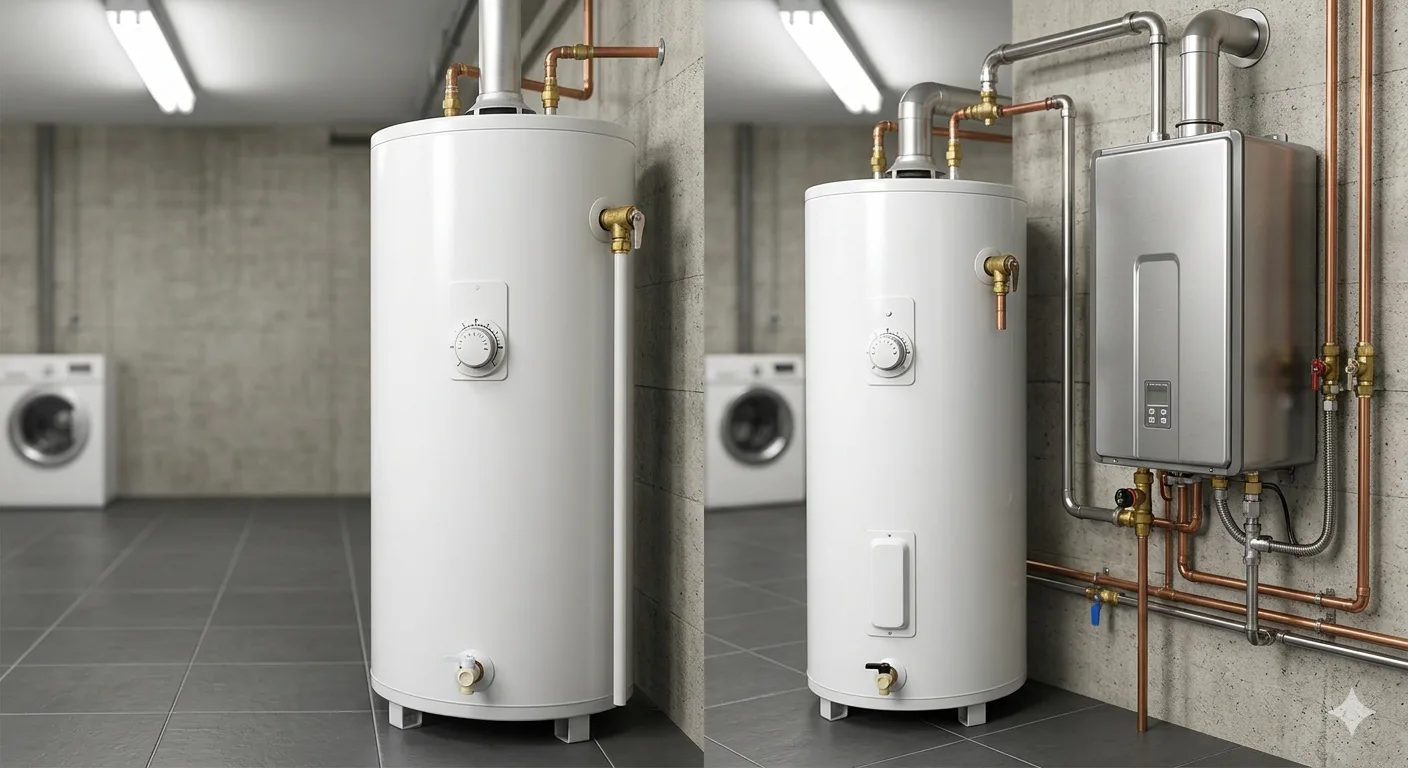
Often yes, but not always. Tankless units require different venting configurations, may need a larger gas line and often need a condensate drain if they are high-efficiency condensing models. The existing location may need modification. A licensed plumber inspects the installation site and identifies any infrastructure changes required before work begins.
How long does a tankless water heater last compared to a tank?
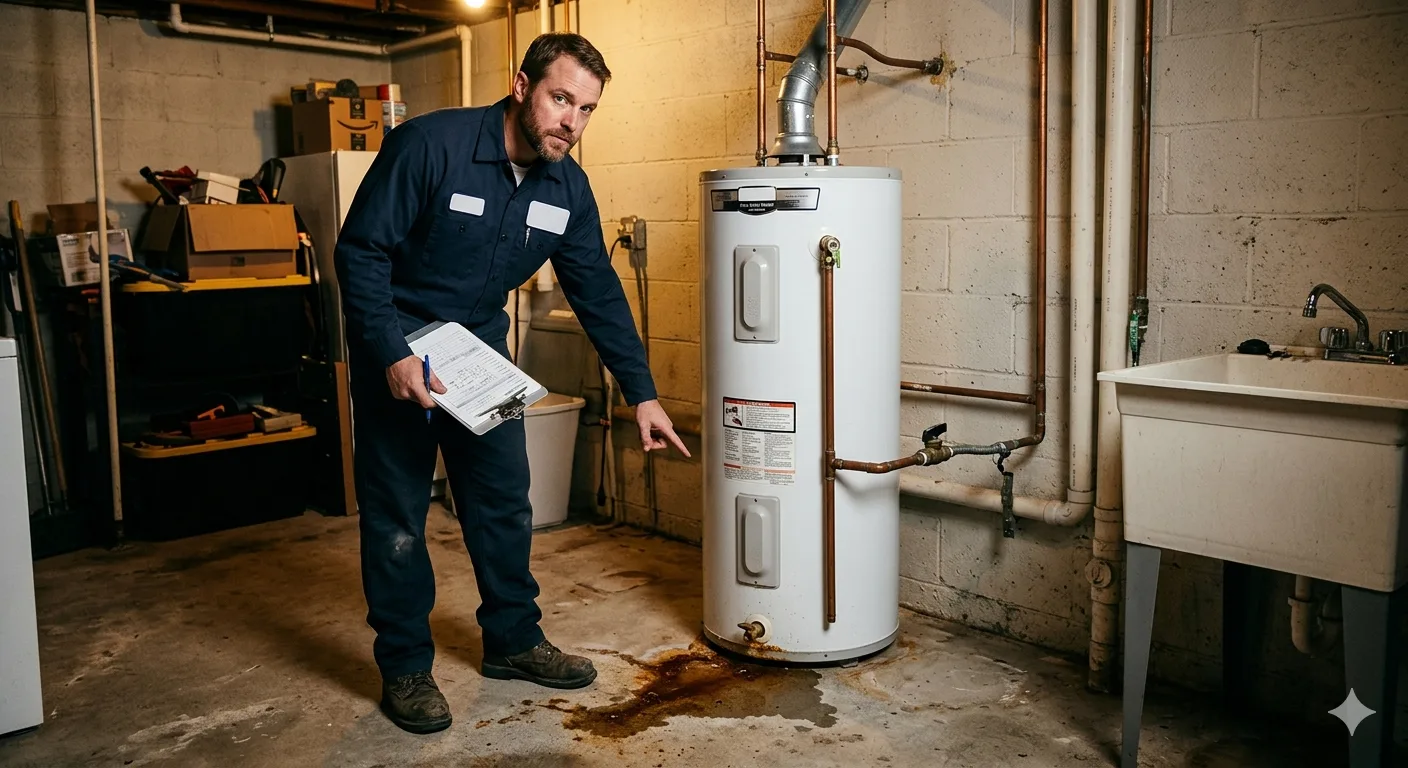
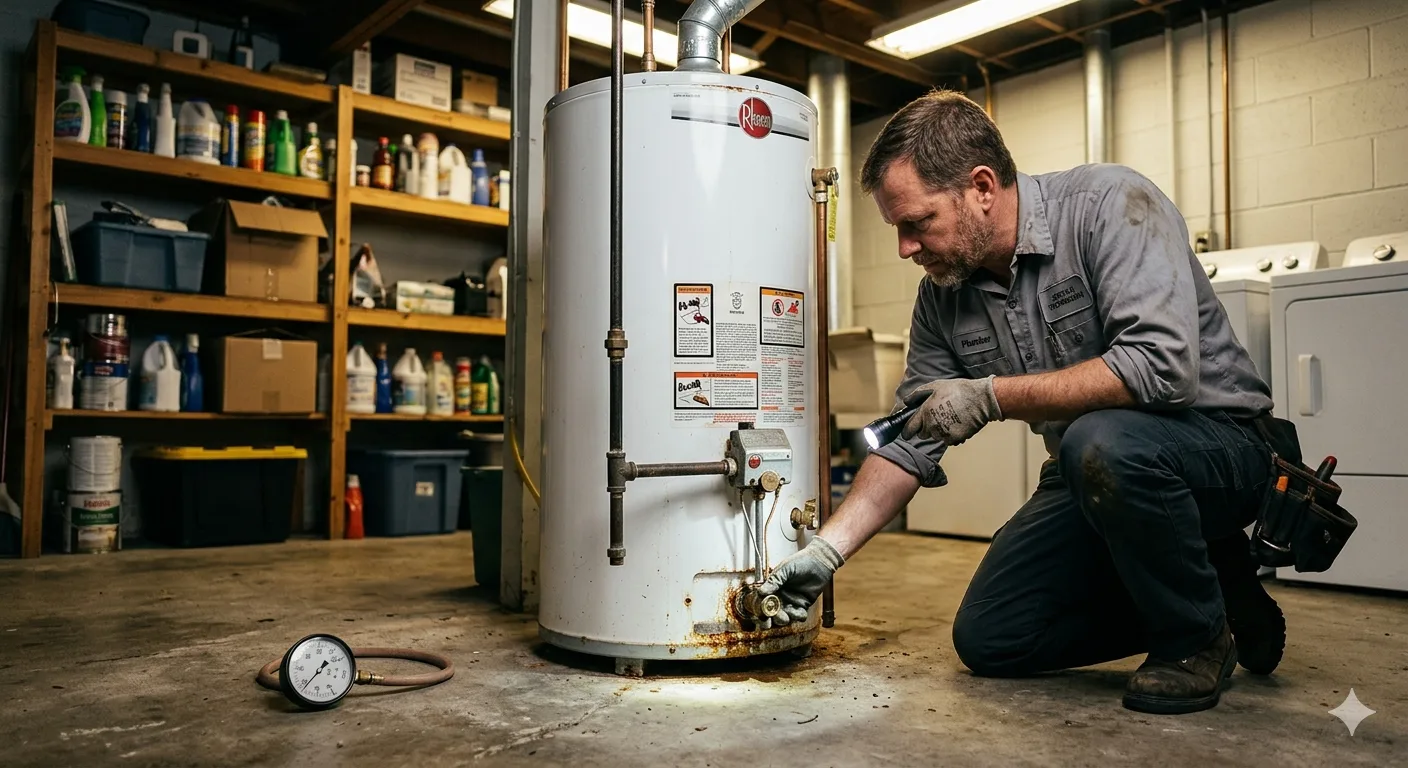
A well-maintained gas tankless unit lasts 15 to 20 years. A tank lasts 8 to 12 years. The longer lifespan means one tankless unit replaces approximately two tank units over the same period.
Is a tankless water heater worth it if I'm on a budget?
For the instant water heater vs tank question on a tight budget, the honest answer is often no if significant gas or electrical upgrades are needed. The break-even period extends significantly when upgrade costs are factored in. A high-efficiency tank unit is a better financial choice for budget-constrained homeowners who need a reliable water heater now.
Find a Trusted Local Plumber for Water Heater Advice Today
The instant water heater vs tank decision is worth getting right the first time. A licensed plumber can assess your gas supply, household demand and infrastructure before recommending which option makes sense for your home.
Visit PlumberLocator.us to find a licensed local plumber who can help you choose and install the right water heater. For more guidance, browse our plumbing tips section.