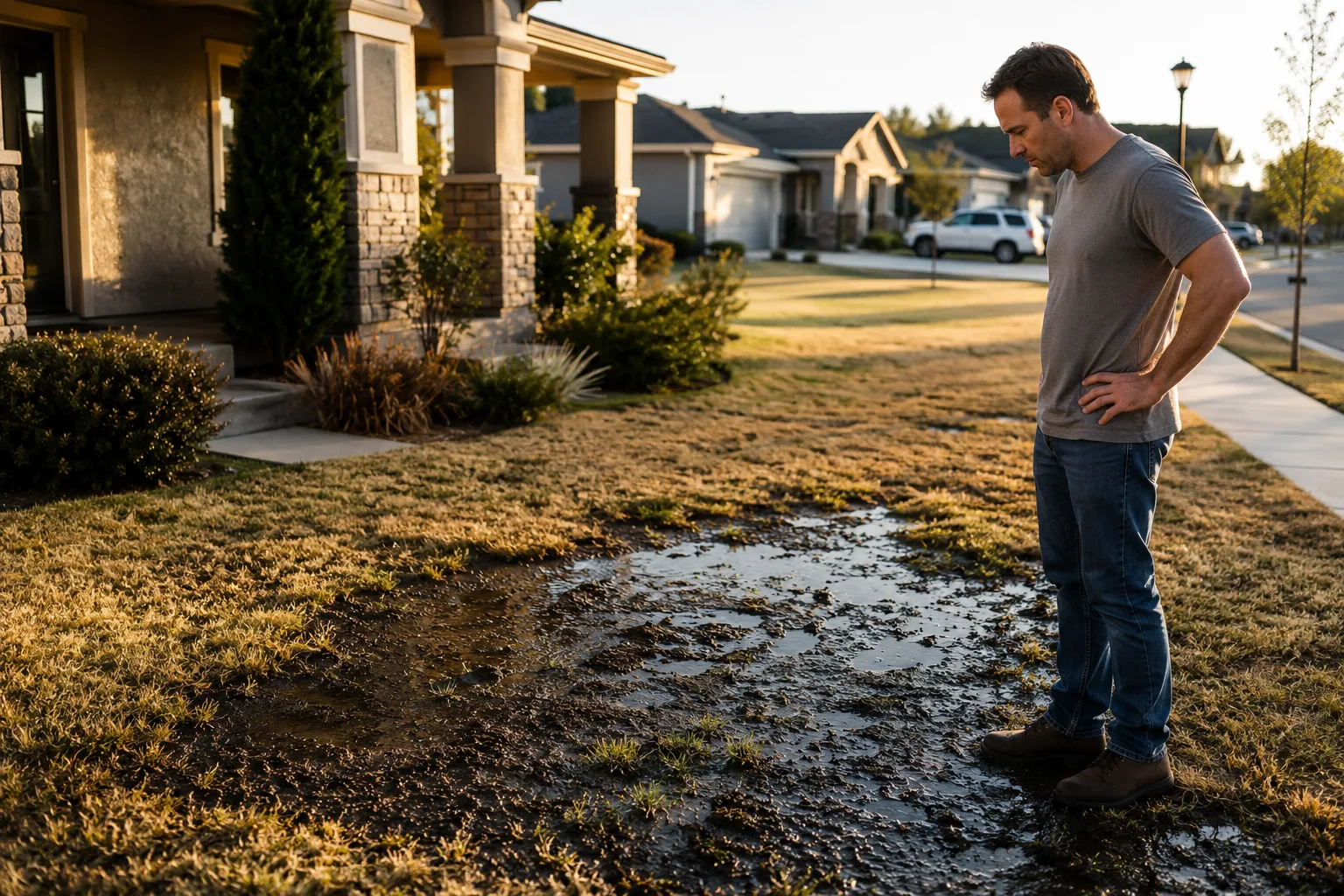
It starts as a drip you notice once, ignore for a month, then forget entirely until spring when the spigot is spraying sideways. What looks like a simple outdoor problem is almost never just outside. The pipe that feeds it runs through your exterior wall, and anything left unrepaired finds its way inside. Outdoor water spigot repair gets cheaper the sooner you deal with it.
Quick Answer: Outdoor water spigot repair involves fixing or replacing a hose bib that is dripping, leaking at the base, or failing to shut off. Most repairs address a worn packing washer, damaged stem, or corroded valve seat. A licensed plumber completes the job in one to two hours for $100 to $300, depending on access and damage.
Why Outdoor Water Spigot Repair Should Never Wait Until Spring
Outdoor water spigot repair becomes urgent the moment you notice a drip, not the following season. A leaking hose bib wastes an average of 3,000 gallons per year, according to the EPA's WaterSense program, but the water bill isn't the real problem. Most outdoor spigots penetrate the exterior wall and connect to a supply line inside. A drip from the spout means the seal is failing. A leak at the base means water is already entering your wall structure.
Wood rot and mold follow standing moisture in a wall cavity within weeks. By the time you see staining on the siding, the damage inside is months old. A plumber who catches it early saves you a drywall repair on top of the spigot fix.
The Outdoor Water Spigot Repair Mistake That Causes More Damage Immediately
The most common error is failing to fully depressurize the line before disassembly. Most homeowners shut the main supply and start working, then discover fittings still weep because residual pressure remains. The correct sequence is to shut the dedicated spigot supply valve if one exists, open the spigot fully to release pressure, then drain the line before touching any fittings.
On frost-free sillcocks with stems 8 to 12 inches long, this matters more. If the pipe between the interior shutoff and the spigot body isn't drained before disassembly, water spills into the wall cavity. The Plumbing-Heating-Cooling Contractors Association notes improper disassembly of frost-free sillcocks is among the most frequent causes of wall moisture damage on outdoor water spigot repair calls.
How to Tell Whether Outdoor Water Spigot Repair or Full Replacement Is Needed
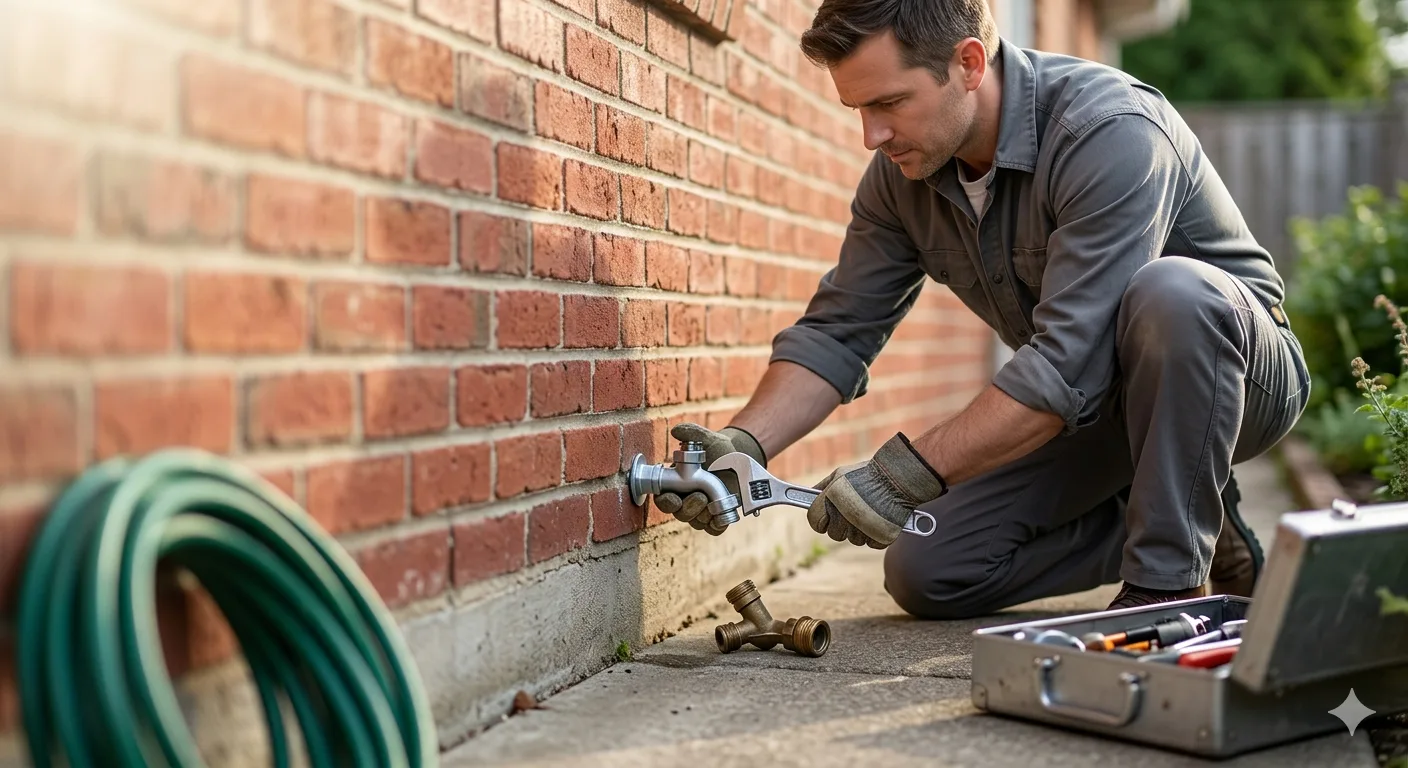
Not every dripping spigot is a candidate for a simple washer swap. A spigot dripping from the spout when fully closed usually needs a new seat washer, a $2 part that takes twenty minutes. One leaking around the handle needs new packing material or a stem replacement. These are standard repairs that restore full function.
Full replacement is right when the spigot body is cracked, corrosion has destroyed the valve seat, or the fixture is a standard sillcock that should be upgraded to a frost-free model. If your home's spigots predate 1990, a frost-free upgrade during this outdoor water spigot repair is worth doing at the same time. It prevents the freeze damage that sends repair costs much higher.
What Outdoor Water Spigot Repair Uncovers Inside the Wall
A spigot leaking at its base for months is rarely a standalone problem. The stub-out pipe passes through a hole in the exterior wall sheathing. A failing base seal lets water track down the outside of the pipe and into that wall penetration, onto the structural sill plate. On a wood-framed wall, that moisture sits against lumber that can't dry out because it's sandwiched between sheathing and drywall.
The American Society of Plumbing Engineers recommends that any repair include an inspection of the wall penetration for water intrusion, caulk failure, and proper pipe slope. The spigot should pitch slightly downward toward the outside so residual water drains out rather than back into the wall. A plumber checks this angle and corrects it if the original installation was level or pitched inward.
The Outdoor Water Spigot Repair Problem That Actually Starts Inside Your House
Not every outdoor water spigot repair originates at the fixture. Sometimes the failure is at a fitting, shutoff valve, or supply connection inside the wall. You might notice reduced pressure at the spigot, a wet spot on the interior wall nearby, or a shutoff valve that no longer turns fully. Any of these signals a repair that must happen inside before the outdoor fix makes sense.
The CDC's guidance on residential mold prevention notes that mold establishes in damp wall cavities in as little as 24 to 48 hours without visible signs. A plumber should always inspect the interior pipe run, especially if the spigot has been leaking for an unknown period. Use our plumber directory to find a licensed plumber who treats the full pipe run, not just the visible fixture.
Why Outdoor Water Spigot Repair Before Winter Protects the Whole Line
A dripping spigot heading into a freeze may split the pipe behind it. Even frost-free sillcocks rely on being fully closed so water drains back past the interior shutoff. A worn washer that prevents full closure leaves water in the exposed pipe section during a freeze. Water expands roughly 9 percent when it freezes, cracking copper, splitting PVC, and blowing solder joints.
Burst pipe repairs cost $200 to $1,500 depending on location and access. This outdoor water spigot repair before the first hard freeze costs a fraction of that. Late summer or early fall is the right time to schedule it, before temperatures drop and before the spigot sees its last heavy use. Visit plumbing tips for a full pre-winter checklist covering every outdoor fixture on your property.
Frequently Asked Questions About Outdoor Water Spigot Repair
How do I know if my outdoor spigot needs repair or replacement?
A spigot dripping from the spout or leaking around the handle usually needs a washer or packing repair. One that is cracked, heavily corroded, or is a non-frost-free model in a cold climate is better replaced. A plumber can assess this in minutes on-site.
Can I do outdoor water spigot repair myself?
Basic washer and packing replacements are manageable with the right tools and a proper shutoff. Repairs involving pipe inside the wall or frost-free sillcock replacement are better left to a licensed plumber to avoid wall damage or fitting failures under pressure.
How much does outdoor water spigot repair typically cost?
A standard washer or packing repair runs $75 to $150, including labor. Full sillcock replacement costs $150 to $350, depending on access and pipe condition. Repairs requiring interior wall access cost more.
How often should outdoor spigots be inspected?
Check every outdoor spigot at the start of spring and before winterizing in fall. Look for drips at the spout, moisture at the base, and full shutoff operation. Early detection keeps a minor repair from turning into a wall repair.
Find a Trusted Local Plumber for Outdoor Water Spigot Repair Today
A dripping spigot is a small problem with a short window before it becomes a structural one. The repair itself is straightforward. Finding a plumber who looks at the full pipe run inside the wall is what separates a lasting fix from a callback. Use our plumber directory to connect with a licensed local plumber in your area who handles outdoor water spigot repair completely and correctly.
Before you call, our plumbing tips page covers what to check and what to tell the plumber before the job starts.