Septic Tank Installation: A Complete Guide for Homeowners
If your home is not connected to a municipal sewer system, septic tank installation is one of the most important investments you will ever make as a homeowner. A properly designed and installed septic system protects your family’s health, keeps your property compliant with local regulations, and preserves the surrounding environment for years to come.
This complete guide walks you through every stage of the septic tank installation process, from the initial site evaluation all the way through long term maintenance. Whether you are building a new home, replacing a failing system, or simply trying to understand how everything works beneath your yard, this guide has you covered.
What Is a Septic Tank and How Does It Work?
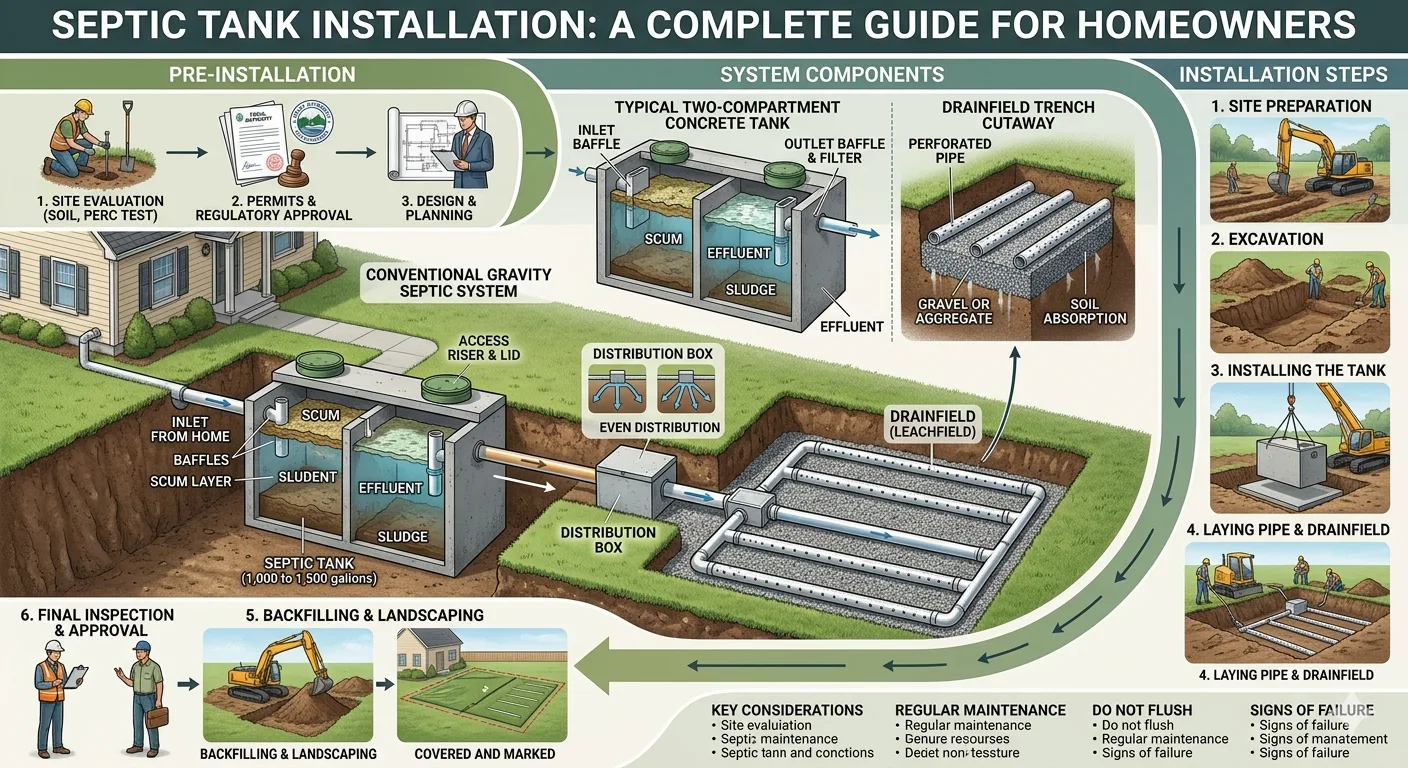
A septic tank is an underground chamber made of concrete, fiberglass, or polyethylene that collects and partially treats wastewater from your home on site. When sewage leaves your home through toilets, sinks, and drains, it flows into the tank where a natural separation process begins.
Solid waste sinks to the bottom of the tank and forms a layer called sludge. Grease and oils rise to the top and form a layer called scum. The clarified liquid in the middle, known as effluent, exits through an outlet pipe and travels into the drain field, also called a leach field.
The drain field is made up of perforated pipes buried in gravel filled trenches beneath your yard. The effluent slowly seeps through the soil, which naturally filters and purifies the water before it rejoins the groundwater supply. A correctly installed septic system is safe, efficient, and environmentally responsible.
Step 1: Get a Professional Site Evaluation
Before any septic tank installation can begin, a licensed engineer or soil scientist must evaluate your property. The most important part of this evaluation is the percolation test, commonly called a perc test. This test measures how quickly water drains through the soil on your lot.
The perc test results determine which type of septic system is suitable for your property, where the system can be installed, and how large the drain field needs to be. Other factors considered during the site evaluation include soil composition, lot size, the slope of the land, and the proximity of your property to water sources such as wells, rivers, and streams.
Sandy or loamy soils drain efficiently and work well with conventional septic systems. Clay heavy soils drain much more slowly and often require a specialized system design to meet health and safety standards.
Step 2: Choose the Right Type of Septic System
There is no single septic system design that works for every property. The right choice depends on your soil evaluation results, local regulations, and the size of your household. The most common system types are explained below.
Conventional Gravity Systems are the standard choice for most homes built on suitable soil. Wastewater flows naturally from the tank to the drain field using gravity alone. These systems are cost effective, reliable, and require minimal maintenance when properly installed.
Pressure Distribution Systems use a pump to distribute effluent evenly across the drain field. This design works well on sloped lots or properties with moderately challenging soil conditions that cannot rely on gravity alone.
Mound Systems are built above the natural ground level and are used when the soil is too shallow, too saturated, or too clay heavy to support an underground drain field. Mound systems cost more than conventional designs but are highly effective in difficult soil conditions.
Aerobic Treatment Units use oxygen injection to speed up the bacterial breakdown of waste inside the tank. These systems are often required in environmentally sensitive areas near lakes, wetlands, or flood zones where stricter treatment standards apply.
A licensed septic contractor in your area can review your site evaluation results and recommend the system that best fits your property and budget.
Step 3: Apply for the Required Permits
Septic tank installation is regulated at the county or municipal level in most parts of the country. Before any digging begins, you are required to obtain a permit from your local health department or environmental agency. The permit application typically includes a site plan, your soil evaluation report, and a system design prepared by a licensed engineer.
Skipping the permit process is never worth the risk. Installing a septic system without proper permits can result in heavy fines, a mandatory removal order, and serious complications if you ever try to sell your property. Always work with a contractor who manages the permitting process as part of the job.
Step 4: Understanding the Installation Process
Once your permits are approved, the actual installation typically takes between one and three days for a standard system. Here is what you can expect during each stage of the process.
Excavation is the first step. Heavy machinery is used to dig the pit for the septic tank and the trenches for the drain field pipes.
Tank Placement comes next. The precast or prefabricated tank is carefully lowered into the excavated pit and leveled to ensure proper drainage.
Pipe Connections are then made. Inlet pipes are connected from your home to the tank, and outlet pipes are run from the tank to the drain field.
Drain Field Construction follows. Perforated pipes are laid inside gravel filled trenches or inside plastic chamber systems designed to distribute effluent across the soil.
Official Inspection is required before the system can be covered. A local building or health inspector verifies that everything meets code requirements.
Backfill and Grading complete the process. The excavated areas are filled in, the surface is graded, and grass or other shallow rooted vegetation is planted over the drain field.
It is important to remember that the drain field area must never be paved over, built on, or driven across. Keep heavy vehicles and deep rooted trees well away from this zone permanently.
How Much Does Septic Tank Installation Cost?
The total cost of septic tank installation depends on the system type, the size of the tank, your soil conditions, local labor rates, and permit fees. Here is a general breakdown of what homeowners can expect to pay.
A conventional gravity system typically costs between $3,000 and $7,000. A pressure distribution system generally runs between $7,000 and $12,000. A mound system can cost anywhere from $10,000 to $20,000 or more depending on the complexity of the build. An aerobic treatment unit usually falls between $10,000 and $15,000.
Tank size is determined by the number of bedrooms in your home. A 1,000 gallon tank is standard for homes with up to three bedrooms. Larger homes typically require a 1,250 to 1,500 gallon tank or larger. Always collect at least three quotes from licensed and insured septic contractors before making a final decision.
Step 5: Maintaining Your Septic System for the Long Term
The most common and costly mistake homeowners make is neglecting their septic system after installation. A well maintained system can last between 25 and 40 years. A neglected system can fail in less than a decade and require a full replacement.
Having your tank pumped every three to five years is the single most important maintenance task. This removes accumulated sludge and scum before they overflow into the drain field and cause a failure. The exact pumping schedule depends on household size and water usage.
Beyond regular pumping, there are several habits that protect your system over the long term. Never flush wipes, feminine hygiene products, medications, paper towels, or cooking grease down your drains. Avoid harsh chemical drain cleaners because they kill the beneficial bacteria that break down waste inside your tank. Do not plant trees or large shrubs near the drain field, as their roots can damage the pipes.
Pay attention to early warning signs of system trouble. Slow drains throughout the house, sewage odors near the yard, wet or soggy patches over the drain field, and gurgling sounds from your pipes are all signs that your system needs immediate professional attention.
What Are the Key Takeaways?
Septic tank installation is a regulated and engineered process that directly affects the health and safety of your household and the surrounding environment. Choosing a licensed contractor, following all permitting requirements, selecting the correct system for your soil type, and committing to routine maintenance are the four fundamentals of a successful installation.
When every step is handled correctly, your septic system will operate quietly and reliably for decades, protecting your home, your family, and your property value every single day.
Ready to move forward? Contact a licensed septic professional in your area today to schedule a site evaluation and receive a personalized system recommendation for your property.