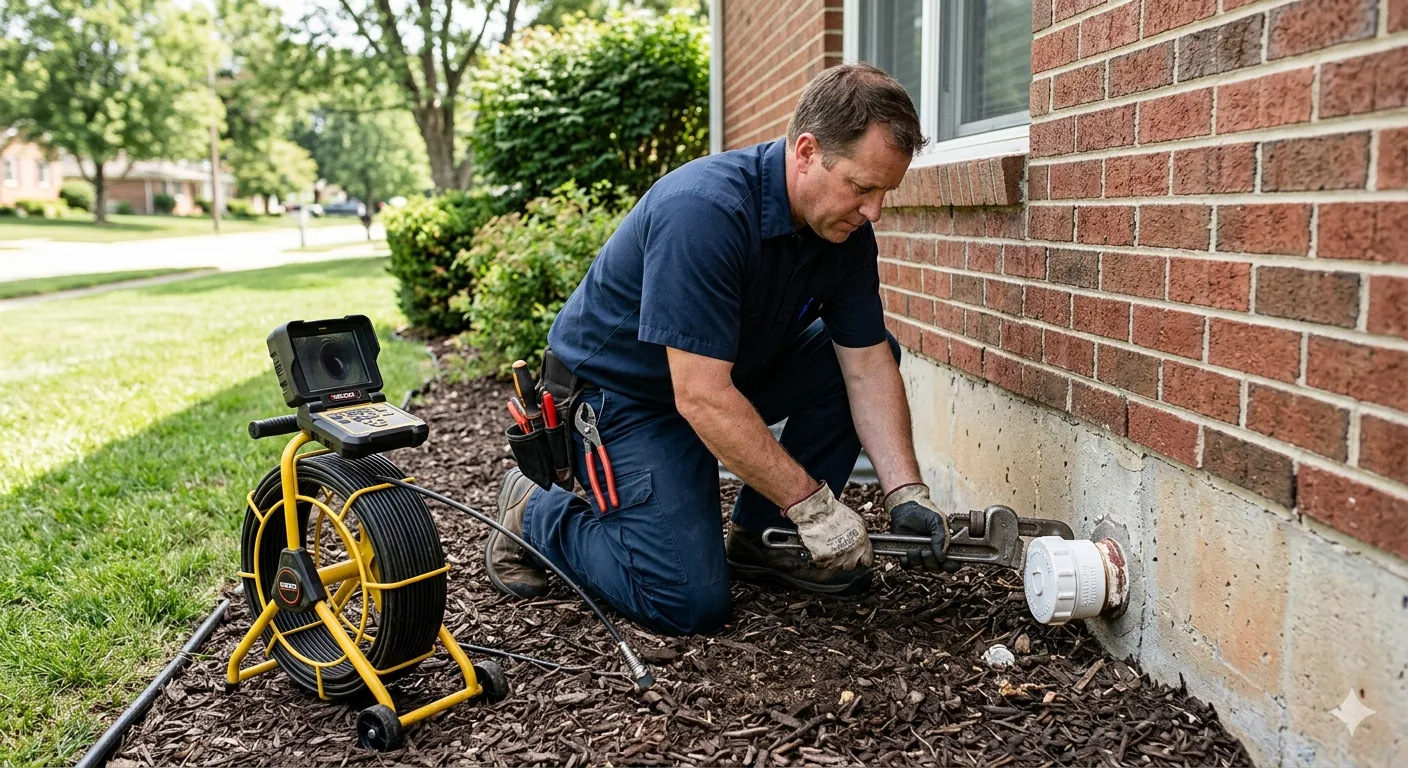
Most homeowners walk past their sewer cleanout every day without knowing it’s there. It looks like a capped pipe stub poking out of the ground near the foundation, or sometimes it’s inside in a utility area. It doesn’t announce itself. But the moment a main sewer line blockage develops, that small fitting becomes the most important piece of plumbing on your property. A plumber with access to it can clear the line in an hour. A plumber without access to it is looking at excavation.
Quick Answer: A sewer cleanout is a capped access point built into the main sewer lateral that runs from your home to the municipal connection. It allows plumbers to insert a snake, hydrojetting hose or camera directly into the sewer line without opening walls or digging up the yard. Most homes have at least one cleanout near the foundation. Missing, buried or damaged cleanouts significantly increase the cost and complexity of any sewer service call.
What a Sewer Cleanout Is and Why It Matters
The sewer lateral carries all wastewater from your home to the city main under the street. It runs 2 to 10 feet below ground depending on your region and connects every toilet, sink and shower. A blockage anywhere in it affects the whole house.
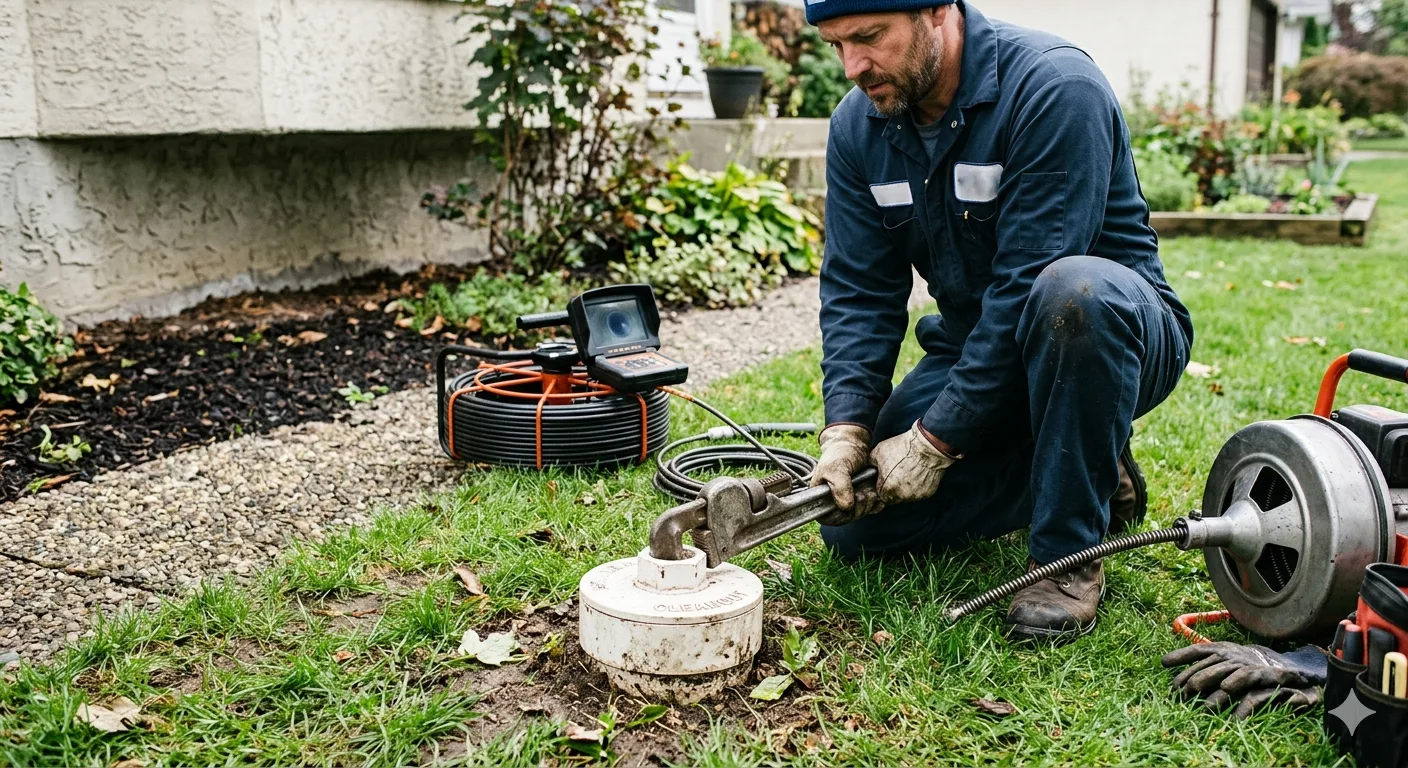
The cleanout is a Y or T-shaped fitting with a threaded cap at grade level. Removing it gives a plumber direct access to the line in both directions. The PHCC notes that accessible sewer cleanouts reduce service call times by over 50% and eliminate excavation in most residential blockage events. That single fitting can mean the difference between a $250 service call and a $2,500 dig.
6 Trusted Signs Your Sewer Cleanout Needs Attention
Multiple fixtures are backing up at the same time.
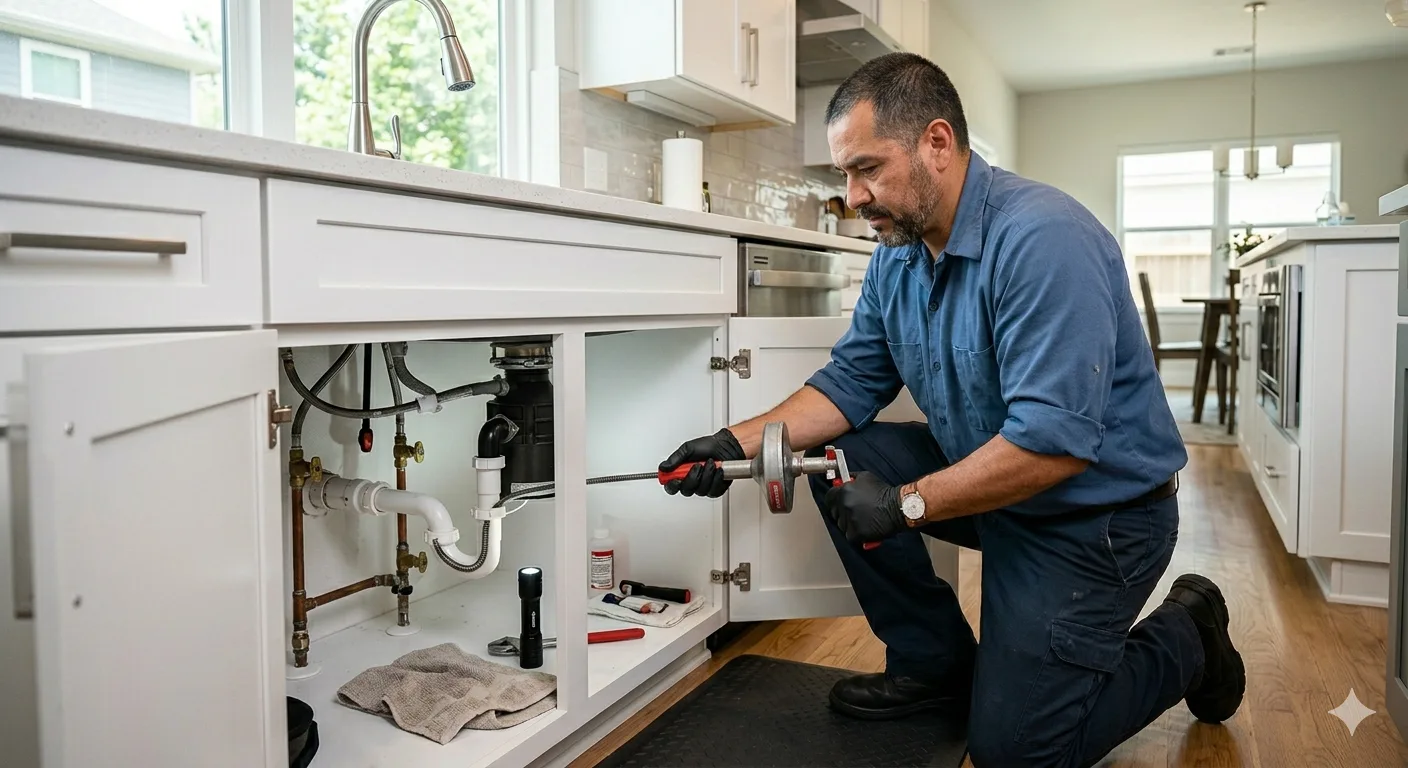
When a single drain runs slowly, the blockage is usually local to that fixture. When two or more fixtures back up simultaneously, especially when flushing a toilet causes water to rise in a nearby tub or shower, the blockage is in the main sewer lateral. This is the primary situation the sewer cleanout exists to address. A plumber can pop the cap, insert a camera to confirm the blockage location and then clear it mechanically, all without touching your floors or yard.
You can see the cap is missing, cracked or buried.
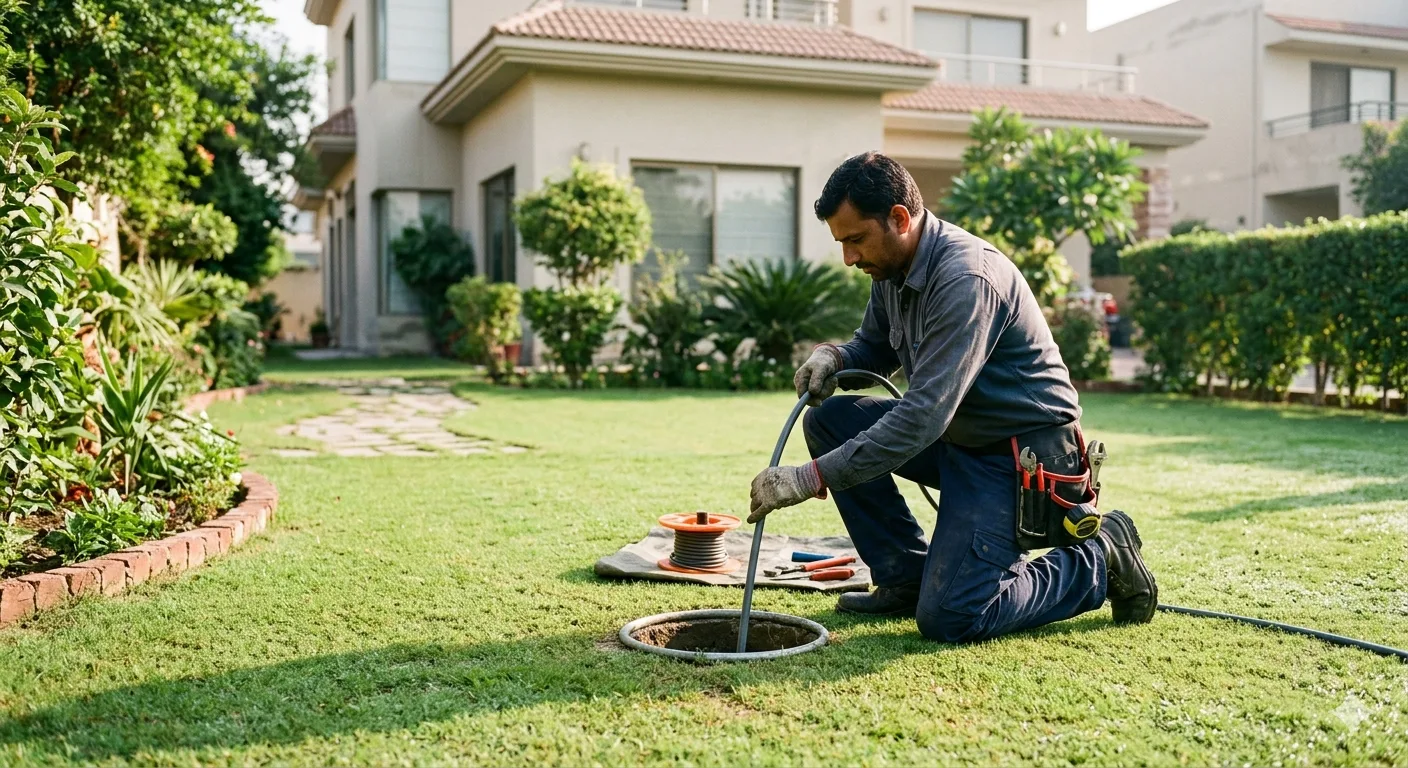
A cap knocked off, cracked by frost heave or buried under landscaping over the years is not accessible when you need it. Walk your property and find the cleanout. If you can’t locate it or the cap is compromised, a licensed plumber can find it with an inside camera run, expose it and replace the cap before the next emergency.
There is a sewage smell in the yard near the sewer line path.
A persistent sewage smell in the yard along the lateral path or around the cleanout can mean a cracked lateral or a collar that is no longer sealing. The EPA identifies outdoor sewage odour as a potential indicator of a failing sewer line and a groundwater contamination risk. A camera run through the sewer cleanout confirms the source.
Tree roots are visible around the cleanout area.
Root intrusion is the most common cause of lateral blockage in established neighbourhoods. Roots enter through hairline cracks at pipe joints and grow toward the moisture inside. If you have mature trees within 20 feet of the sewer line path and the line hasn’t been inspected in years, root intrusion is a likely finding.
The last sewer blockage wasn’t cleared through the cleanout.
If a previous plumber had to clear a sewer blockage by removing a toilet, accessing the line through a floor drain or cutting into a wall, it may be because the cleanout wasn’t accessible or wasn’t located. That’s a sign the cleanout needs to be found, exposed and restored to usable condition before the next event. A blockage cleared without cleanout access costs significantly more and takes longer than one cleared through a properly maintained access point.
Your home was built before 1970 and the cleanout has never been serviced.
Older homes frequently have sewer cleanouts in non-standard locations, or cleanouts that were installed at the time of construction and have since been concreted over, built around during renovations or buried during landscaping projects over the decades. The CDC classifies sewage backup inside a home as a Category 3 water intrusion event with direct contamination and health risks. Having a licensed plumber locate and assess the cleanout condition in an older home is a straightforward preventive step that costs far less than a sewage backup event.
Who Is Responsible for the Sewer Cleanout
The city maintains the sewer main under the street. The homeowner is responsible for the lateral from the home to the main, including the sewer cleanout. When a lateral blockage occurs, clearing it is the homeowner’s responsibility regardless of where on the line it sits.
When a sewer cleanout is missing or inaccessible, the homeowner bears the full cost of any excavation needed to access the line. Adding or restoring one is one of the most cost-effective investments in an older home with cast iron or clay tile laterals approaching the end of their service life.
Frequently Asked Questions About Sewer Cleanouts
How do I find my sewer cleanout?
Look for a capped pipe, typically 3 to 4 inches in diameter, within 3 to 5 feet of the home’s exterior foundation near the point where the sewer line exits the building. It may be at ground level or slightly below grade. Inside the home, check the basement or utility area near the main stack. A licensed plumber can locate it precisely using a camera inspection run from a drain inside the house.
How much does a sewer cleanout installation cost?
A new cleanout installation on an accessible lateral typically runs $150 to $500. If the lateral requires excavation to access, costs can reach $1,500 or more depending on depth and access conditions. The investment pays for itself the first time it allows a plumber to clear a blockage without digging.
How often should a sewer cleanout be inspected?
Most plumbers recommend a camera inspection through the cleanout every two to three years for standard households. Homes with large mature trees near the lateral, older clay tile or cast iron pipes, or a history of recurring blockages benefit from annual inspection to catch root intrusion or pipe deterioration before it causes a backup.
What happens if I ignore a blocked or inaccessible sewer cleanout?
Without cleanout access, a blockage requires excavation, which is significantly more expensive than a standard clearing service. If sewage backs up inside the home first, you’re dealing with a Category 3 contamination event that requires remediation on top of the plumbing repair.
How Do You Find a Trusted Local Plumber for Sewer Cleanout Service?
Your sewer cleanout is the access point that keeps a blocked sewer line from becoming a flooded bathroom. Knowing where it is and keeping it accessible is one of the simplest and highest-value things you can do for your home’s plumbing.
Visit PlumberLocator.us to find a licensed local plumber who can locate, service or install a sewer cleanout at your property. For more practical plumbing guidance, browse our plumbing tips section.