You walked in to brush your teeth and stopped dead. That smell. It hits you like something rotting underground, faint at first and then impossible to ignore. You checked the toilet, sniffed the sink, even got down on your knees near the floor drain. Nothing obvious. But the sewer smell in bathroom is still there, and it comes back every morning. That is not a coincidence. Something in your plumbing system is failing, and your nose is the first to know.
Quick Answer: A sewer smell in bathroom spaces is caused by escaping hydrogen sulfide gas from your drain system, usually due to a dry P-trap, cracked vent pipe, faulty wax ring, or biofilm buildup. According to the EPA, hydrogen sulfide is detectable at concentrations as low as 0.5 parts per billion. A licensed plumber can diagnose the exact source and seal it before the problem spreads or becomes a health concern.
Why a Sewer Smell in Bathroom Is Never Just a Bad Odor
The smell you're dealing with is hydrogen sulfide, the same gas found in sewage and decomposing organic matter. At low concentrations it causes headaches and nausea, and the CDC links prolonged exposure in enclosed spaces to respiratory irritation. The moment a sewer smell in bathroom air becomes a daily occurrence, the clock is running.
Most people assume the problem is surface-level. But if cleaning the toilet and scrubbing the drain fixes nothing, the gas is escaping from inside the pipe system. The seal between your plumbing and your living space has broken down, and finding exactly where requires a proper inspection.
The Dry P-Trap Is the Most Common Source of Sewer Smell in Bathroom
A P-trap is the curved section of pipe beneath every drain. It holds a small water plug at all times, and that plug is the only barrier between sewer gases and your room. When the water evaporates because a drain hasn't been used in a few weeks, the barrier disappears and gas rises straight through.
This is especially common in guest bathrooms and basement floor drains. Running the water for thirty seconds refills the trap. If the smell comes back within days, the trap may be cracked or a partial blockage is forcing gas back up. At that point a plumber needs to inspect the line.
A Cracked Vent Pipe Lets Sewer Smell in Bathroom Air Year-Round
Every drain connects to a vent stack that runs through your walls and exits through the roof, carrying sewer gases safely outside. When that pipe cracks at a joint or inside the wall, those gases leak into your living space instead. A sewer smell in bathroom rooms that persists regardless of drain use is a strong indicator of a vent problem.
Vent failures are more common in homes over 20 years old where cast iron or early ABS plastic pipes have aged and shifted. The PHCC notes that vent and drain failures account for a significant share of repeat service calls in older homes. Locating a crack requires a smoke test or camera inspection, both of which a licensed plumber can complete in under an hour.
The Wax Ring Under Your Toilet Can Fail and Release Sewer Smell in Bathroom
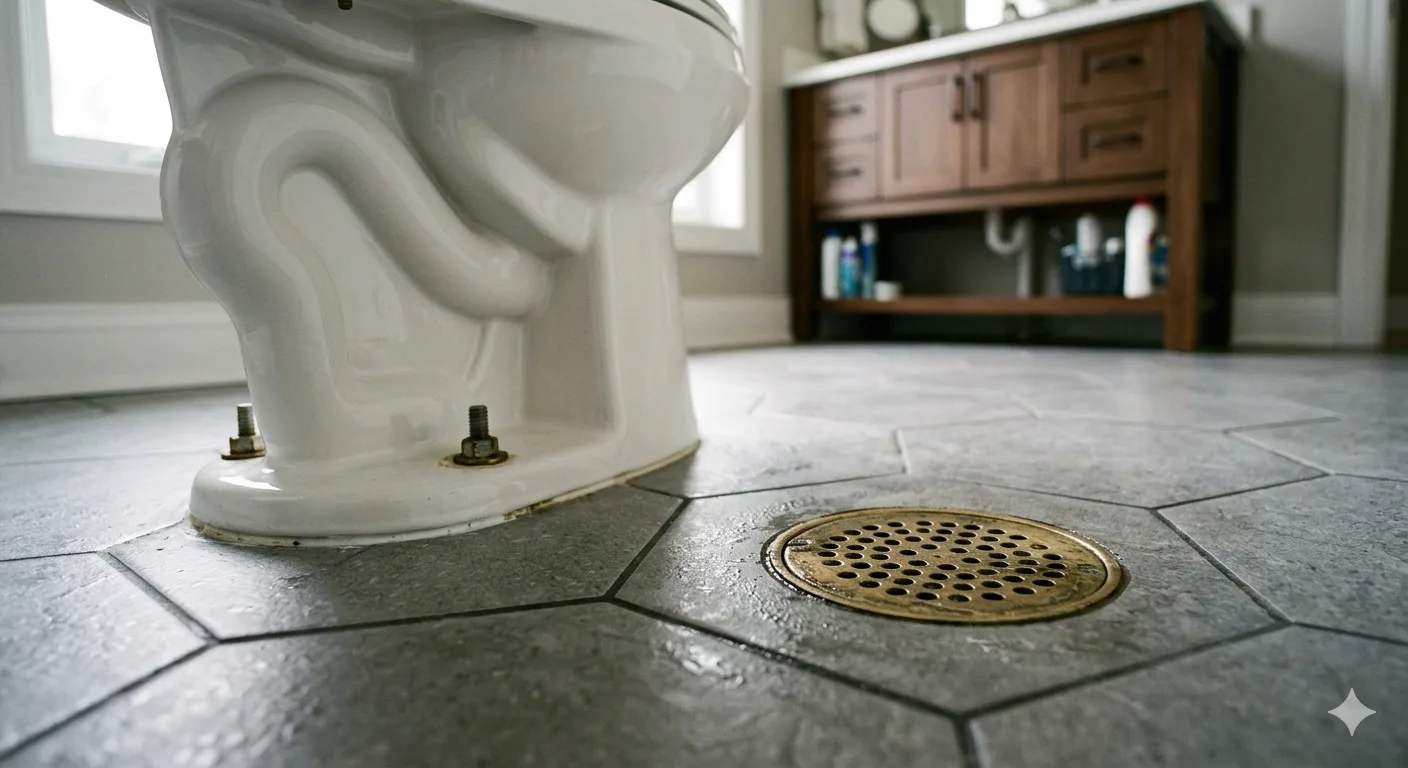
The wax ring is the airtight seal between your toilet base and the drain flange in the floor. When it deteriorates, which happens after 20 to 30 years or after repeated toilet rocking from a loose bolt, sewer gas escapes around the base. A sewer smell in bathroom spaces concentrated near the toilet is the clearest sign this seal has gone.
You may also notice slight moisture or discoloration at the grout line around the toilet base. Replacing the wax ring costs $90 to $200 in most markets and is a straightforward job for a plumber. Leaving it unaddressed risks not only ongoing odor but slow water damage to the subfloor beneath.
Biofilm and Blocked Drains Trap and Amplify the Sewer Smell in Bathroom
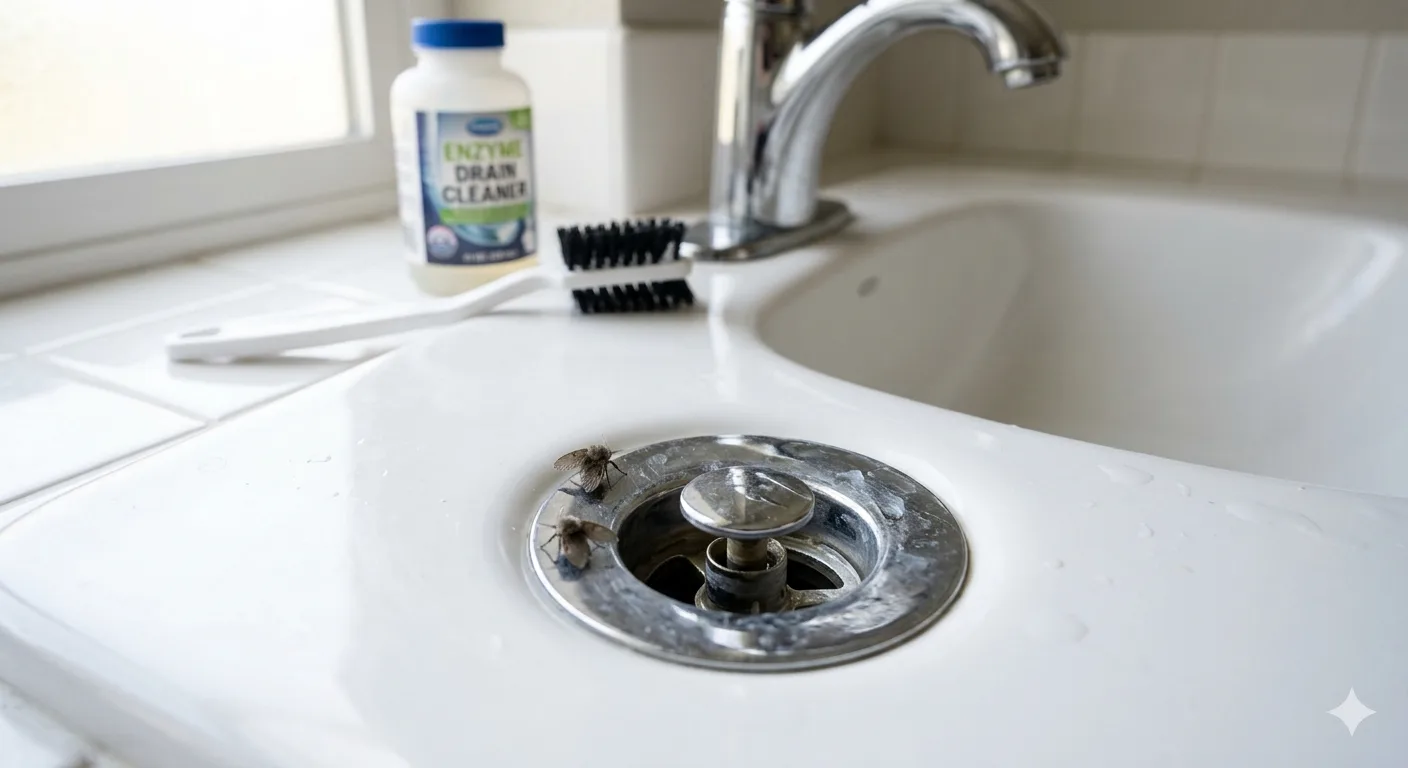
Organic matter builds up inside drain pipes constantly. Soap residue, hair and skin cells decompose on pipe walls and produce hydrogen sulfide at a low but steady rate, enough to keep a sewer smell in bathroom air even when every seal is intact. A slow drain that gurgles is already past the point of basic maintenance.
The EPA recommends cleaning bathroom drains at least every three months to prevent this kind of buildup. A plumber with hydro-jetting equipment can clear years of biofilm from a drain line in a single visit, restoring both flow and smell at once.
A Broken Floor Flange Can Make Sewer Smell in Bathroom Permanent
Beyond the wax ring, the floor flange itself can crack or pull away from the drain pipe, especially in homes with settling foundations. When the flange is loose, the entire toilet base connection becomes gas-permeable even if the wax ring above it looks fine.
A rocking toilet is the clearest warning sign. If it moves when you sit down, the flange may already be compromised. Repairs range from re-tightening floor bolts to full flange replacement, costing $150 to $400 depending on damage. A plumber should assess it before a cracked flange turns into a cracked toilet and a much larger bill.
Frequently Asked Questions About Sewer Smell in Bathroom
Why does the sewer smell in my bathroom come and go?
Intermittent odor usually points to a P-trap that is partially dried out or a vent pipe that is partially blocked. Changes in air pressure inside the home push gas through weak points at irregular intervals. A smoke test performed by a plumber can find exactly where the seal is failing.
Is sewer gas in the bathroom dangerous?
At typical residential concentrations, sewer gas causes headaches and nausea rather than acute poisoning. However, methane is present in sewer gas and is flammable above 5 percent concentration. If the smell is very strong or you feel dizzy, leave the room and call a plumber immediately.
Can I fix a sewer smell in my bathroom myself?
Running water down unused drains to refill P-traps is a safe DIY step. Anything beyond that, including inspecting vent pipes, replacing wax rings or checking floor flanges, should be handled by a licensed plumber to avoid making the problem worse.
How much does it cost to fix a sewer smell in a bathroom?
Refilling a dry P-trap costs nothing. Replacing a wax ring runs $90 to $200. A cracked vent pipe repair ranges from $200 to $900 depending on access. A camera inspection to locate the source typically costs $100 to $300 and is often the most efficient first step.
Find a Trusted Local Plumber for Sewer Smell in Bathroom Today
A sewer smell in your bathroom is not something that resolves on its own. The source is somewhere in your drain or vent system and it will keep releasing gas until a professional finds and seals it. The longer you wait, the greater the risk of water damage, subfloor deterioration or a gas concentration that makes the space genuinely unpleasant to use. Visit PlumberLocator.us to find a licensed local plumber in your area who can diagnose the problem fast.
Not sure what kind of service you need or what questions to ask? Our plumbing tips guide covers everything from what to tell your plumber to how to spot warning signs before they become expensive repairs. Knowledge is the best first step, and the right plumber is the second.