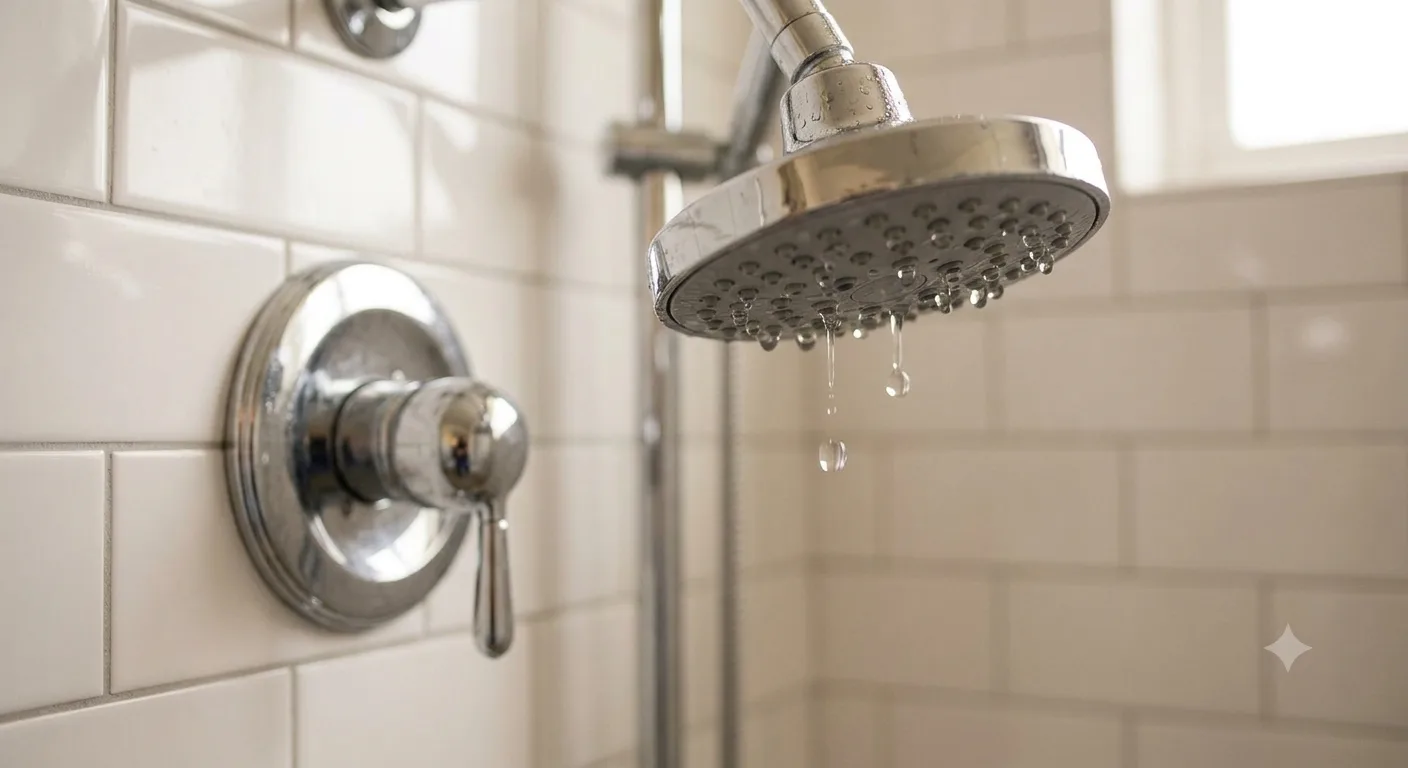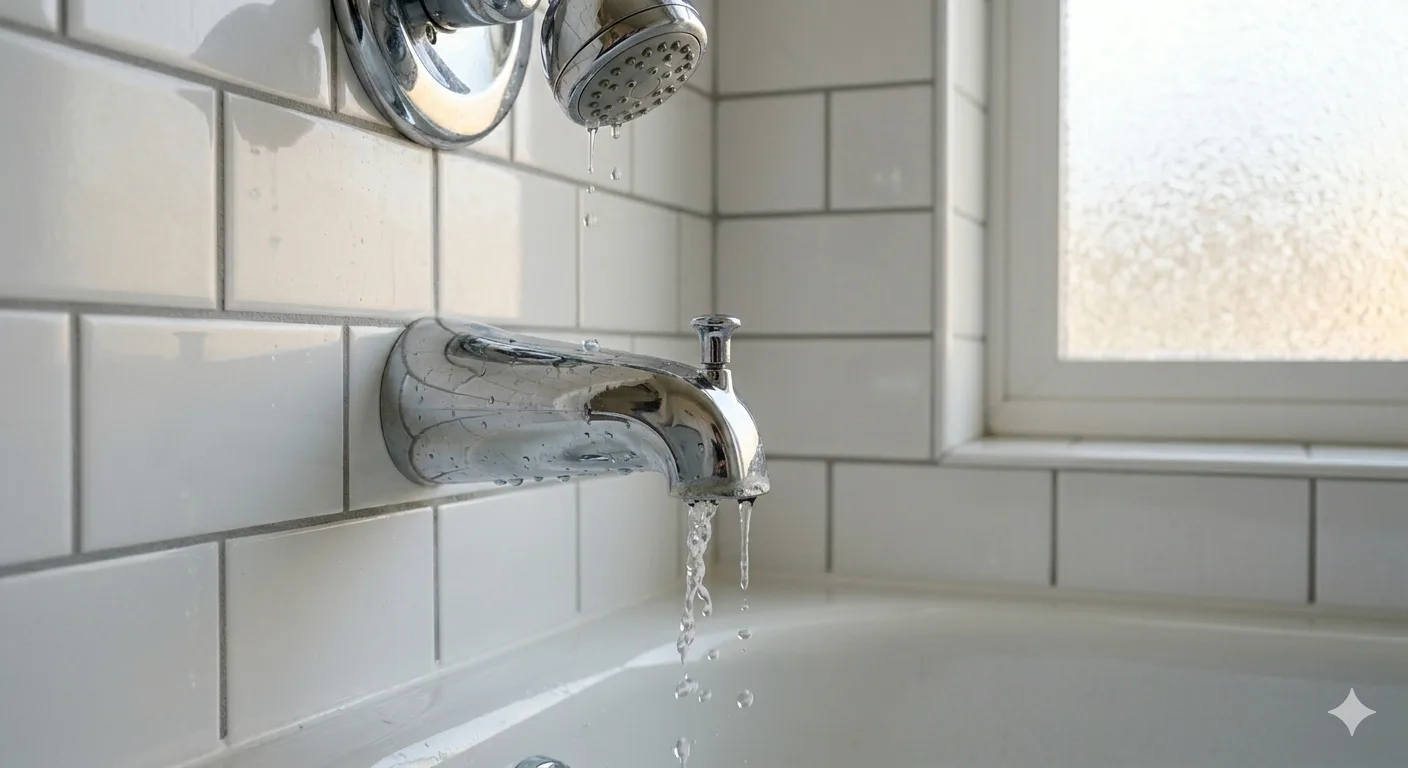
Pull up the knob. Water still dribbles from the tub spout while the showerhead sputters. You’ve probably been living with it for weeks, maybe months, telling yourself it’s fine. It’s not. A broken shower diverter is one of those problems that feels minor right up until it isn’t, because the water you can’t see is the part doing the real damage. It’s not going down the drain. It’s going into your wall.
Quick Answer: A shower diverter is the valve that switches water flow between your tub spout and showerhead. When it fails, water splits between both at once, cutting pressure and sending moisture behind your tiles. Worn seals, mineral buildup and cracked valve bodies are the usual culprits. A licensed plumber can replace it before the hidden water damage gets expensive.
Why That Drip From the Spout Is Not a Small Problem
Here’s what people get wrong about a leaking shower diverter: they think the water coming out of the spout is the problem. It isn’t. That drip is a symptom. The real problem is the water that isn’t coming out anywhere you can see.
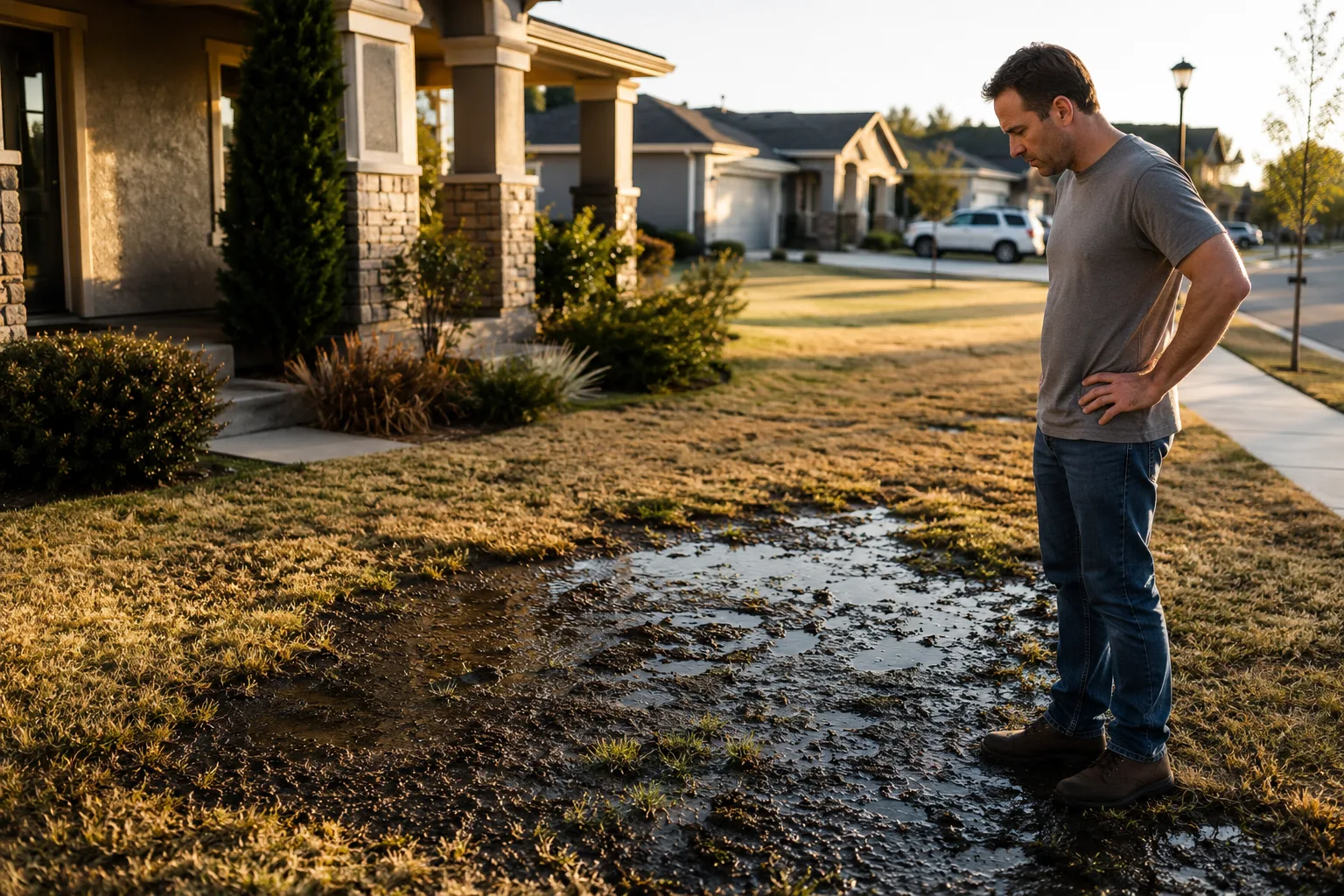
When a diverter valve fails to seal completely, water takes the path of least resistance. Some goes to the showerhead, some goes out the spout, and some goes, depending on where the crack or worn seal is, straight into the wall cavity behind the fitting. Tile grout starts crumbling. Drywall goes soft. A musty smell settles into the bathroom that no amount of ventilation fixes. The EPA flags hidden moisture intrusion as one of the main drivers of residential mold, and mold can take hold in as little as 24 to 48 hours on a wet surface. By the time you smell it, the damage is already done.
The average shower runs at 40 to 60 PSI. That’s a lot of force pushing against a faulty seal every single day.
5 Proven Reasons Your Shower Diverter Is Leaking
The rubber seals have worn out.
This is the most common reason, and it’s completely normal after years of use. The O-rings and washers inside a diverter typically hold up for 5 to 8 years, but hard water cuts that short. Calcium and magnesium deposits score the rubber over time, stopping it from forming a proper seal. You’ll notice it first as weak shower pressure, well before any visible drip appears. The seal is gone, and no amount of tightening the knob will fix it.
Mineral scale has frozen the valve in place.
Hard water leaves deposits inside the diverter housing that build up around the stem and seat. The valve can no longer close fully, so there’s always a small gap water escapes through. Water with a calcium hardness above 200 mg/L can cause noticeable scale in under two years. A vinegar soak sometimes buys you time, but once scale has hardened inside the housing, the valve usually needs to come out entirely.
The valve body itself is cracked.
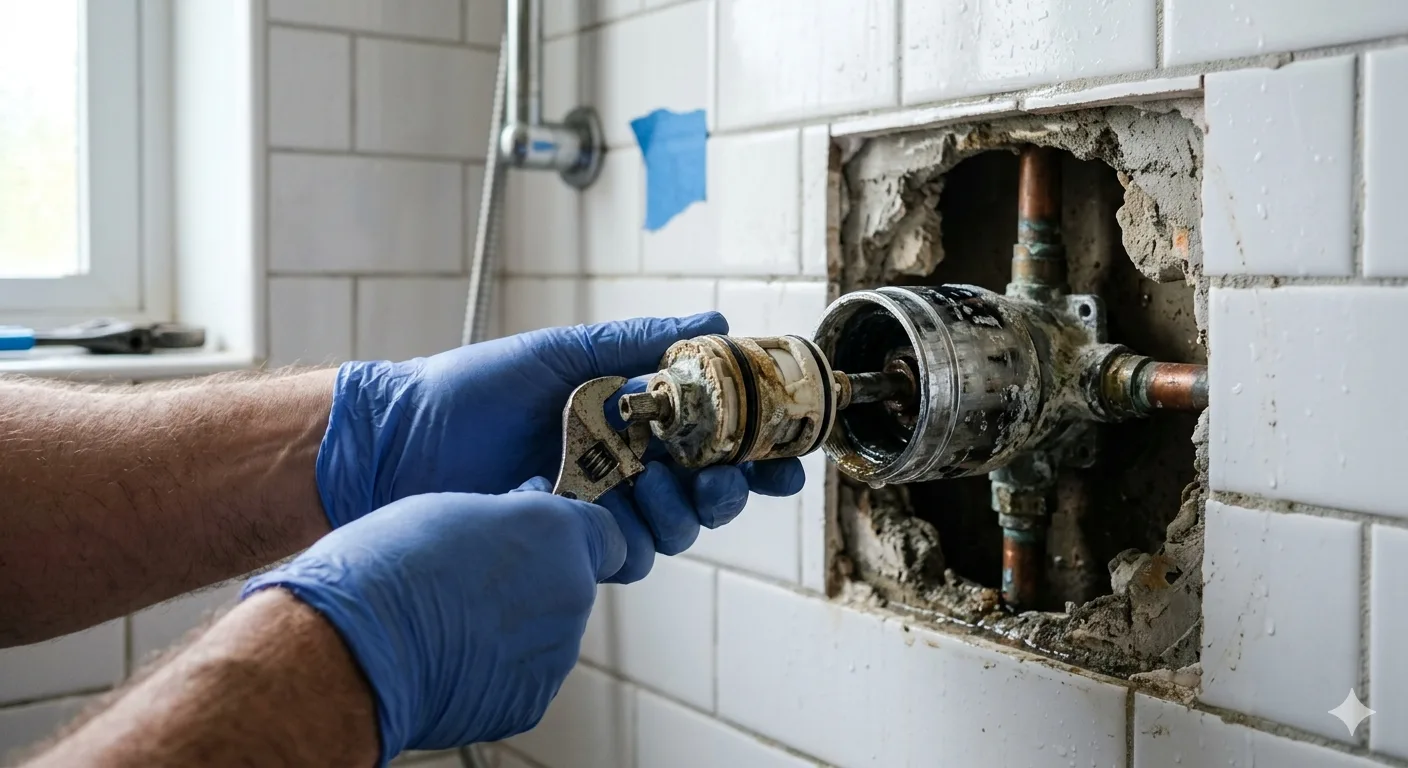
Brass and plastic both crack. Brass corrodes, plastic degrades with age and temperature stress. A crack in the valve body doesn’t send water out the spout. It sends it straight into the wall. This is the failure mode that turns a $200 repair into a $3,000 remediation job. Tile grout crumbling at the tub surround, soft spots in the wall near the controls, or a persistent musty smell are your warning signs. Don’t wait on these.
Someone installed the wrong part.
Generic diverter replacements from hardware stores are close, but close isn’t good enough. A seat diameter or thread pitch that’s even slightly off means the valve never seals correctly, even fresh out of the box. The PHCC is clear that shower valve repairs need manufacturer-specified components, not substitutes. A licensed plumber knows the difference and sources the right part before touching anything else.
Your water pressure is too high.
Most diverters are rated to handle up to 80 PSI. A lot of homes run higher than that without anyone knowing, because unregulated supply pressure isn’t visible until it starts destroying things. Constant pressure above the rated limit stresses the valve on every single use, accelerating seal wear and eventually cracking the housing. The CDC recommends keeping residential pressure between 40 and 80 PSI. A pressure reducing valve is a straightforward fix that protects every fixture in your home, not just the shower.
What About Water Waste?
Beyond the wall damage, a leaking shower diverter wastes a surprising amount of water. Even a modest 10% bypass at normal pressure adds up to thousands of gallons over a year, heated water that never reaches the showerhead. It shows up on your utility bill long before it shows up as visible damage, which is one more reason a slow pressure drop is worth investigating rather than ignoring.
Frequently Asked Questions About Shower Diverter Repair
Can I replace a shower diverter myself?
A tub spout diverter is manageable for a confident DIYer: unscrew the spout, swap the part and done. An in-wall three-handle diverter is a different story. You’re cutting off water supply, possibly removing tile and working inside the wall. One wrong move creates a hidden leak worse than the one you started with. For anything inside the wall, call a licensed plumber.
How do I know if it needs replacing or just cleaning?
Soak the spout in white vinegar for 30 minutes and scrub the valve seat. If full pressure comes back, it was scale. If the pressure loss returns within a few weeks, or the valve won’t hold its position, the seals or valve body are done. Cleaning is a temporary fix at that point, not a solution.
How long does the repair take?
A tub spout diverter swap takes a plumber under an hour. An in-wall replacement runs two to three hours, longer if tile needs cutting or an access panel has to be built. Either way, it’s a single visit and the shower is usable the same day.
Does home insurance cover a failed shower diverter?
Sudden failures can qualify under accidental water damage coverage. Gradual leaks almost never do. Insurers treat those as maintenance neglect. Getting the repair done by a licensed plumber and keeping the invoice matters here, because it documents that you acted when the problem appeared rather than letting it go.
How Do You Find a Trusted Local Plumber for Shower Diverter Repair?
A shower diverter is a small part doing a big job. When it fails, the damage it causes isn’t small at all. The good news is that catching it early keeps the repair fast and cheap, a few hundred dollars versus a few thousand once the wall is involved.
Head to PlumberLocator.us to find a licensed local plumber who can diagnose the problem and sort it properly. And if you want to stay ahead of issues like this, our plumbing tips section is worth a look.