A shower hair catcher is the single cheapest preventive measure in bathroom plumbing. A $5 silicone cover prevents the clogs that cost $100 to $300 to clear professionally. The wrong type either fails to catch hair, restricts water flow or slides around underfoot. Understanding what each type does and what it requires from your drain determines which one works for your bathroom.
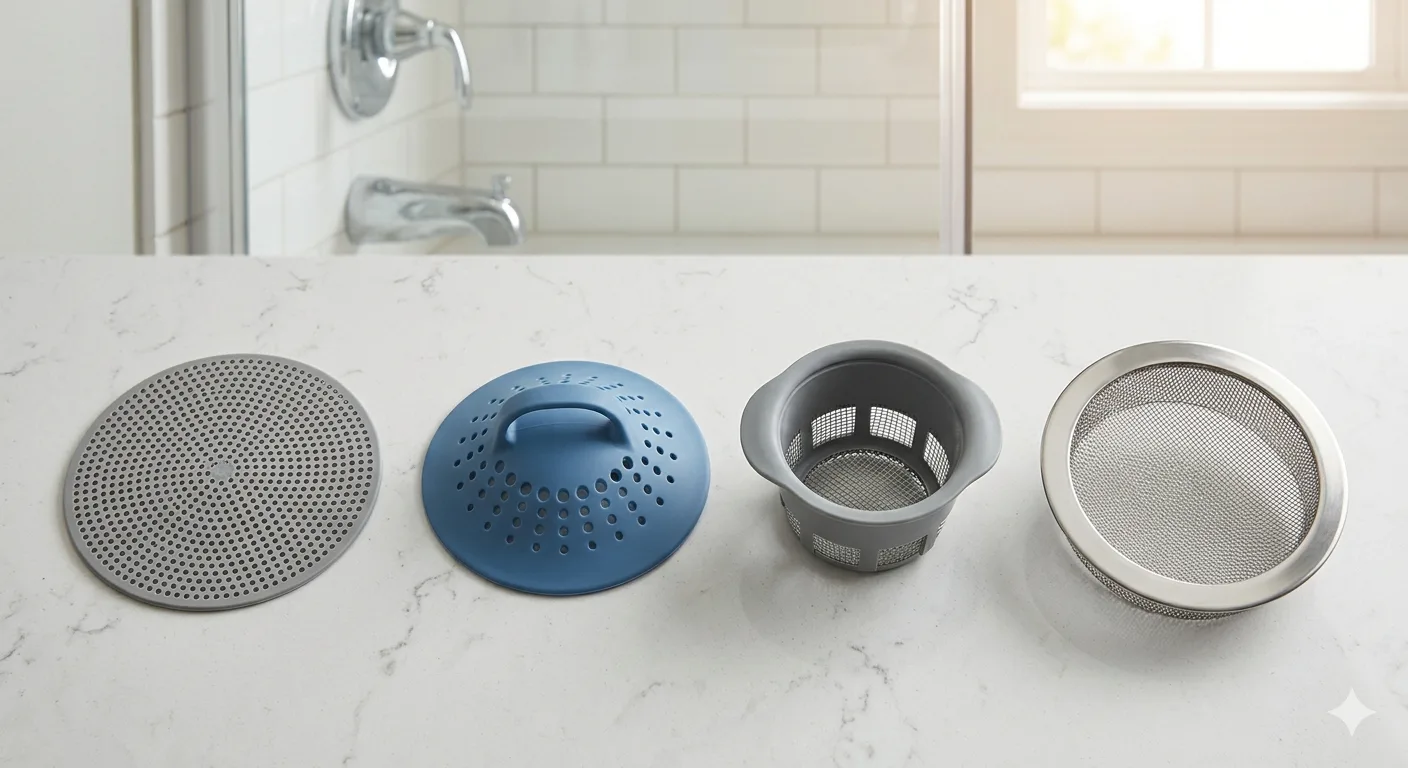
Quick Answer: A shower hair catcher sits over or inside the drain opening to intercept hair before it enters the P-trap and forms a blockage. The six main types are flat silicone covers, dome-shaped catchers, cylindrical insert catchers, snare-style tools, magnetic drain covers and pop-up stopper inserts with mesh. The right choice depends on your drain opening diameter, whether the drain is recessed or flush with the floor, and whether you prefer a tool you empty weekly or one that clears itself during the shower.
Why Hair Is the Primary Cause of Shower Drain Blockages
Human hair bonds readily to soap scum and body oil residue on pipe walls. Once anchored, it catches additional strands into a growing mass. The EPA notes that drain blockages from hair and organic buildup are among the most common causes of residential plumbing service calls in US homes.
The P-trap directly below the drain is the first accumulation point and the hardest to reach without a snake. A shower hair catcher keeps hair from ever entering the trap, converting a $150 to $250 clearing call into a 10-second task.
6 Critical Facts About Choosing a Shower Hair Catcher
Flat silicone covers work on flush floor drains but not on recessed ones.
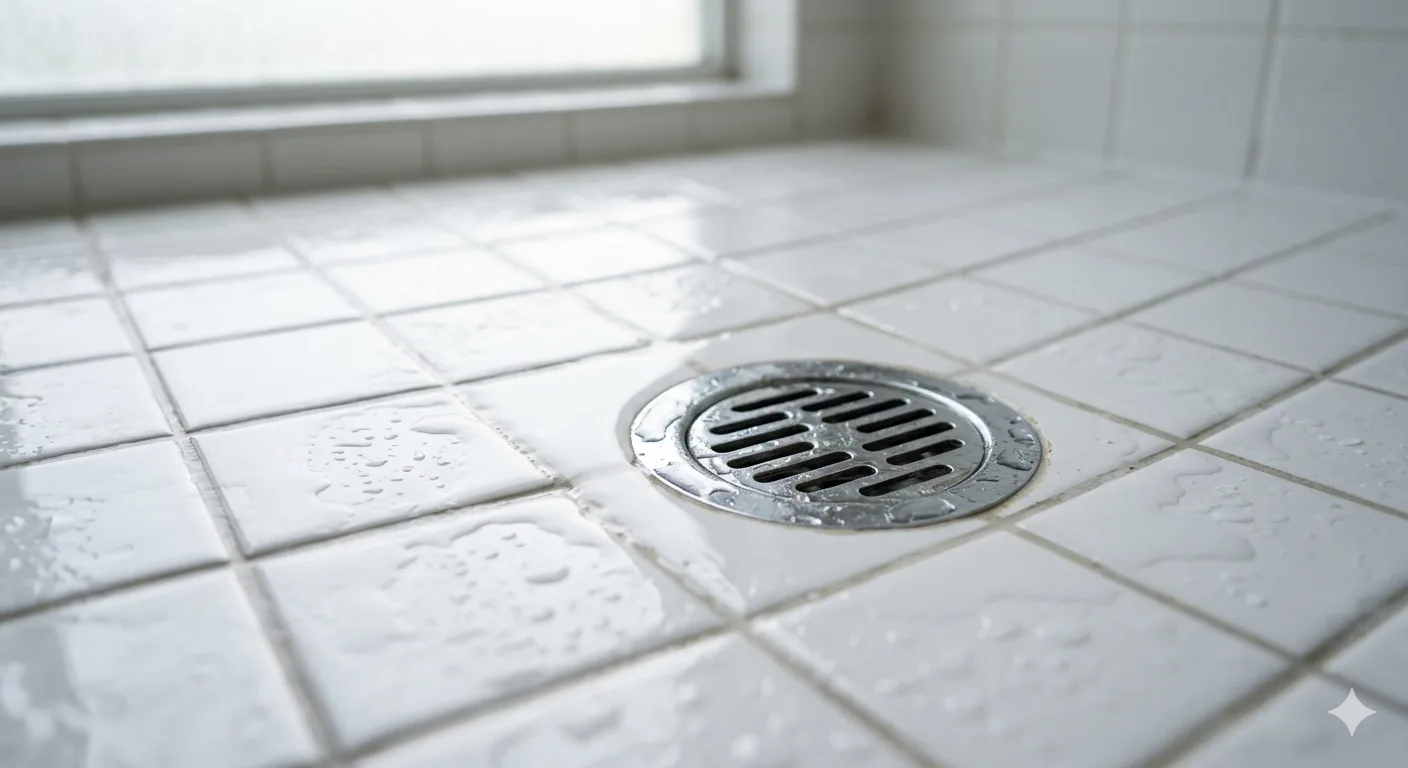
A flat silicone shower hair catcher sits over the drain opening on the floor surface. On a flush tile drain this works well. On a recessed drain where the grate sits below floor level, a flat cover sits on the rim with a gap around the edge that hair passes through. If the grate surface is flush with the tile, a flat silicone cover works. If it sits 3 to 10 millimetres below floor level, you need a domed or cylindrical insert type.
Dome-shaped catchers are the most versatile type for recessed drains.
A domed silicone shower hair catcher snaps over the drain and creates a raised collection surface above drain level. Hair catches on the dome exterior and is removed by lifting and wiping. Water enters around the base of the dome rather than only through the mesh, so the catcher does not restrict flow. This is the most widely compatible type for recessed drains in tile and fibreglass floors.
Cylindrical insert types catch more hair but require the correct drain size.
Insert-style catchers drop into the drain opening and use a cylindrical basket to intercept hair below the drain surface. These catch more hair because the collection chamber is deeper. They only fit drain bodies with a matching internal diameter. Most residential shower drains are 2 inches nominal, but the exact fit depends on brand and age. Measure the opening before purchasing.
The mesh size determines what gets caught and what gets through.
A fine-mesh shower hair catcher catches every strand but traps fine debris too, requiring clearing after every shower. A coarser mesh catches long hair efficiently without restricting flow between cleanings. The right size depends on the household. Short-haired users need coarser mesh. Long-haired users need finer mesh even if it requires more frequent clearing. The PHCC notes that mesh openings between 2 and 4 millimetres provide the best balance for most residential applications.
Emptying frequency determines whether the catcher actually prevents clogs.
The most effective shower hair catcher prevents nothing if emptied once a month. A full catcher is a partial blockage holding water on the shower floor. Empty it after every shower, or at minimum every two to three showers. This takes five seconds and is the only maintenance required. The CDC notes that standing water on bathroom floors creates a slip risk and a condition for bacterial growth in the drain area.
Hard water areas need catchers that are easy to descale.
In areas with hard water, mineral scale builds up on the mesh of a shower hair catcher within weeks of installation, reducing the openings and restricting flow even after hair is removed. Silicone catchers release scale more easily than metal or plastic ones when soaked in white vinegar. A metal mesh insert in a hard water area needs weekly descaling. A silicone surface cover needs monthly soaking. Factor in water quality when choosing material. A soft silicone catcher in a hard water area will outperform a metal mesh catcher that is left scale-coated with twice the cleaning frequency.
When a Shower Hair Catcher Is No Longer Enough
If water pools despite a clean, empty catcher, the blockage is already inside the drain system. A manual plastic drain snake clears the P-trap in most cases. A drain that doesn’t respond to snaking has a blockage deeper in the line that requires hydrojetting or a licensed plumber.
Frequently Asked Questions About Shower Hair Catchers
What size shower hair catcher do I need?
Most residential drain grates are 4 to 5 inches in outer diameter. Match or slightly exceed this for surface catchers. For insert-style catchers, measure across the drain opening from inside edge to inside edge, not the grate.
Can a shower hair catcher damage my tile or drain finish?
Silicone catchers are inert and will not scratch tile or chrome drain finishes. Metal-edged catchers can scratch polished chrome or stone tile if slid across the surface rather than lifted directly. Suction-cup style catchers can leave marks on some stone tile finishes. Check the manufacturer’s surface compatibility notes for stone, textured tile or specialty finishes.
How often should I replace a shower hair catcher?
A quality silicone shower hair catcher lasts two to three years with regular cleaning. Signs it needs replacing are visible tears in the mesh, deformation that prevents a flat seal over the drain, or silicone that has hardened and no longer flexes cleanly. Replacement costs $5 to $25 depending on the type and material.
My shower drain is slow even with a hair catcher. What should I do?
The hair catcher prevents new blockages but does not clear existing ones. If the drain was slow before the catcher was installed, or if the catcher was used inconsistently, the P-trap likely has an existing hair mass. Use a flexible plastic drain snake to pull it out. If snaking doesn’t restore flow, call a licensed plumber to assess whether the blockage is deeper in the line or whether the drain configuration has another issue.
When Should You Call a Trusted Local Plumber If Your Drain Needs More Than a Catcher?
A shower hair catcher is the best single preventive investment for a bathroom drain. When the prevention has already been missed and a blockage exists, a licensed plumber clears it correctly and confirms the drain is fully open.
Visit https://plumberlocator.us/emergency/ to find a licensed local plumber near you for drain clearing and bathroom plumbing service. For cost estimates on drain work, browse our https://plumberlocator.us/cost-guide/.