Most people install a shower head extension on a Saturday afternoon and never think about it again. Until there is a damp patch on the ceiling below the upstairs bathroom. Or a musty smell that will not leave. It was only a few inches of pipe. What could go wrong? Quite a bit, it turns out, and most of it happens silently inside your wall.
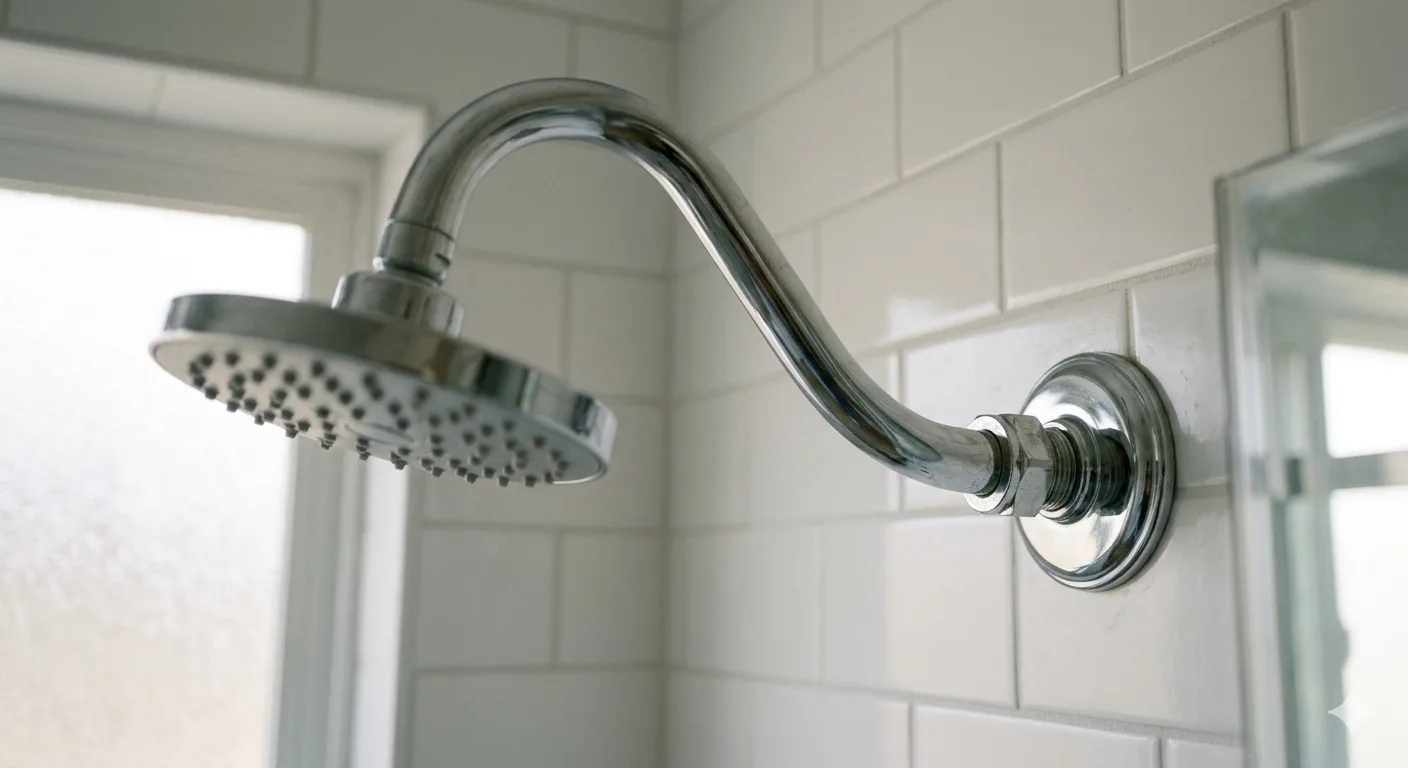
Quick Answer: A shower head extension is a curved or straight arm that repositions your shower head away from the wall for better height or reach. Extensions range from 6 to 24 inches and connect between the wall pipe fitting and the shower head. Installed incorrectly, they leak at the joint, corrode from inside, and send water into your wall cavity causing mold and structural rot.
Why a Shower Head Extension Leak Is Never as Simple as It Looks
The most common mistake is thinking a drip at the wall connection is something you can tighten your way out of. That joint sits where your shower arm pipe meets the wall elbow fitting, and water under typical household pressure between 40 and 80 PSI will find any gap and exploit it. What you see is a slow drip. What is happening inside is water wicking into drywall, insulation, and framing. The EPA recommends fixing leaks promptly to prevent structural damage.
The 6 Proven Shower Head Extension Mistakes That Cause the Most Damage
Skipping thread tape on both connection points.
A shower arm extension has two threaded connections. One screws into the wall pipe fitting, the other accepts the shower head. Most people tape one end and forget the other. Both joints need two to three wraps of PTFE thread tape before assembly. Without it, water migrates along the threads and the joint weeps slowly until real damage is done.
Over-tightening the arm into the wall fitting.
Tighter feels safer, but metal fittings inside the wall are only as strong as the surrounding joint. Force the arm too hard and you can crack the elbow fitting, or strip the threads so badly that nothing seats properly again. Hand-tight plus a quarter turn with a wrench is the correct method, and anything beyond that risks a fitting you cannot replace without opening the wall.
Using the wrong extension material for your water type.
Water chemistry varies enough across the US to matter. Homes on well water or in high-mineral regions can destroy a cheap zinc alloy arm within two to three years through internal corrosion. The Plumbing, Heating, Cooling Contractors Association notes that material selection is one of the most overlooked factors in fixture longevity. Solid brass or stainless steel extensions resist the buildup that collapses flow and corrodes joints from the inside out.
Installing an arm that is too long for the existing wall fitting.
Extensions beyond 12 inches put real stress on the connection point every time someone adjusts the shower head angle. The wall fitting was not designed for an 18-inch rain shower extension with a heavy head on the end. If you want a longer reach, the wall fitting may need to be reinforced or replaced by a licensed plumber first.
Ignoring a shower head extension that will not stop dripping after installation.
A drip that starts immediately and does not stop within 48 hours is not going to seal itself. The threads are not aligning, the tape was wrong, or the wall fitting is already compromised. Letting it run means weeks of moisture entering a space with no ventilation. The CDC has documented the health risks of indoor mold growth, and slow bathroom leaks are among the most common causes.
Not checking the shower head extension after water pressure changes.
Your water pressure is not fixed. If a pressure-reducing valve fails or your municipality adjusts delivery pressure, the pressure at your fixtures can spike above normal. Joints holding fine at 55 PSI can start weeping at 75 PSI. The American Society of Plumbing Engineers recommends annual pressure testing to catch changes before they cause fixture failures. A gauge at the hose bib takes two minutes.
How to Know Your Shower Head Extension Needs a Professional
An arm that shifts on its own, a wall that feels soft around the shower, or a joint that reseals and starts dripping again within weeks all mean the problem is past a simple retape. Plumbers use moisture meters to check wall cavities without cutting into anything. Call early and the repair stays small. Waiting is how a $200 service call becomes a $2,000 mold remediation job.
Shower Head Extension Maintenance That Actually Prevents Problems
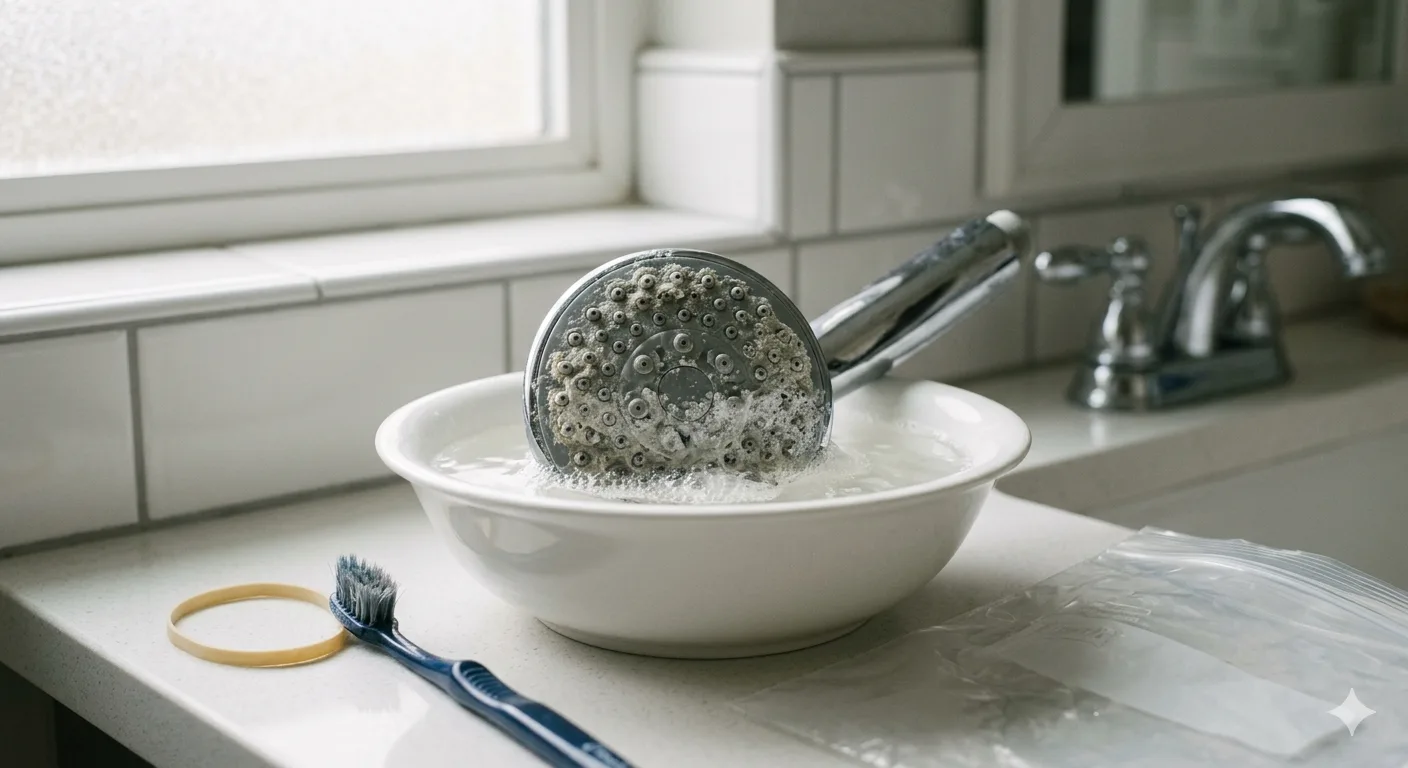
Descale the extension arm once a year. Hard water deposits inside the arm restrict flow and create pressure differentials at the connections. Soaking the arm in white vinegar for an hour dissolves most calcium buildup without damaging the finish. While it is off the wall, inspect both threaded ends for corrosion, pitting, or hairline cracks. Any of those signals that the arm needs replacing before it fails.
Check the wall connection point while the arm is detached. The escutcheon plate should sit flush with no gaps. Gaps mean the arm is not seating squarely, and uneven seating puts uneven stress on the threaded fitting with every use. Reseating it properly prevents the slow-developing leak that causes real damage inside your wall.
Frequently Asked Questions About Shower Head Extension
How long does a shower head extension typically last?
A quality brass or stainless steel extension should last 10 to 15 years with normal use. Cheaper zinc alloy arms in hard water areas often fail within 3 to 5 years. Annual descaling and a thread inspection extend the life of any extension considerably.
Can I install a shower head extension myself?
Basic installations on an undamaged wall fitting are within most homeowners' abilities with proper thread tape and correct tool pressure. If the wall fitting is old, stripped, or showing corrosion, a plumber should assess it before you add a new arm on top of a compromised base.
Why does my shower head extension keep dripping after I tightened it?
Tightening past a certain point damages threads and makes a proper seal impossible. If tape and correct tightening have not stopped the drip within 48 hours, the fitting or arm has a defect that needs replacing. A licensed plumber can also check whether water has already entered the wall cavity.
Does shower head extension length affect water pressure?
Slightly, yes. Longer arms create additional friction loss. A 24-inch arm in a home with marginal pressure can noticeably reduce flow at the shower head. If your supply pressure is already under 40 PSI, a long extension will make a weak shower weaker. A plumber can measure your actual pressure and recommend an arm length accordingly.
Find a Trusted Local Plumber for Shower Head Extension Today
A small drip from a shower arm is easy to ignore. The damage it causes behind the wall is not. If your shower head extension is leaking, shifting, or showing corrosion at the wall joint, get a licensed professional to look at it before the wall comes open. Visit PlumberLocator.us to find a vetted local plumber in your area who can assess the fitting and stop the leak.
For more guidance on keeping your bathroom plumbing in shape, browse our plumbing tips resource section. A shower head extension connects directly to your wall pipe, and that joint deserves the same attention as any other fitting in the house.