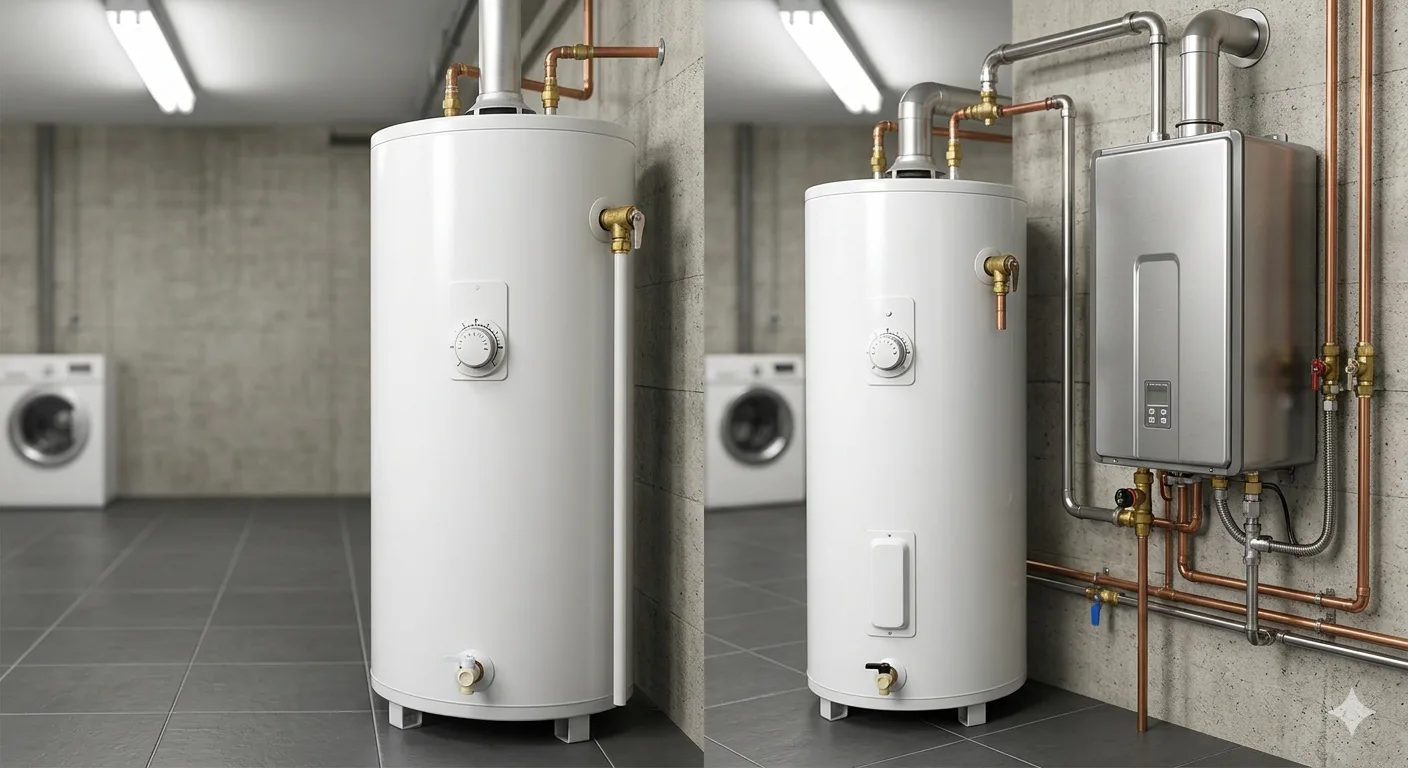
The tankless vs tank water heater debate is treated as a simple cost comparison when it's actually six separate decisions that all matter. Upfront cost is the one everyone focuses on. The right tankless vs tank water heater choice also depends on gas line capacity, demand patterns, water quality and how long you plan to stay in the property.
Quick Answer: Tankless water heaters heat water on demand, have no standby heat loss and last 15 to 20 years. Tank water heaters maintain a stored volume of hot water at all times, cost less to install and are simpler to service. Tankless units cost more upfront and require higher gas line capacity. Tank units consume energy continuously but work with existing infrastructure in most homes. A licensed plumber can assess which option your home's infrastructure actually supports before you purchase anything.
Why the Tankless vs Tank Water Heater Decision Is Infrastructure First
Most homeowners start with energy savings. The correct starting point is whether your existing gas line and metre can support a tankless unit without a costly upgrade.
A whole-home gas tankless heater draws 150,000 to 199,000 BTU per hour. A standard tank heater draws 36,000 to 50,000. Many older homes have gas supply infrastructure sized for tank heaters only. Upgrading the gas line can add $500 to $2,000 or more to the total installation cost. The PHCC identifies gas infrastructure as the most overlooked cost factor in tankless installations.
6 Trusted Differences in the Tankless vs Tank Water Heater Comparison
Difference 1: Upfront installation cost.
A standard 50-gallon gas tank heater with professional installation runs $900 to $1,500. A whole-home gas tankless unit with installation runs $1,500 to $3,500, and more if gas line or venting upgrades are required. Electric tankless units may require a new 200-amp service or dedicated high-amperage circuit, adding $500 to $1,500 in electrical work. The upfront cost difference is real and it takes years of energy savings to recover.
Difference 2: Energy efficiency and operating cost.
Tankless units use 24 to 34% less energy than tank heaters for households using 41 gallons or less daily. At typical US gas rates, annual savings run $70 to $150. A licensed plumber can model the payback period for your specific household before you commit.
Difference 3: Hot water capacity and flow rate.
A tank heater stores 40 to 80 gallons. When depleted, you wait for recovery. A tankless unit supplies hot water continuously but is limited by its flow rate. A unit rated at 7 GPM cannot simultaneously run a shower at 2 GPM, a dishwasher at 1.5 GPM and a second shower at 2 GPM. Undersized installation is the most common performance complaint among homeowners who switched.
Difference 4: Lifespan and maintenance requirements.
Tankless units last 15 to 20 years with proper maintenance. Tank heaters last 8 to 12 years. The longer lifespan means one tankless unit replaces two tank units over a 20-year period. However, tankless units require annual descaling in hard water areas, and their heat exchangers, sensors and flow controls are more complex to service than a tank heater's heating element or burner. The EPA estimates over 85% of US households have hard water, which shortens component life in both unit types but affects the heat exchanger in tankless units more severely.
Difference 5: Hard water impact.
Hard water above 120 mg/L deposits scale inside a tank heater's lower section and on the heating element. In a tankless unit, scale accumulates on the heat exchanger and can cause complete failure without annual descaling. In hard water areas, maintenance requirements, component costs and shortened service life all favour the tank in this comparison. A water softener addresses this for both types but adds to installation cost.
Difference 6: Service and repair access.
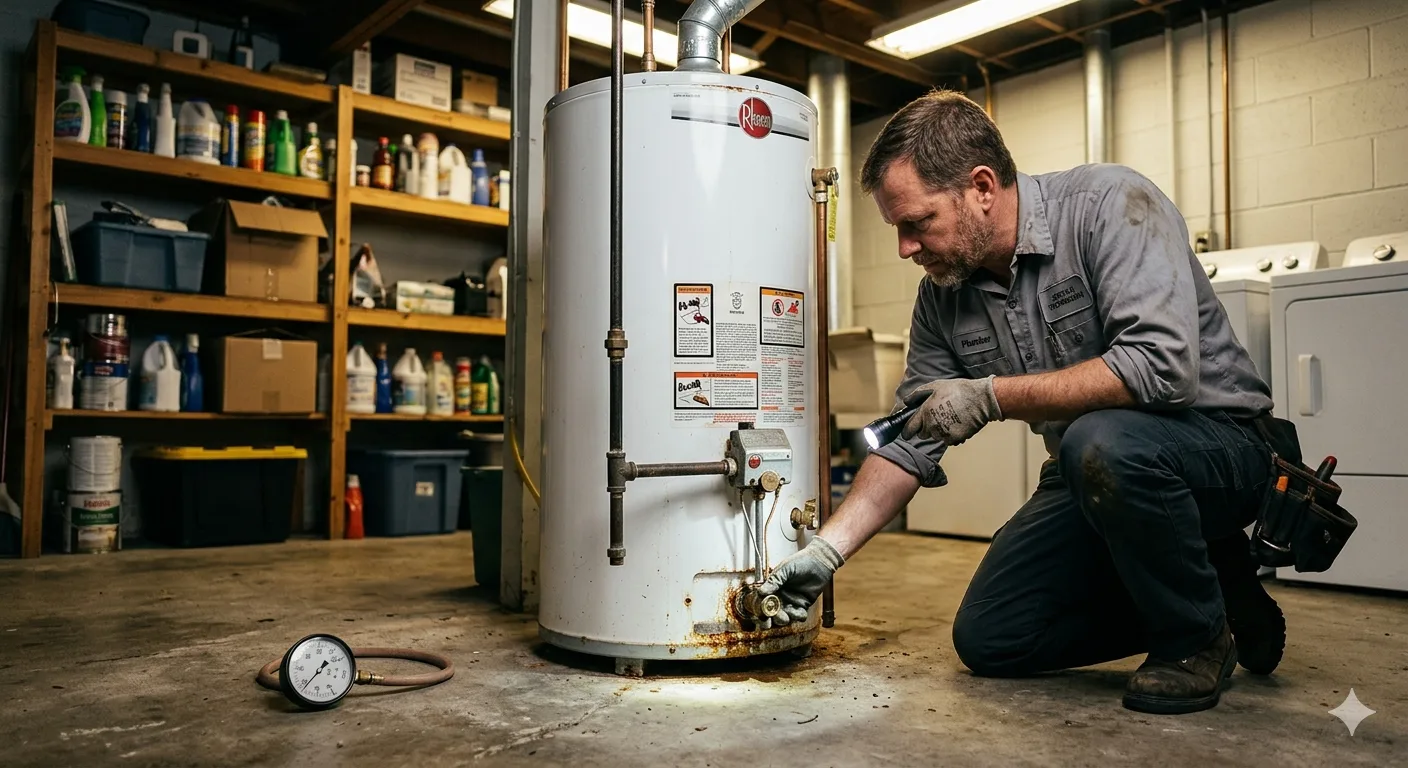
A tank water heater is one of the most straightforward appliances a plumber services. Parts are widely available, repair procedures are well-established and most problems are diagnosable and fixable in a single visit. A tankless unit has more components, proprietary control boards and sensors that require brand-specific parts, and error codes that need interpretation. Service call duration and parts cost are both higher for tankless units when something goes wrong. The CDC notes that reliable access to domestic hot water is a health and sanitation requirement, which is why service reliability and repair accessibility are legitimate factors in the tankless vs tank water heater decision.
Who Tankless Is Right For and Who It Isn't
Tankless works for a household of two to four people with existing high-capacity gas infrastructure, soft or treated water and plans to stay for ten or more years. The longer lifespan and lower operating cost make financial sense in that scenario.
Tank works better for large households with high simultaneous demand, homes with undersized gas infrastructure, very hard water without a softener, short-term ownership or anyone who wants the simplest service path.
Frequently Asked Questions About Tankless vs Tank Water Heater
Can I replace a tank heater with a tankless unit in the same location?
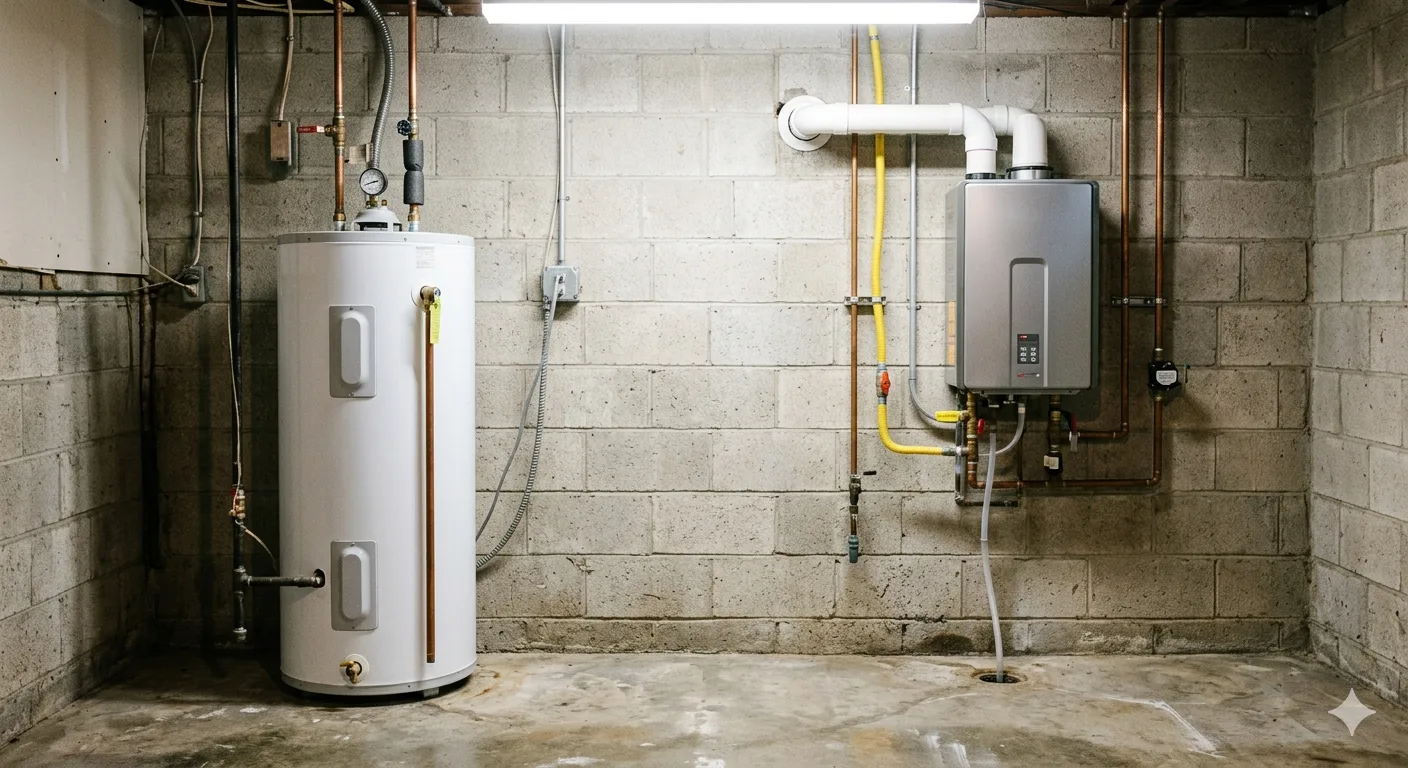
Often yes, but with modifications. Tankless units require different venting, may need a larger gas line and often need a condensate drain if they are high-efficiency condensing models. A licensed plumber inspects the installation location and identifies required changes before any purchase is made.
Does a tankless unit really provide unlimited hot water?
Yes, within its flow rate capacity. If demand exceeds the unit's rated GPM, the temperature drops rather than the water running out. A correctly sized unit delivers continuous hot water. An undersized unit delivers disappointing performance under peak demand.
Is a tankless water heater worth it for a small household?
For a one or two-person household with existing gas infrastructure that supports the unit, the payback period on a tankless unit is typically 8 to 12 years. If the home also needs gas line upgrades, the payback period extends significantly. A licensed plumber can calculate the specific payback for your situation.
What happens if a tankless unit breaks down?
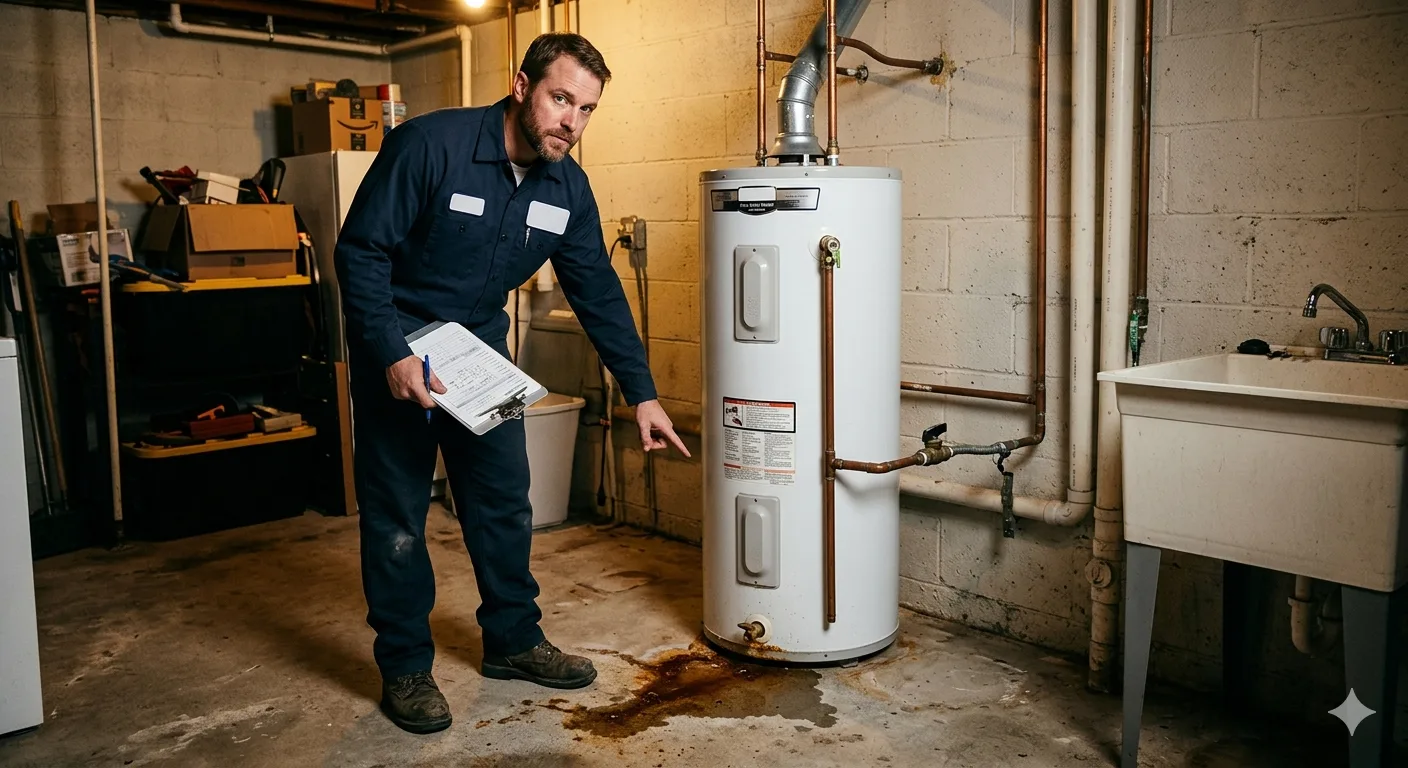
Unlike a tank failure, which can release 40 to 80 gallons of water, a tankless failure typically means no hot water rather than flooding. However, repair parts are more specialised and service visits take longer. Having a service agreement with a licensed plumber who knows your unit's brand and model reduces downtime when problems occur.
Find a Trusted Local Plumber for Tankless vs Tank Water Heater Advice Today
The tankless vs tank water heater comparison ends in the right place when a licensed plumber has assessed your gas supply, household demand and water quality before any decision is made.
Visit PlumberLocator.us to find a licensed local plumber in your area who can evaluate your infrastructure and recommend the right water heater for your home. For more guidance on home plumbing decisions, browse our plumbing tips section.