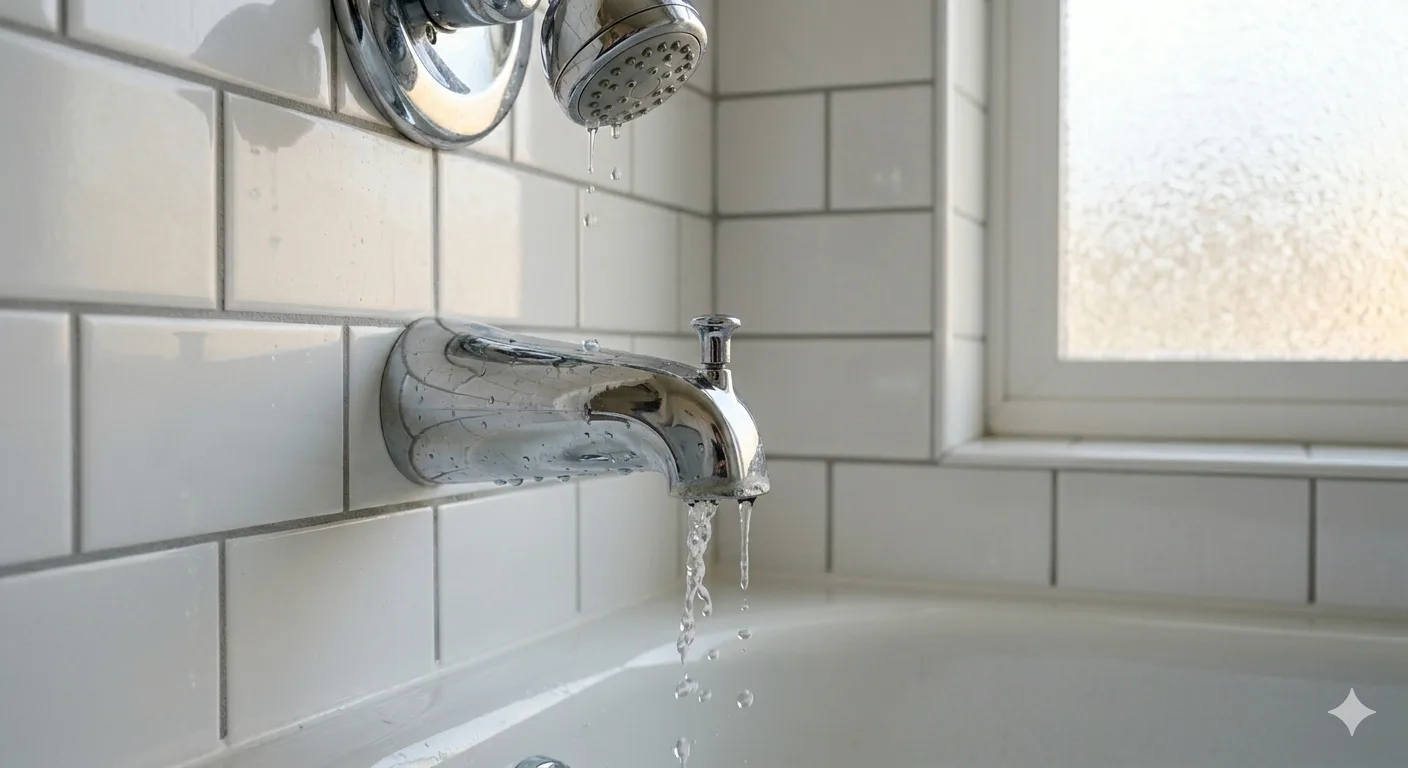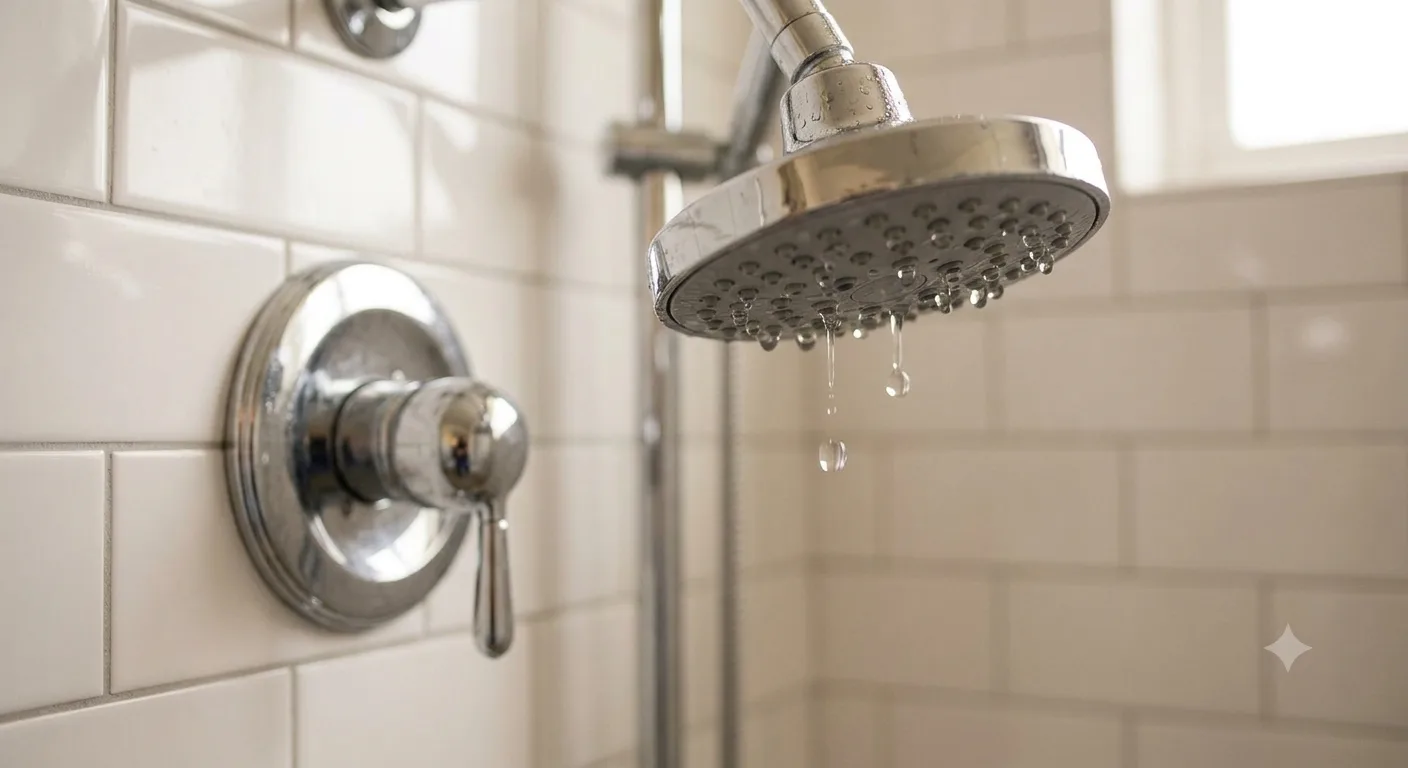
A shower dripping shower head after the tap is fully closed is one of the most misdiagnosed bathroom plumbing problems in residential homes. Most people clean or replace the showerhead. The drip continues because the head is almost never the cause. The cause is inside the wall, where the valve or cartridge no longer seals completely when the handle is off.
Quick Answer: A shower dripping shower head after the water is turned off is caused by a failed valve component inside the shower control: a worn cartridge, a worn diverter, a damaged O-ring or a corroded valve seat. The showerhead itself is not the cause unless it is retaining water in its internal chambers after the valve closes, which produces a brief drip that stops within 30 to 60 seconds. A drip that continues for minutes or hours points to a valve or cartridge that is not fully sealing.
Shower Dripping Shower Head: Valve Failure or Just Trapped Water
If the drip stops within 60 seconds of shutoff, the showerhead is releasing trapped water from its internal chambers. This is normal with multi-setting heads where water pools in the switching mechanism.
A drip that continues past 60 seconds is receiving continuous flow through a valve that is not sealing. The EPA estimates a shower dripping at one drop per second wastes more than 3,000 gallons per year, also running a continuous heat loss cycle on the water heater.
6 Critical Causes of a Shower Dripping Shower Head
Cause 1: Failed cartridge in a single-handle shower valve.
Single-handle shower valves use a cartridge that controls both temperature and volume. When the cartridge's internal seals wear out, it can no longer fully block water flow in the off position. The result is a continuous shower dripping shower head that worsens as the seal degrades. Replacement requires the manufacturer-specified cartridge for the exact valve brand and model. The PHCC identifies cartridge failure as the most common cause of single-handle shower drips in residential bathrooms.
Cause 2: Worn ceramic disc or O-rings in a ceramic disc valve.
Ceramic disc valves use a pair of precision discs that rotate against each other to control flow. When either disc develops a crack or when the O-rings wear out, water bypasses the seal and produces a continuous drip. Soaking the disc cartridge in white vinegar removes mineral deposits that prevent a full seal. If cleaning does not stop the shower dripping shower head, the disc cartridge needs replacement.
Cause 3: Corroded or pitted valve seat in a two-handle shower.
Two-handle showers use compression valves on separate hot and cold handles. When the valve seat becomes corroded or pitted, the sealing surface is no longer smooth and a new washer fails almost immediately. The seat needs resurfacing with a seat grinder or replacement with a seat wrench before any washer will hold. If only one handle causes the shower dripping shower head when turned off, that side's seat is the likely culprit.
Cause 4: Failed diverter valve in a tub-shower combination.
A diverter that is not fully engaging sends a portion of flow to the showerhead even when the user intends the water to go to the tub only. This appears as a shower dripping shower head while the tub tap runs. The diverter may be a pull-knob on the tub spout, a separate valve or a lever on a three-valve configuration. In all cases the cause is a failed seating mechanism.
Cause 5: Residual water in the showerhead's internal chambers.
Multi-setting showerheads use an internal rotating mechanism where water can pool and drip for 30 to 60 seconds after the valve closes. If this has been consistent since installation, it is normal operation. If the drip time has increased over years, mineral scale is accumulating in the mechanism and a vinegar soak clears it.
Cause 6: High water pressure forcing past the valve seal.
A shower valve that seals adequately at 60 PSI may allow a slow bypass at 80 PSI or above. The CDC recommends keeping residential supply pressure between 40 and 80 PSI to protect fixtures and connections. A pressure reducing valve on the main supply line often resolves a shower dripping shower head that has not responded to cartridge or washer replacement.
What Fixing a Shower Dripping Shower Head Actually Involves
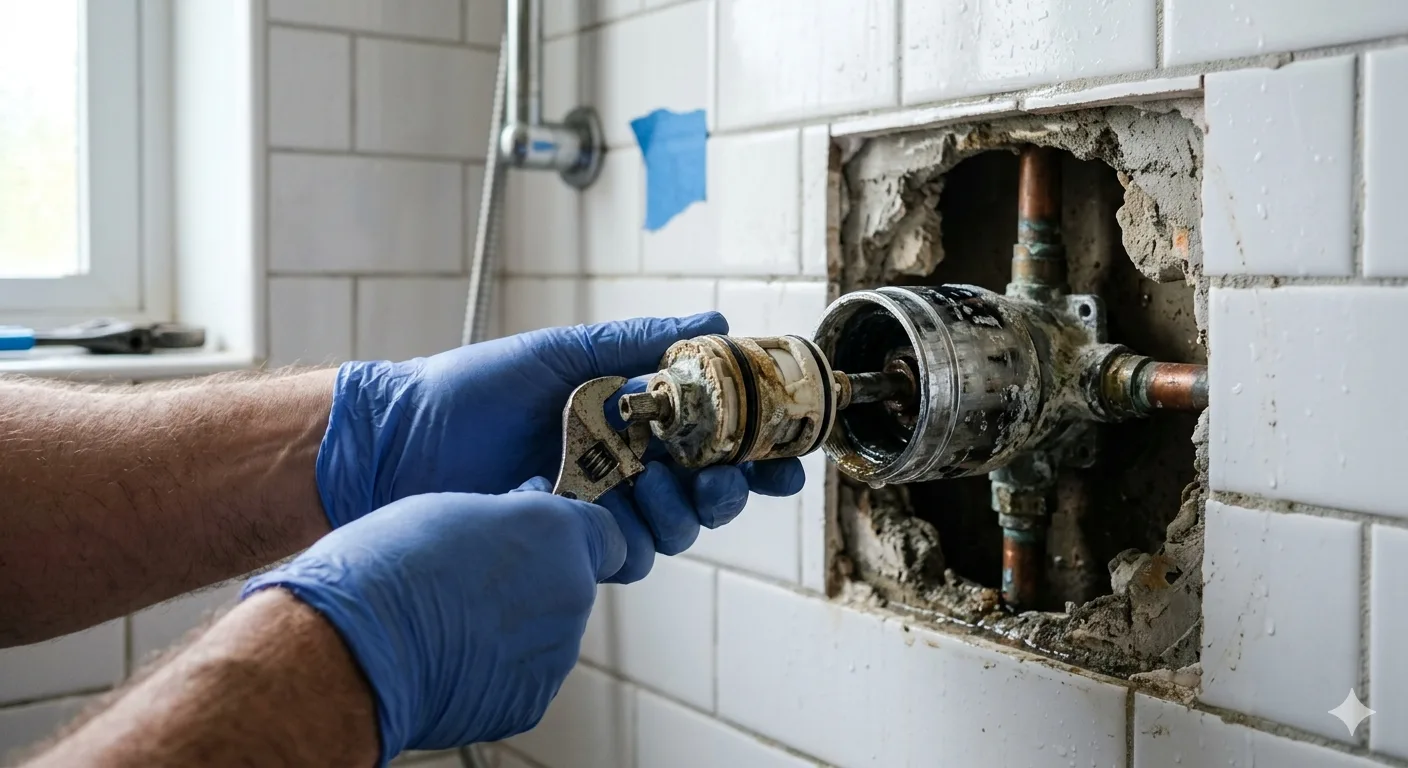
Most shower valve repairs access the valve through the trim and handle from the front of the shower wall. Shutting off the supply, removing the handle, taking off the trim plate and extracting the internal component are the standard steps. Reinstallation reverses the process.
When the valve body has corroded to the point where the cartridge or seat cannot be serviced from the front, the valve body needs replacement. This requires cutting drywall or tile for rear access. A licensed plumber determines whether front access is sufficient before work begins.
Frequently Asked Questions About a Shower Dripping Shower Head
How much water does a dripping shower head waste?
A shower dripping at one drip per second wastes approximately 3,000 gallons per year. At a visible trickle, the waste can reach 20,000 gallons or more annually. At average residential water rates, a continuous trickle adds $50 to $150 per year to a water bill, plus energy cost of heating water that goes straight to the drain.
Can I fix a dripping shower valve myself?
Cartridge replacement on a single-handle shower valve is manageable for a confident DIYer who sources the correct manufacturer-specified cartridge first. Two-handle compression valve repairs involving seat resurfacing are more technical. Any repair that requires access behind the tile or wall is better handled by a licensed plumber to avoid tile damage.
How long does shower valve repair take?
A cartridge replacement on an accessible single-handle shower valve typically takes one to two hours including shutting off water, removing the handle and trim, swapping the cartridge and testing. If the replacement cartridge is not immediately available and needs ordering, the shower may be out of service for a day or two while it arrives.
How do I know if I need a new cartridge or just a new washer?
Single-handle cartridge valves and ceramic disc valves need cartridge replacement. Two-handle compression valves use washers that sit on the end of a stem. If you unscrew the packing nut and pull out the stem, the washer is at the end, held by a brass screw. A flattened, cracked or visibly compressed washer needs replacing. If the washer looks intact but the drip continues, the valve seat needs resurfacing.
Find a Trusted Local Plumber for Shower Drip Repair Today
A shower dripping shower head that has been dripping for months has already cost real money in wasted water and energy. The fix is straightforward once the correct cause is identified and the right part is sourced.
Visit https://plumberlocator.us/emergency/ to find a licensed local plumber who can diagnose and repair your shower valve correctly. For cost estimates on shower plumbing repairs, browse our https://plumberlocator.us/cost-guide/.