Quick Answer: Trenchless sewer pipe repair fixes cracked, corroded, or root-damaged sewer lines through one or two small access points — no trench, no torn-up yard. The two methods are pipe lining (a resin sleeve cured inside the old pipe) and pipe bursting (a new pipe pulled through while the old one fractures outward). Most jobs complete in one to two days and cost $3,000–$15,000 depending on pipe length and method. A camera inspection is always the first step.
What Is Trenchless Sewer Pipe Repair?
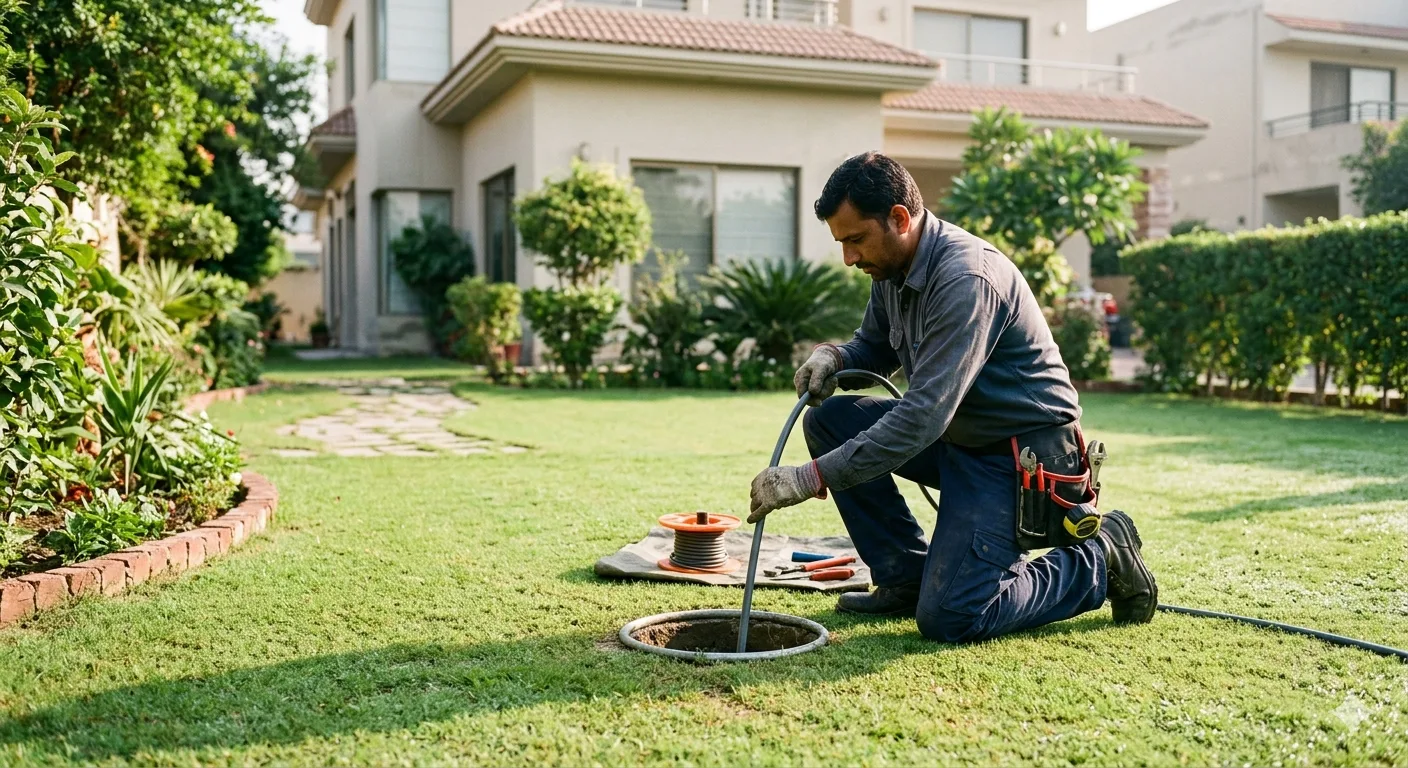
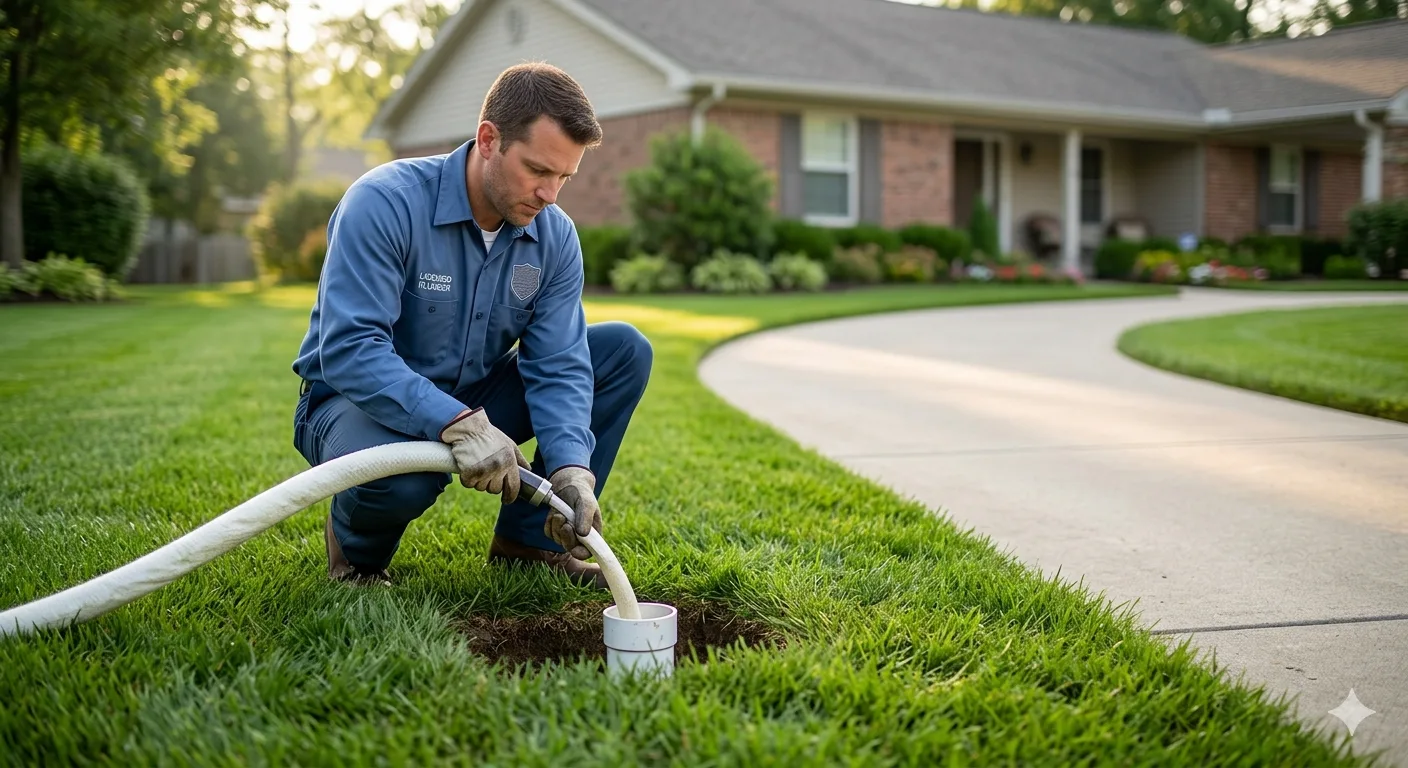
Trenchless sewer pipe repair fixes damaged or broken underground sewer lines without digging up your yard, driveway, or landscaping. Instead of excavating a long trench across your property, technicians access the pipe through one or two small entry points and repair or replace it from the inside out.
It has become the preferred solution for cracked pipes, root intrusions, corrosion, and aging clay or cast iron sewer lines installed before 1980.
What Are the Two Trenchless Sewer Repair Methods?
Pipe lining (CIPP — Cured-in-Place Pipe)
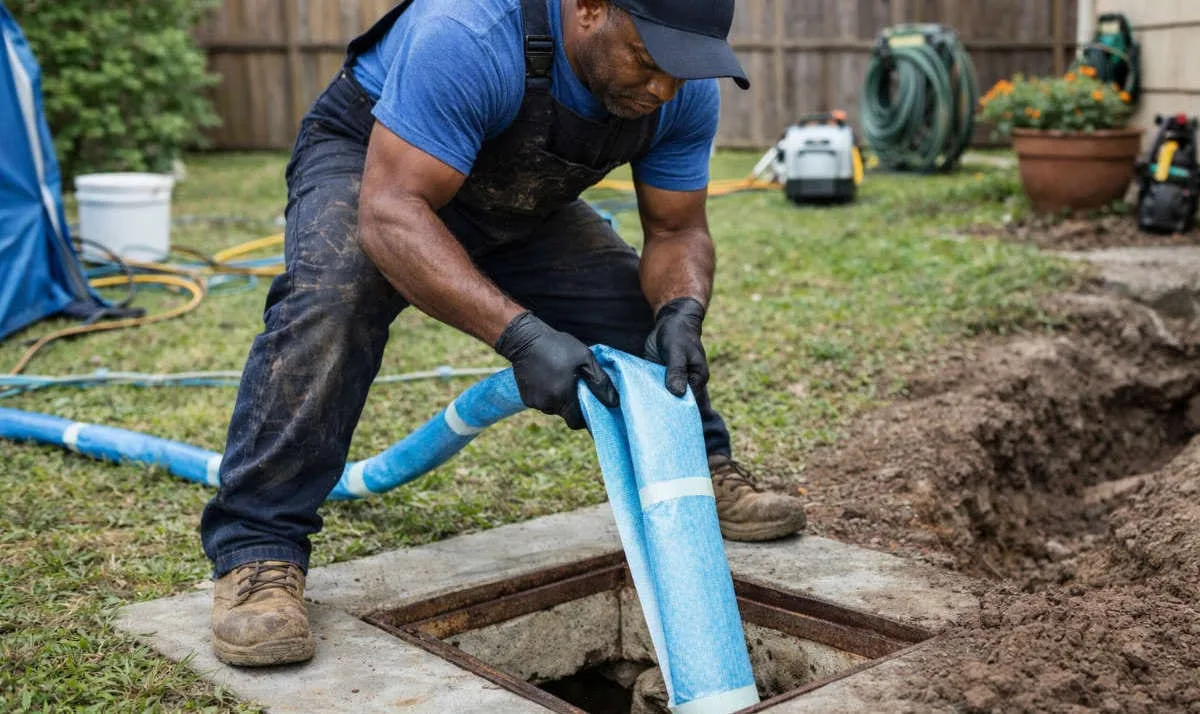
A flexible resin-saturated liner is inserted into the damaged pipe and inflated. Once it cures (usually with hot water, steam, or UV light), it forms a hard, seamless pipe within the old pipe. The new liner is typically 3–8 mm thick and rated to last 50+ years. Best for cracked, leaking, or root-infiltrated pipes that still hold their basic shape.
Pipe bursting
A bursting head is pulled through the old pipe, fracturing it outward while simultaneously pulling a new HDPE pipe into its place. No old pipe material remains in the ground — it’s pushed into the surrounding soil. Best when the existing pipe is collapsed, severely deteriorated, or needs upsizing.
| Method | Best For | Typical Cost Per Foot | Disruption |
|---|---|---|---|
| CIPP lining | Cracked, leaking, root-infiltrated pipe | $80–$250 | Minimal |
| Pipe bursting | Collapsed or severely deteriorated pipe | $100–$300 | Low |
| Traditional excavation | Inaccessible or severely bellied pipe | $50–$200 + restoration | High |
Why Do Homeowners Choose Trenchless Sewer Repair Over Digging?
- No landscape destruction. No torn-up flower beds, cracked driveways, or weeks of mud. Repair is invisible from above ground.
- Faster completion. Most trenchless jobs finish in one to two days. Traditional excavation can take a week or more plus additional time for concrete and landscape restoration.
- Long-lasting results. CIPP liners are rated 50+ years and resist root intrusion and corrosion.
- Lower total cost. Upfront trenchless pricing is similar to excavation, but homeowners avoid $2,000–$8,000 in landscape, concrete, and pavement restoration.
- Less disruption to neighbors. No heavy excavation equipment means fewer noise complaints and no blocked driveways.
When Is Trenchless Sewer Repair NOT an Option?
Trenchless repair works in most situations but not all:
- Severely bellied pipe. If a section has sunk and pools standing water, lining it preserves the problem. Excavation is needed to re-grade.
- Complete collapse over a long section. There must be enough pipe integrity to thread a liner or pull a bursting head.
- Inaccessible entry points. Some older homes have configurations that prevent equipment access.
- Active sewage backup with root mass. Roots are usually hydro-jetted first; if the intrusion has caused total pipe wall failure, bursting may be the only option.
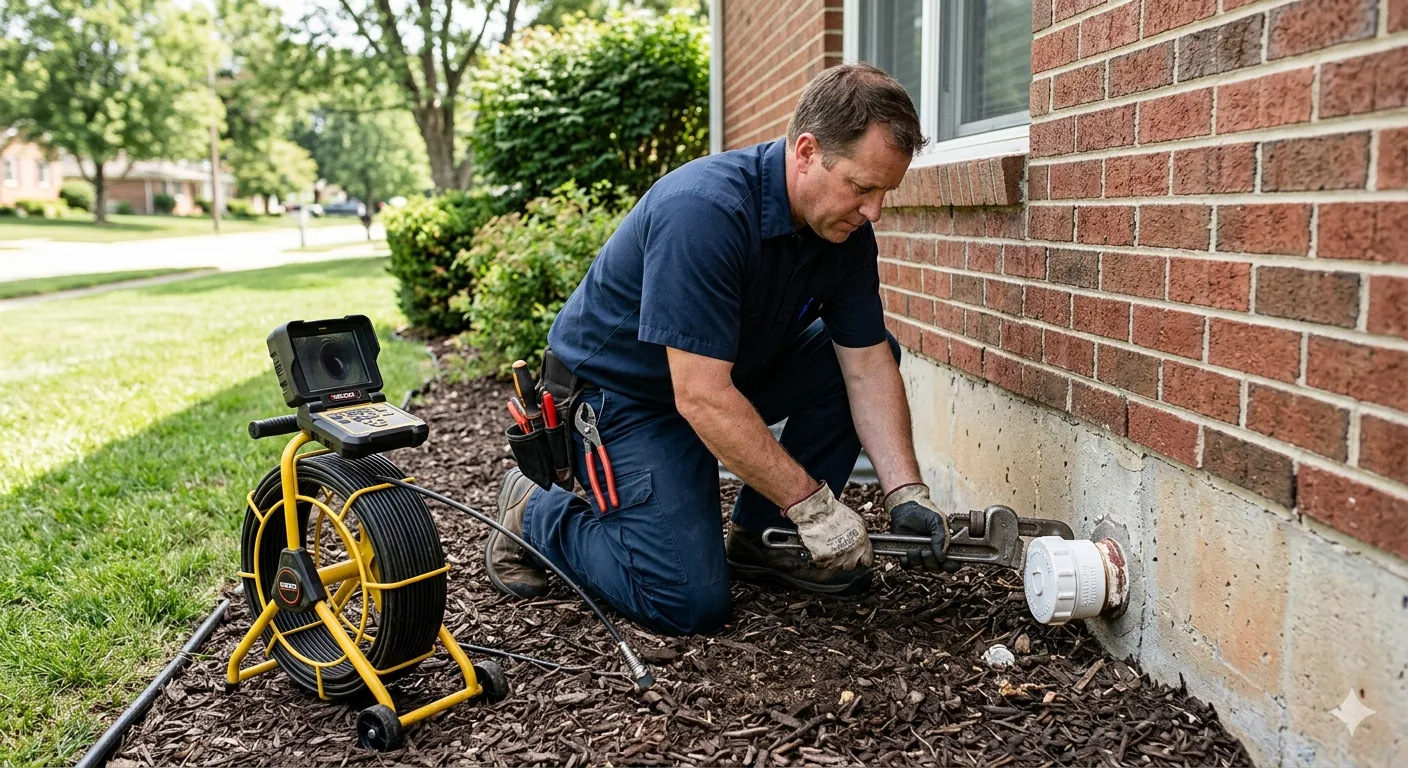
A licensed plumber performs a sewer camera inspection before recommending any method — this is non-negotiable and typically costs $150–$300.
What Does Trenchless Sewer Pipe Repair Cost?
| Scope | Typical Price Range |
|---|---|
| Camera inspection | $150–$300 |
| Spot repair (3–5 ft) | $1,000–$3,000 |
| Full residential line — CIPP lining | $3,000–$10,000 |
| Full residential line — pipe bursting | $4,000–$15,000 |
| Traditional excavation + restoration | $5,000–$25,000+ |
Costs vary by pipe length, depth, diameter, and local labor rates. Always get two or three quotes and ask each contractor to include the camera inspection report with their estimate.
What Are the Warning Signs You Need Sewer Line Repair?
Watch for these signs that your sewer line needs attention — ignoring them turns a $5,000 trenchless repair into a $15,000 emergency:
- Slow drains throughout the house (not just one fixture)
- Gurgling sounds from toilets or drains when water runs elsewhere
- Sewage odors in the yard, basement, or crawlspace
- Unusually green, wet, or sunken patches of grass over the sewer line path
- Frequent backups even after drain cleaning
- Rodent activity in the yard near the sewer line
How Do You Find a Licensed Trenchless Sewer Repair Contractor?
Not every plumber performs trenchless work — the equipment is specialized and the technique requires training. When vetting contractors:
- Ask specifically whether they own their CIPP equipment or subcontract it
- Request the camera inspection video before agreeing to any repair
- Ask for a written quote that breaks out lining vs. bursting and lists the footage to be repaired
- Verify the contractor is licensed for sewer work in your state — licensing requirements vary
Find licensed sewer repair plumbers by state at PlumberLocator.us — States Directory.
Frequently Asked Questions About Trenchless Sewer Repair
How long does trenchless sewer pipe repair take?
Most residential trenchless jobs complete in one to two days. A camera inspection is typically done the day before or the morning of the repair. CIPP curing time adds two to four hours to the job. Pipe bursting is often faster than lining for severely damaged lines.
Does trenchless sewer repair work on all pipe materials?
Yes — CIPP lining works on clay, cast iron, PVC, concrete, and Orangeburg pipe. Pipe bursting works on most materials but is most commonly used to replace clay and cast iron. Your contractor should confirm compatibility after the camera inspection.
Is trenchless sewer repair covered by homeowners insurance?
Sudden and accidental damage (such as a pipe collapsed by a falling tree) is sometimes covered. Gradual deterioration from age or root intrusion typically is not. Document everything before repair begins and contact your insurer to review your specific policy language before the work starts.
How long does a CIPP liner last?
CIPP liners installed by accredited contractors are rated for 50+ years. The Insituform/National Institute of Standards and Testing (NIST) data shows properly installed liners performing well at 30+ years in the ground with no degradation of structural integrity.
Can trenchless repair fix a complete sewer line collapse?
A fully collapsed section cannot be lined — there is no open pipe to thread a liner through. Pipe bursting can sometimes work on collapsed pipe if a pulling head can be introduced. In severe cases, spot excavation over the collapsed section, combined with trenchless repair on the rest of the line, is the most cost-effective approach.