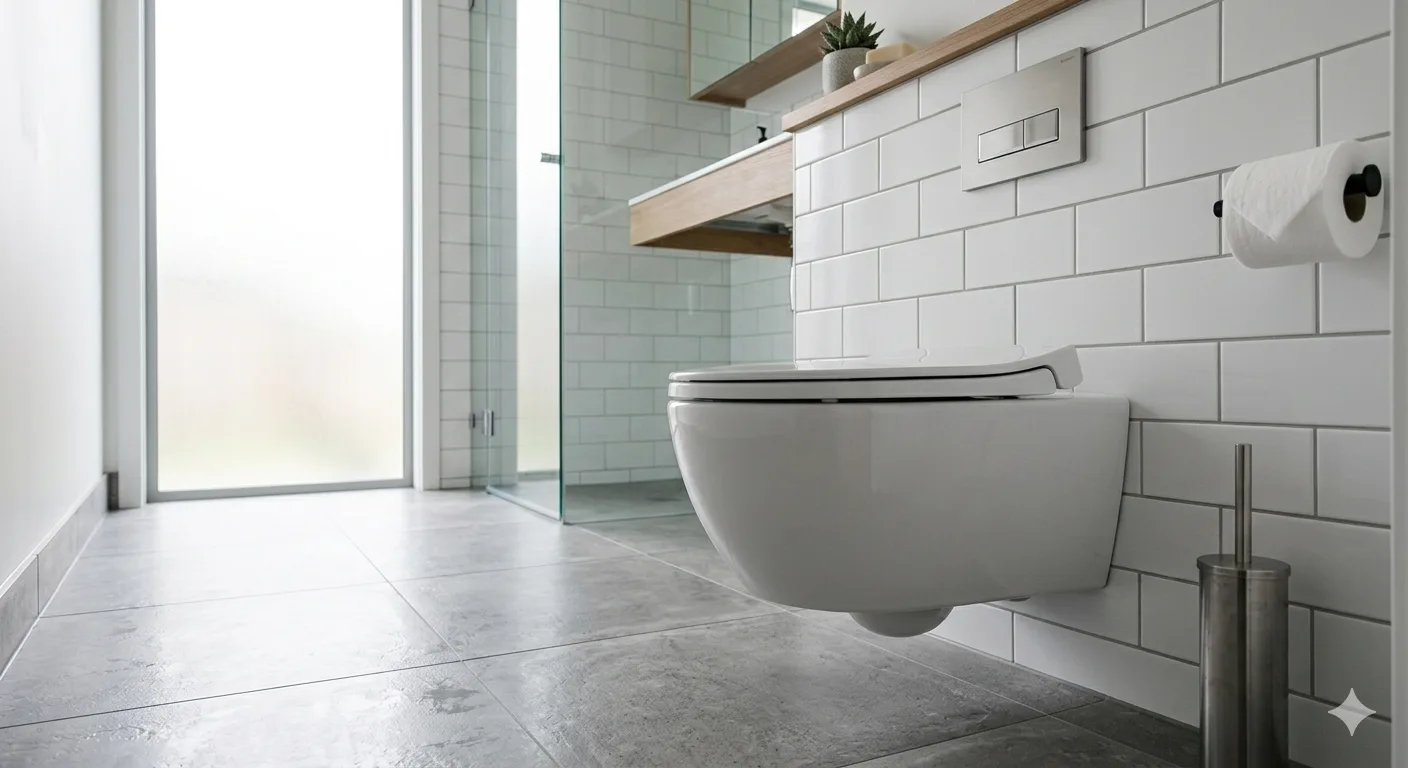
The contractor packs his tools and the bathroom looks incredible. Clean lines. No base touching the floor. You flush it a few times, everything seems fine, and you assume you're done. Here's what most homeowners don't find out until months later: a wall mounted toilet is only as solid as the rough-in work hidden inside your wall, and if that work has even one flaw, you won't know until the damage has already started.
Quick Answer: A wall mounted toilet is a fixture supported entirely by a steel carrier frame bolted inside the wall rather than resting on the floor. The tank is concealed in the wall cavity, and the bowl mounts at whatever height the installer sets during rough-in. Because all load-bearing hardware is hidden, problems with the carrier frame or in-wall tank can go undetected for months. A licensed plumber should handle both rough-in and final installation to meet the 500-pound load rating required by most manufacturers.
What Makes a Wall Mounted Toilet Structurally Different From a Standard One
A wall mounted toilet transfers every pound of weight into the wall. A standard floor-mounted toilet sits on a wax ring bolted to a subfloor flange, forgiving of imperfections because the floor absorbs the load. A wall-hung unit relies on a steel carrier frame anchored to structural studs. That distinction changes everything about how it must be built.
Most manufacturers rate carrier frames to support 500 pounds, accounting for the bowl, a sitting adult, and dynamic pressure. That rating only holds if the frame is anchored correctly. According to the Plumbing-Heating-Cooling Contractors Association, improper rough-in is a leading cause of premature fixture failure in residential remodels. Non-standard stud spacing or under-torqued bolts can push the assembly below that load threshold.
How a Wall Mounted Toilet Conceals Its Own Warning Signs
The in-wall tank sits 3.5 to 6 inches deep inside the wall cavity, invisible once tile goes up. That's the appeal. It's also why a slow leak from the fill valve or flush valve goes undetected far longer than in a standard toilet where the tank lid simply lifts off.
Water migrating inside a wall cavity soaks into framing, insulation, and drywall. The EPA's WaterSense program notes that household leaks waste nearly 1 trillion gallons annually across the US. By the time discoloration appears on a wall or flooring feels soft, the repair bill often exceeds the original installation cost because the fix means opening the wall.
Wall Mounted Toilet Rough-In Depth Is Not Adjustable After Tiling
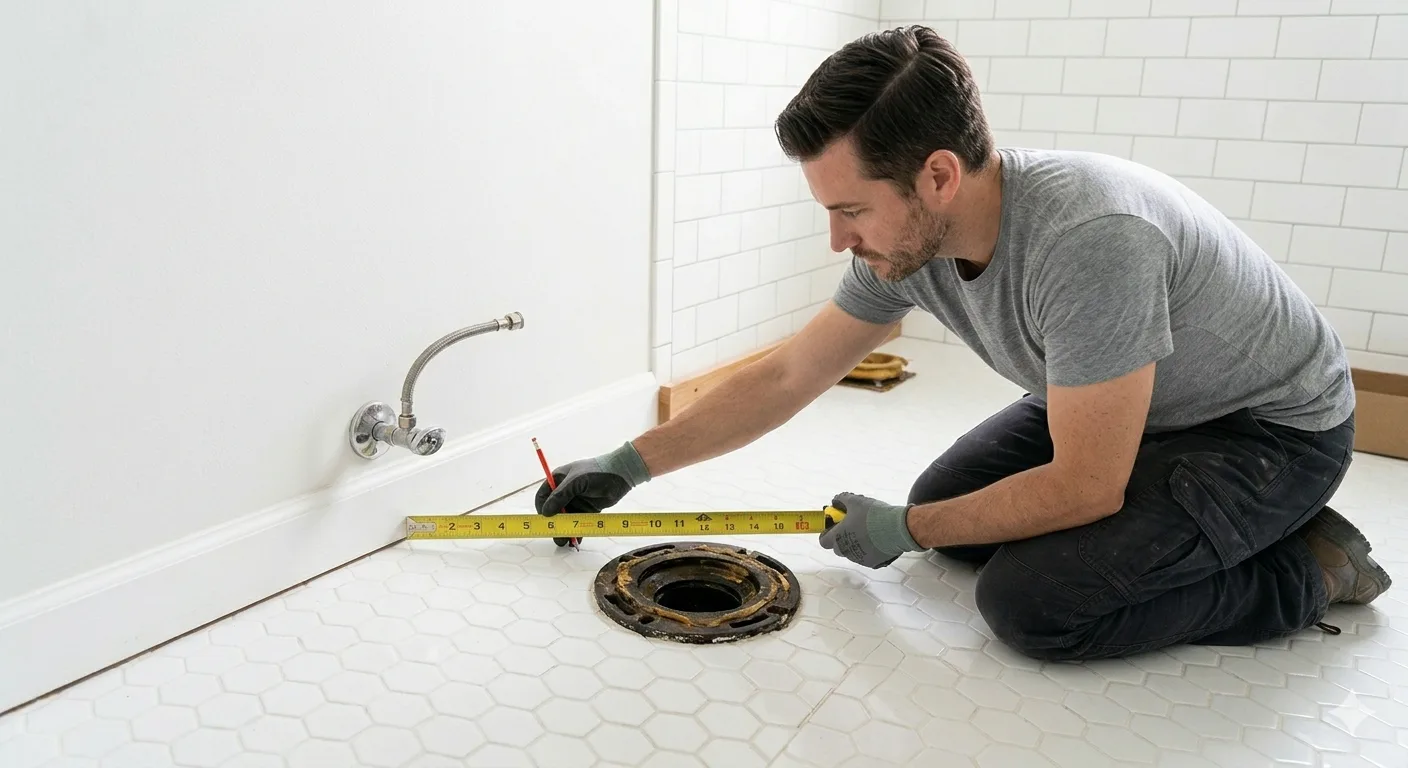
One of the most costly mistakes in a wall mounted toilet installation happens before a single tile goes up. The rough-in depth, the distance from the finished wall surface to the drainpipe centerline, must be set precisely during framing. Most wall-hung bowls require 4 to 6 inches. Set the frame too shallow and the bowl won't mount flush. Too deep and the flush plate won't seat properly.
Getting this wrong after tiling is a full demo job. Tile comes off, the wall opens, the frame is repositioned, and everything is rebuilt. A licensed plumber coordinates rough-in depth with the specific toilet model, confirms bowl height between 15 and 19 inches from finished floor to seat, and checks the carrier frame level in two planes. Our plumbing tips guide covers what to ask before rough-in begins.
Why the Carrier Frame of a Wall Mounted Toilet Must Be Inspected Before Walls Close
Once drywall covers a carrier frame, you are trusting the installation completely. There is no way to verify anchor bolts or the frame level without opening the wall. This is the one window where a professional inspection matters most, and most homeowners skip it because everything looks fine from the outside.
The American Society of Plumbing Engineers recommends that all concealed rough-ins be inspected and pressure-tested before wall closure. For a wall mounted toilet that means confirming carrier anchors are torqued to spec, the in-wall tank is leak-checked, the drain coupling is secure, and the supply shutoff operates. One inspection before closure prevents a five-figure repair later.
A Wall Mounted Toilet Bowl That Moves Even Slightly Is a Serious Problem
A properly installed wall mounted toilet bowl should have zero movement. When you sit on it, nothing rocks, shifts, or flexes. If yours does, the carrier frame connection has failed and the bowl is being held by the drain coupling or supply line rather than the steel frame it should anchor to.
This is not a situation to handle yourself with a wrench. If the bowl moves, the mounting bolts have loosened inside the wall, the carrier has shifted, or the anchors have pulled. Torquing harder without knowing what's inside can shear the threads on the carrier, turning a simple repair into a full frame replacement. A plumber with an inspection camera can assess the situation first.
Wall Mounted Toilet Access Panels Are Not Optional
Every wall mounted toilet installation must include an access panel on the opposite side of the in-wall tank. This is how a plumber services the fill valve, flush valve, and supply connections without demolishing tile. Some contractors skip it, or leave furniture blocking it, because the panel looks untidy.
That decision will cost real money at the worst possible time. When the fill valve fails at 2 AM and water runs continuously, or when the flush valve seal cracks and you're losing a gallon per hour, that panel is the only way to shut things down without cutting tile. Access panels come in tile-in versions that are nearly invisible when done correctly. If yours doesn't have one, find a plumber who can retrofit it now.
Frequently Asked Questions About Wall Mounted Toilets
How long does a wall mounted toilet installation take?
A full rough-in and installation typically takes one to two days for a licensed plumber, not counting tile work. Carrier frame anchoring, in-wall tank setting, and supply stub-out alone usually run four to six hours. Final bowl mounting adds another hour after wall finishes are complete.
Can a wall mounted toilet be installed on any wall?
Not every wall can support one without modification. The carrier frame needs solid stud anchoring and the cavity must be deep enough for the in-wall tank. Exterior walls and walls with non-standard stud spacing need professional assessment before any work begins.
How do you fix a running wall mounted toilet?
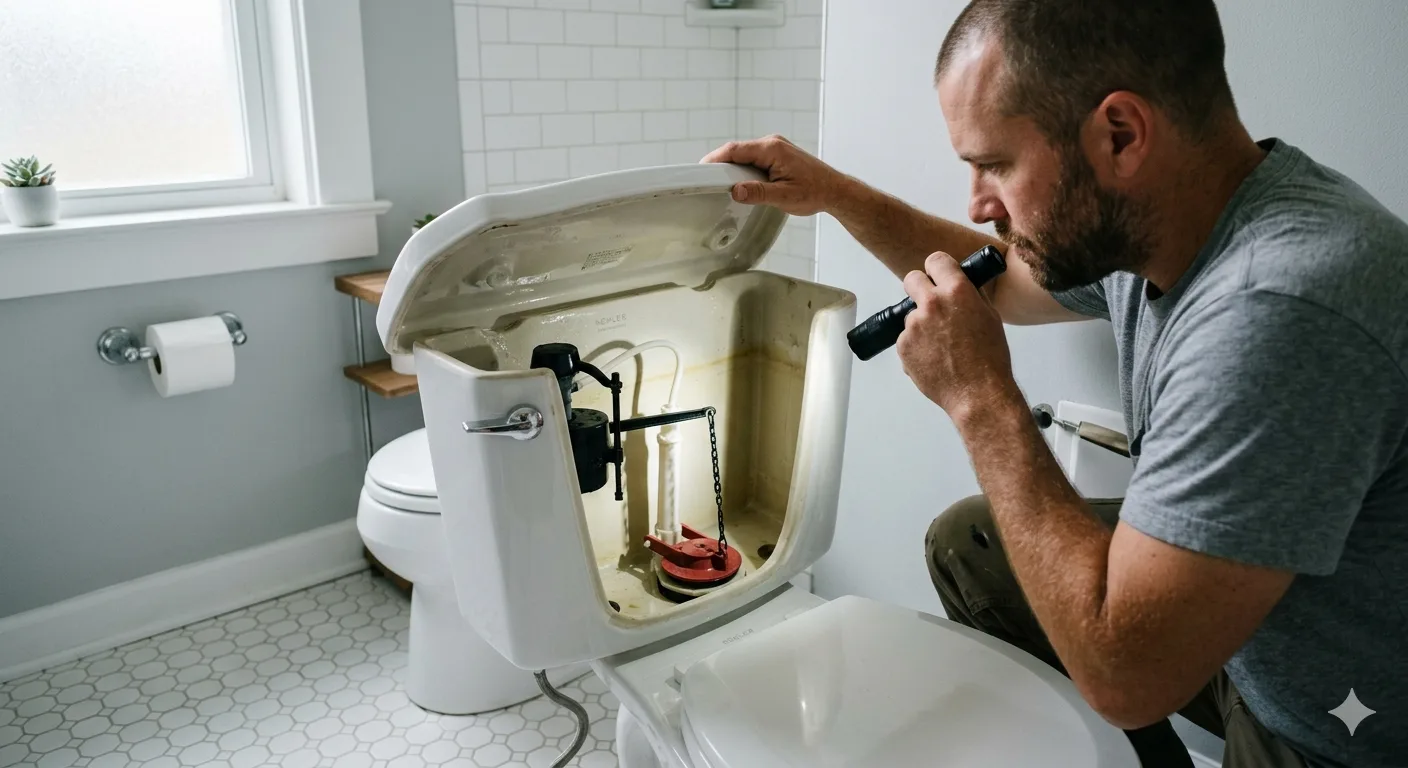
A constantly running fixture almost always means a worn flush valve seal or faulty fill valve inside the in-wall tank. A plumber removes the flush actuator plate, accesses the tank through the access panel, and replaces the part. Straightforward when the panel is unobstructed.
Are wall mounted toilets harder to maintain than floor-mounted ones?
Day-to-day cleaning is easier since there's no base to scrub around. Mechanical maintenance is more involved because tank and valves live inside the wall. A proper access panel makes routine valve work comparable to a standard toilet. Without one, any repair means demolition.
Find a Trusted Local Plumber for Wall Mounted Toilet Work Today
A wall mounted toilet rewards careful installation and punishes shortcuts. The carrier frame, in-wall tank, rough-in depth, and access panel must all be right the first time. Correcting any of them after walls are closed is expensive and disruptive.
Use PlumberLocator.us to connect with a licensed local plumber experienced in wall-hung fixture work. Then visit our plumbing tips section to know what to look for in a rough-in inspection and how to make sure your access panel is correctly set up.