That loud banging noise your pipes make when you shut off a faucet, or your washing machine stops filling? That is water hammer, and a water hammer arrestor is the fix. This guide explains exactly what it is, how it works, where to install one, and how to choose the right size.
What is water hammer?
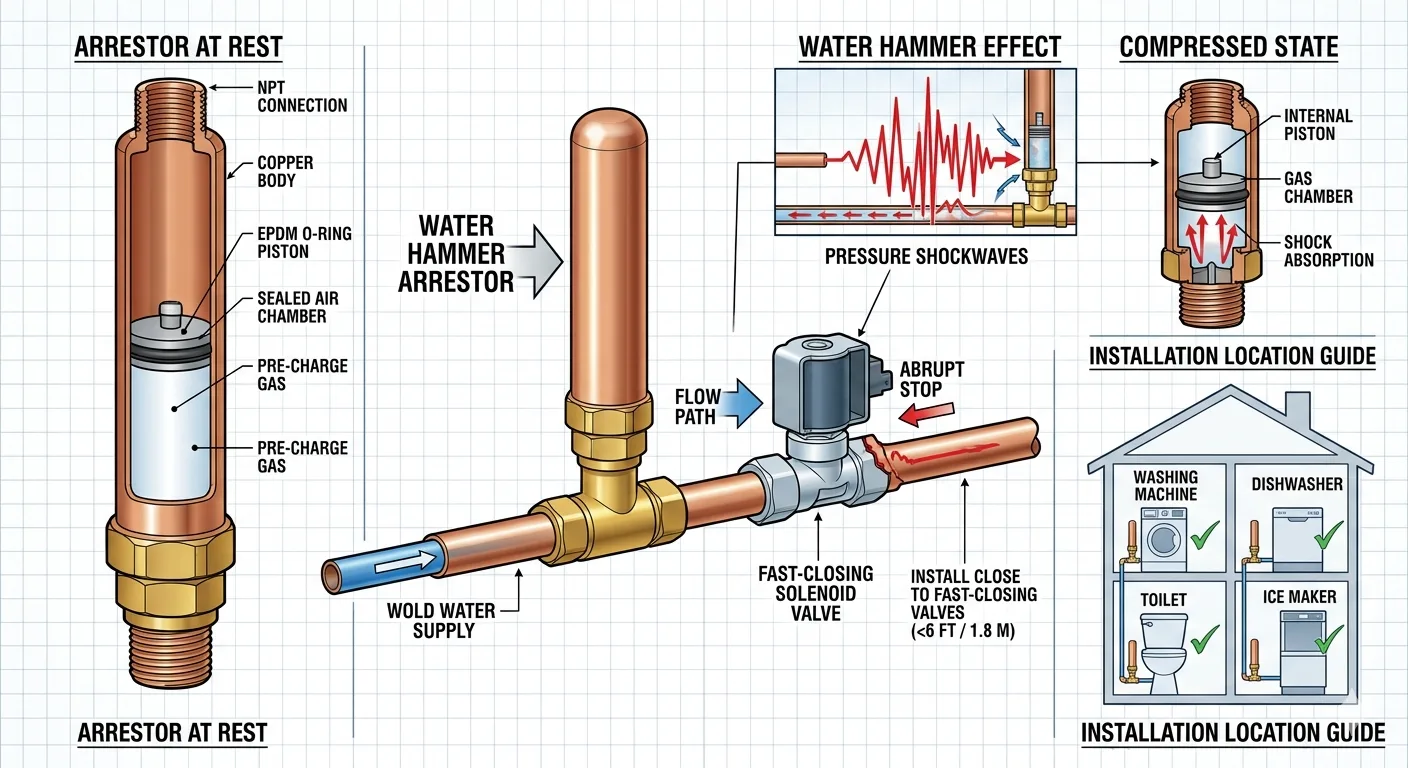
Water hammer is the shockwave that travels through your plumbing when fast-moving water is suddenly forced to stop. When a valve closes quickly, like the solenoid valves inside washing machines and dishwashers, the water column has nowhere to go. The resulting pressure surge slams into the pipe walls, creating that distinctive banging or knocking sound.
Left untreated, water hammer is more than just annoying. Over time, repeated pressure spikes can loosen pipe joints, damage appliance valves, crack fittings, and even burst pipes in severe cases. A water hammer arrestor stops the shockwave before it can cause harm.
What is a water hammer arrestor?
A water hammer arrestor is a small plumbing device, typically a sealed cylinder that absorbs the pressure surge caused by water hammer. Inside the device, a piston or bladder separates the water side from an air-filled chamber. When a sudden pressure spike occurs, the piston compresses the air cushion, absorbing the shockwave instantly and silently.
Unlike older-style air chambers (simply capped sections of pipe that lose their air charge over time and need periodic recharging), a modern water hammer arrestor is permanently sealed and maintenance-free. Once installed, it works indefinitely.
Air chambers and water hammer arrestors are not the same thing. Air chambers are an older, DIY-style solution that requires occasional draining to recharge. A proper water hammer arrestor uses a sealed piston and never needs maintenance.
What Are the Signs you need a water hammer arrestor?
-
Banging or knocking pipes
— especially when a washing machine, dishwasher, or ice maker shuts off.
-
Pipes that shudder or vibrate
when water flow stops suddenly.
-
Rattling sounds in walls
after closing faucets quickly.
-
Recurring leaks at pipe joints or fittings
that have no other obvious cause.
-
Appliance valve failures
— washing machine inlet valves that wear out repeatedly.
Where to install a water hammer arrestor
The most effective placement is as close as possible to the valve causing the hammer. Common installation points include:
- Hot and cold supply lines behind the washing machine (the most common location)
- Under the kitchen sink near the dishwasher supply line
- Near the refrigerator ice maker supply line
- At individual faucet supply stops throughout the home
- Near solenoid-controlled irrigation valves
For whole-home water hammer problems, arrestors can also be installed at the main supply line near the water meter or pressure-reducing valve.
How to install a water hammer arrestor: step by step
Turn off the water supply to the affected appliance or shut off the main supply valve for whole-home installation. Open a nearby faucet to release pressure in the line.
Choose the correct size arrestor. Water hammer arrestors are rated by the number of fixture units they serve. Check the ASSE 1019 rating on the packaging. Size C or D is right for most single-appliance installations like washing machines.
Select the right connection type. Most residential arrestors use a standard 1/2-inch male NPT thread. Match it to your existing supply line fittings. Washing machine models often come with a convenient T-fitting that tees into the existing hose bib.
Wrap the threads with Teflon tape. Apply two to three layers of plumber’s tape clockwise around the male threads before connecting to prevent leaks.
Thread the arrestor in by hand, then tighten with a wrench. Do not overtighten snug plus a quarter turn is sufficient for most threaded fittings. The arrestor can be installed in any orientation: vertical, horizontal, or upside down.
Turn the water back on and test. Run the appliance through a full cycle and listen. The banging should be completely gone or greatly reduced. If it persists, a second arrestor on the other supply line (hot or cold) usually resolves it.
How Do You Choose the Right water hammer arrestor?
Water hammer arrestors are rated under the ASSE 1019 standard. Sizes are labeled A through F based on the number of water supply fixture units (WSFU) they can handle:
-
Size A–B
— single fixtures like faucets and toilets (1–11 WSFU)
-
Size C–D
— washing machines, dishwashers, ice makers (12–32 WSFU)
-
Size E–F
— commercial applications and main supply lines (33–60+ WSFU)
For most homeowners, a Size C arrestor handles the vast majority of residential needs. Top brands include Sioux Chief, Watts, and SharkBite all widely available at hardware stores.
How Much Does a Water Hammer Arrestor Cost?
Single arrestor (DIY)
$10 – $30
Washing machine kit (pair)
$20 – $50
Whole-home professional install
$150 – $400
Plumber service call (diagnosis)
$75 – $200
Frequently asked questions
What is the difference between a water hammer arrestor and an air chamber?
An air chamber is a capped pipe that uses a pocket of trapped air as a cushion but it gradually fills with water and loses effectiveness. A water hammer arrestor uses a sealed piston that never loses its air charge and works permanently without maintenance.
Can I install a water hammer arrestor myself?
Yes. It is one of the most beginner-friendly plumbing repairs available. If you can tighten a garden hose connection, you can install a water hammer arrestor. The entire job typically takes under 15 minutes.
How many water hammer arrestors do I need?
For a washing machine, install one on both the hot and cold supply lines for a total. For a dishwasher or ice maker, one is usually sufficient since they typically have a single supply line.
Do water hammer arrestors wear out?
Quality arrestors from reputable brands are rated to last the life of the plumbing system, typically 20+ years. In areas with very hard water, mineral buildup can eventually degrade the internal piston, but replacement is inexpensive.
Will a water hammer arrestor work if my water pressure is too high?
Not always. If your home’s water pressure exceeds 80 PSI, the root cause of your water hammer may be excessive line pressure rather than valve closure speed. In that case, installing a pressure-reducing valve (PRV) is the better first step.
What Is the Bottom Line?
A water hammer arrestor is one of the cheapest and easiest plumbing upgrades a homeowner can make, typically under $30 and installable in minutes. If your pipes bang when the washing machine stops or your dishwasher finishes filling, do not ignore it. Repeated pressure spikes cause real long-term damage to joints, valves, and fittings. Install an arrestor at the source, follow the steps above, and enjoy permanently quiet pipes.