What a Water Main Break Actually Does to Your Property
A water main break does not just mean a wet yard. It means pressurized water is escaping somewhere between the city connection at the street and your home’s shutoff, doing damage every single hour it goes undetected. The pipe is typically under 40 to 80 PSI of constant pressure. When it ruptures, that force drives water outward through the surrounding soil, eroding and shifting it, and eventually undermining anything sitting on top. Foundations, driveways and landscaping all sit at risk.
The EPA estimates that household leaks waste nearly 1 trillion gallons of water annually across the US, and supply line breaks are among the largest contributors. By the time water surfaces visibly in your yard, it has already been moving underground for some time.
6 Essential Signs a Water Main Break Is Happening Right Now
Catching a water main break early can save you from a five-figure repair bill. The signs are real but easy to dismiss as unrelated problems, which is exactly why so many homeowners lose weeks before calling a plumber.
**Your water bill spikes with no obvious explanation.**A water main break can waste 70 to over 400 gallons per hour. If your bill jumps more than 20 percent and nothing changed in your usage, get a plumber to check the supply line before you pay another inflated bill.
**Water pressure inside your home drops noticeably.**When water is escaping through a crack in the supply line, less of it reaches your fixtures. A pressure drop from the normal 45 to 60 PSI range down into the 20s is a strong indicator that something is wrong between the street and your house.
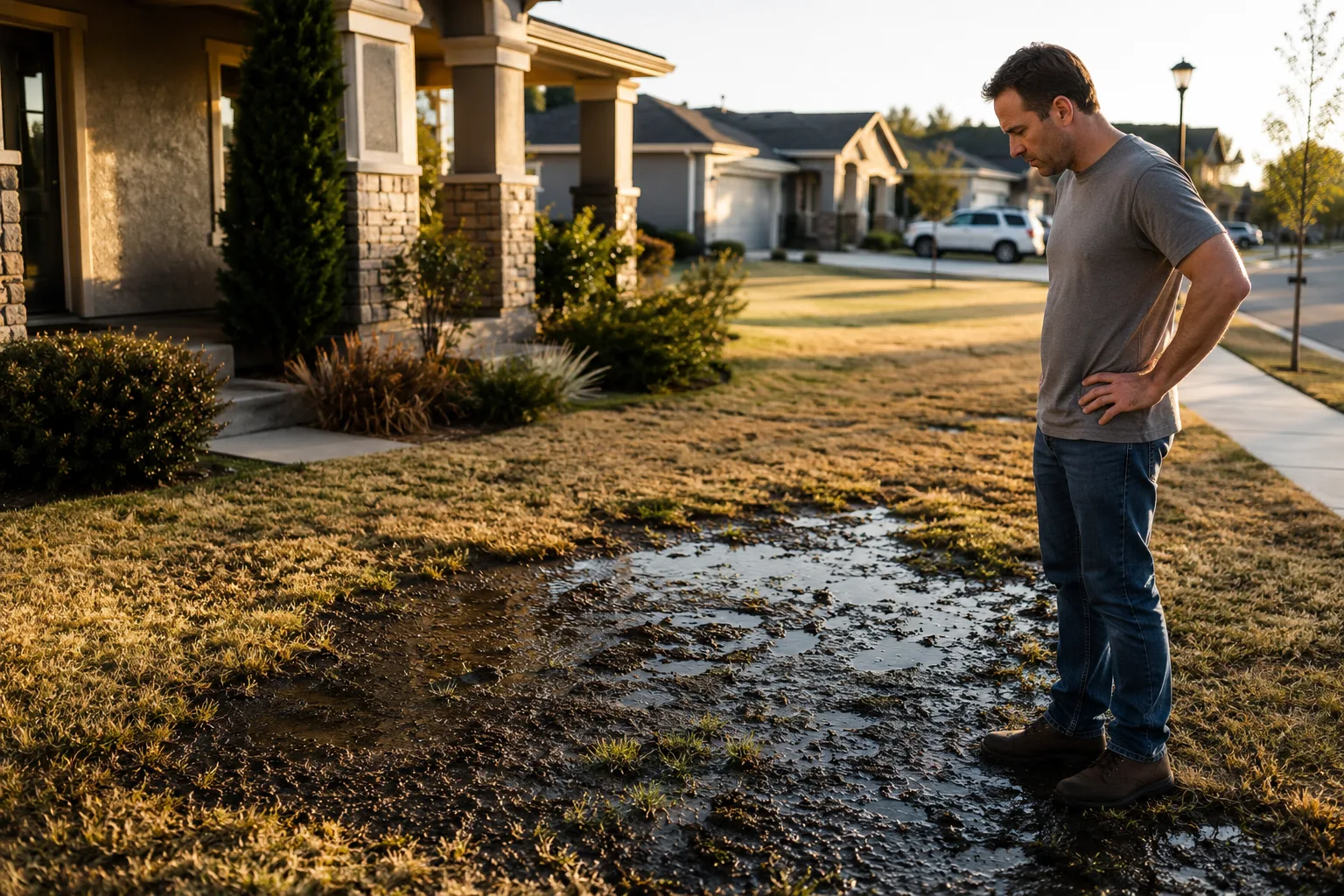
**Soft, soggy or unusually green patches appear in your yard.**Water escaping underground saturates the topsoil above it. One section of your lawn may be inexplicably lush, or a patch of ground feels spongy underfoot. If that wet area aligns with where your supply line runs from the street to your foundation, a water main break is the most likely cause.
**You hear running water when everything is turned off.**Turn off every fixture including the ice maker. Stand near your water meter and listen. A hissing or rushing sound when everything should be silent points directly to a compromised pipe. If the meter dial is spinning while nothing is in use, water is escaping somewhere on the line.
**Discolored or dirty water comes out of your taps.**When a supply pipe fractures, soil and sediment can enter the line. The CDC notes that sudden changes in water clarity or odor are a serious health concern. If your neighbors’ water is fine and yours is not, the contamination point is on your side of the meter.
**Cracks appear in your foundation, driveway or walkways.**Sustained water erosion removes the compacted soil supporting concrete slabs and foundation footings. A new crack in a driveway slab or a step that has started to sink is not cosmetic. If it coincides with any other sign above, you are almost certainly looking at the long-term consequence of a water main break that went undetected too long.
Why a Water Main Break Repair Is Never a DIY Job
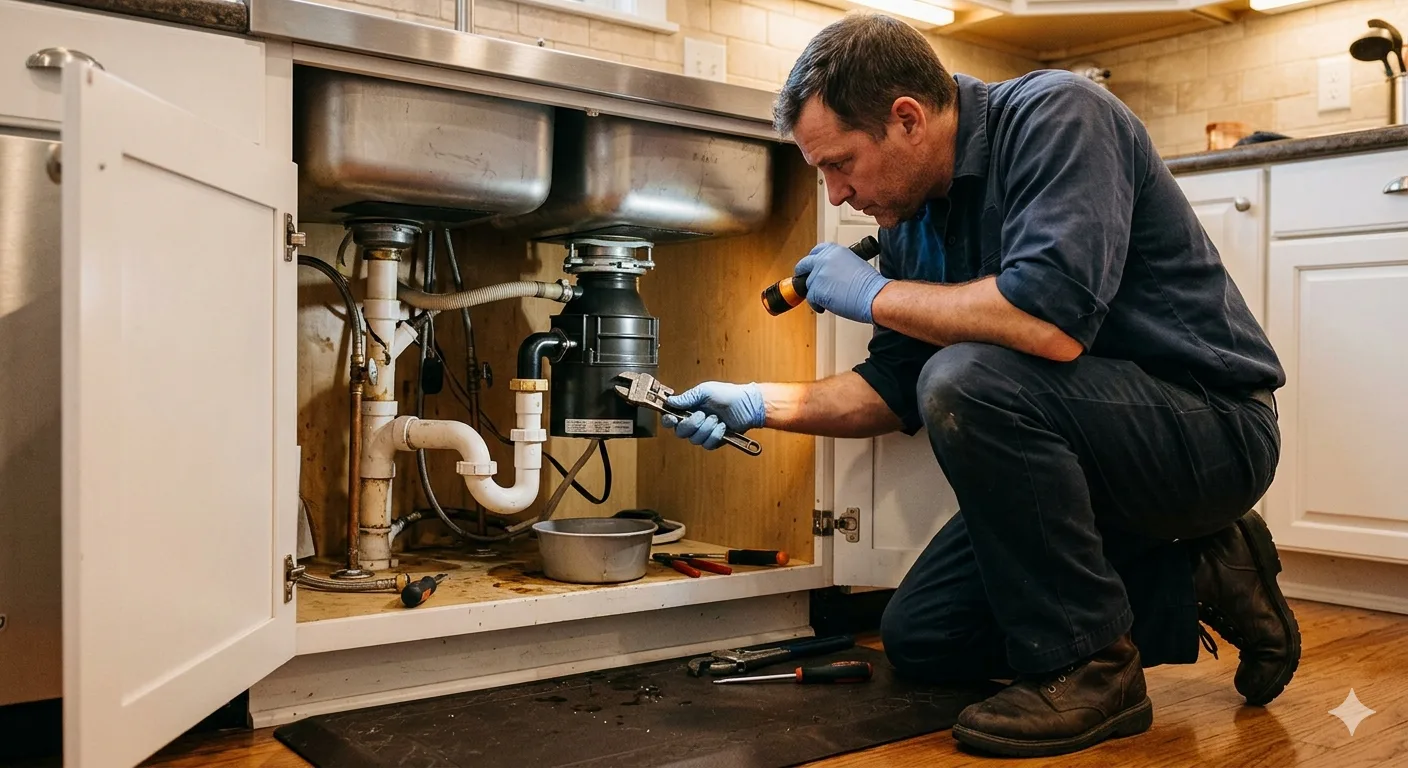
Repairing a water main break is not a weekend project. The pipe is underground, under pressure, and in most jurisdictions it is your legal responsibility from the property line to where it enters your home. The work requires excavation permits, pressure testing and proper material certification. Using incorrect materials on a pressurized supply line can cause an immediate failure or a slow leak that surfaces years later, by which point far more damage has been done.
A licensed plumber uses acoustic leak detection equipment to locate the break without digging up your entire yard. Most water main break repairs run between $500 and $4,000 depending on depth and location, but costs climb when excavation hits a driveway or foundation wall. Getting a professional out the moment you notice any of the signs above is always cheaper than waiting.
What Causes a Water Main Break in the First Place
Pipes do not fail without a reason. Soil movement is the number one culprit. Freeze-thaw cycles put enormous stress on buried pipes as the surrounding soil expands and contracts. Galvanized steel and older cast iron pipes, common in homes built before the 1970s, are particularly vulnerable because corrosion has weakened them over decades. Tree root intrusion is another significant cause since roots will exploit the smallest joint gap. Ground shifting from nearby heavy construction can also trigger sudden breaks even in newer lines.
According to the Plumbing-Heating-Cooling Contractors Association, proactive inspection of aging supply lines is one of the most cost-effective steps a homeowner can take before a break occurs.
Frequently Asked Questions About Water Main Break
**How do I know if the water main break is my responsibility or the city’s?**The break’s location determines who pays. Your municipality owns the main line under the street. The lateral line from the curb connection to your home is yours. Your local water utility can confirm the exact boundary, but anything on your property is typically your cost.
**How long does a water main break repair take?**A straightforward repair with accessible pipe takes one to two days including permit processing. Breaks under driveways or in clay-heavy soils can extend the timeline to three to five days once excavation and backfill are complete.
**Can I use water during a water main break repair?**Usually not. The plumber will shut off supply to your home before excavating. Most households are without water for six to twelve hours for the actual repair work.
**Does homeowner’s insurance cover a water main break?**Standard policies typically exclude the supply line unless you have a separate service line endorsement. Some utilities offer optional protection programs as add-ons to your water bill that cover the lateral line between the meter and your home.
How Do You Find a Trusted Local Plumber for Water Main Break?
A water main break is not a slow problem. Every day without a repair is another day of soil erosion, structural risk and water waste building under your property. The six signs above are your early warning system, but they only help if you act on them. Visit PlumberLocator.us to connect with a licensed local plumber who has the diagnostic equipment to find and fix the break correctly.
Not sure what to ask when you call? Our plumbing tips resource covers how to describe a suspected supply line issue, how to read your water meter, and what the repair process looks like start to finish.