If you rely on a private well for your home’s water supply, your well pump is one of the most critical pieces of equipment on your property. When it stops working or starts behaving strangely, the impact is immediate: no water in the taps, no showers, no laundry, and no way to cook or clean. Understanding well pump repair, what causes problems, how to identify them early, and when to call a professional can save you significant time, money, and stress.
This complete guide covers everything homeowners need to know about well pump repair, from common causes of failure to costs, solutions, and prevention tips.
How a Well Pump Works
Before diving into repairs, it helps to understand how a well pump operates. Most residential properties use one of two types of well pumps.
Submersible Well Pumps are the most common type in modern homes. These pumps are installed deep inside the well casing, submerged beneath the water level. They push water upward through the pipe and into your home’s pressure tank. Submersible pumps are powerful, efficient, and built to last, but because they sit underground in water, accessing them for repair requires specialized equipment.
Jet Pumps are installed above ground, typically in a basement or pump house. They work by creating suction to draw water up from the well. Shallow well jet pumps work for wells up to 25 feet deep, while deep well jet pumps can reach depths of up to 100 feet. Jet pumps are easier to access for inspection and repair but are generally less efficient than submersible models.
Both types of pumps work in conjunction with a pressure tank, which stores water under pressure and delivers it to your home on demand without requiring the pump to run constantly.
What Are the Most Common Signs Your Well Pump Needs Repair?
Catching a well pump problem early can prevent a complete system failure and a much more expensive repair bill. Here are the most important warning signs to watch for.
No Water Coming from the Taps is the most obvious sign of a pump failure. If you turn on a faucet and nothing comes out, the pump may have stopped working entirely due to an electrical failure, a burned out motor, or a broken component inside the system.
Low Water Pressure Throughout the Home often points to a struggling pump or a waterlogged pressure tank. If the pressure drops noticeably during showers or while running multiple fixtures at once, the pump may not be keeping up with demand.
Sputtering or Spitting Water from your faucets is a sign that air is entering the water line. This can indicate that the water table in your well has dropped below the pump intake, or that there is a crack or leak somewhere in the system.
Pump Running Constantly is a serious warning sign. A properly functioning well pump cycles on and off as the pressure tank fills and empties. If the pump runs without stopping, the pressure tank may have lost its air charge, or the pump may be struggling to build adequate pressure due to a mechanical issue.
Unusual Noises such as clicking, grinding, or banging sounds coming from the pressure tank or pump area signal mechanical wear, a failing pressure switch, or a waterlogged tank that needs immediate attention.
Discolored or Cloudy Water can indicate that the pump is pulling sediment, sand, or air into the water supply, which may mean the pump is positioned incorrectly, the well screen is damaged, or the water table has dropped significantly.
Sudden Spike in Electricity Bills without any change in household usage can be caused by a well pump that is overworking due to a mechanical fault or a failing motor drawing more power than it should.
What Are the Most Common Well Pump Problems and Their Repairs?
Once you have identified a symptom, the next step is understanding what is likely causing it and what the repair involves.
Pressure Tank Failure is one of the most frequent well pump repair issues. Inside every pressure tank is an air bladder that separates the air charge from the water. When this bladder fails, the tank becomes waterlogged and the pump short cycles, turning on and off rapidly every few seconds. Replacing a waterlogged pressure tank is a straightforward repair that most licensed well pump technicians can complete in a few hours.
Pressure Switch Problems are another common repair. The pressure switch tells the pump when to turn on and when to stop. If the switch fails or its contacts become corroded, the pump may not turn on at all, or it may run continuously. Replacing a pressure switch is a relatively affordable repair and one of the first things a technician will check during a service call.
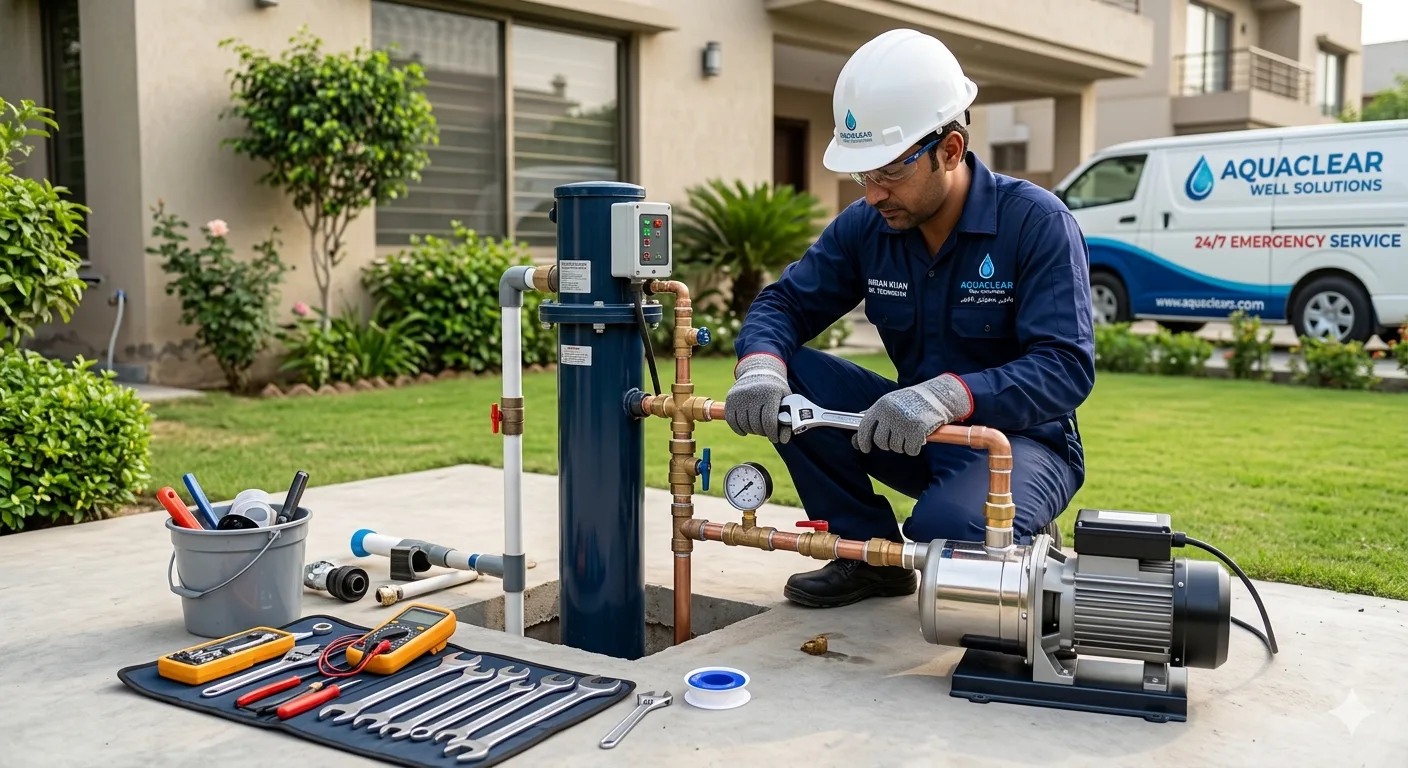
Burned Out Motor is a more serious and expensive repair. The motor inside a submersible pump can burn out due to overheating, electrical surges, running dry when the water table drops, or simply reaching the end of its lifespan. Replacing a submersible pump motor requires pulling the entire pump out of the well, which involves specialized lifting equipment and should only be performed by a licensed well pump contractor.
Broken Pump Impeller occurs when debris or sediment damages the internal components that move water through the pump. A damaged impeller reduces water flow significantly and eventually causes the motor to overheat. This repair also requires pulling the pump from the well for inspection and replacement of the affected parts.
Wiring and Electrical Failures are common causes of complete pump shutdowns. Underground wiring connecting the pump to the control box can corrode, crack, or be damaged by rodents or ground movement. Electrical repairs on well pump systems should always be handled by a licensed professional due to the combination of water and electricity involved.
Low Water Table is not a pump failure in the traditional sense, but it produces the same symptoms. During droughts or periods of heavy usage, the water level in a well can drop below the pump intake, causing sputtering, air in the lines, and reduced flow. Solutions range from lowering the pump deeper into the well to drilling a new, deeper well in severe cases.
How Much Does Well Pump Repair Cost?
Well pump repair costs vary widely depending on the type of pump, the nature of the problem, the depth of the well, and local labor rates. Here is a general overview of what homeowners can expect to pay.
Replacing a pressure switch typically costs between $150 and $300 including parts and labor. Replacing a pressure tank generally runs between $300 and $700. Repairing or replacing a jet pump above ground costs between $500 and $1,200 depending on the extent of the damage. Pulling and replacing a submersible pump is the most expensive repair, with costs ranging from $1,000 to $3,000 or more depending on well depth and pump size. A full well pump system replacement including the pump, pressure tank, and all associated components can cost between $2,000 and $5,000.
Getting at least two or three quotes from licensed well pump contractors in your area before committing to any major repair is always the smart approach.
Can You Repair a Well Pump Yourself?
Some minor well pump related tasks can be handled by a knowledgeable homeowner. Checking and resetting a tripped circuit breaker, testing the pressure switch with a multimeter, and inspecting visible wiring and connections are all things a careful homeowner can do safely.
However, most well pump repairs require professional expertise. Pulling a submersible pump from a deep well without the right equipment can damage the pump, the wiring, and the well casing itself. Electrical work on pump systems carries serious safety risks. Any work that involves the well opening or the components inside the well casing should always be performed by a licensed and insured well pump technician.
How to Extend the Life of Your Well Pump
Routine maintenance goes a long way toward preventing costly well pump repairs down the road. Schedule a professional well inspection every one to two years to check water quality, pump performance, pressure levels, and the condition of the pressure tank. Test your water annually for bacteria, minerals, and contaminants that can damage pump components over time. Install a whole house surge protector to shield the pump motor from electrical spikes during storms. Avoid running the pump dry by monitoring your water usage during droughts and having the water table level checked if you notice reduced flow.
The average lifespan of a submersible well pump is between 10 and 15 years with proper care. A jet pump typically lasts between 10 and 20 years. Staying ahead of maintenance keeps your system running at its best and helps you avoid emergency repairs at the worst possible time.
What Are the Key Takeaways?
Well pump repair is not something most homeowners can or should tackle on their own. The combination of electrical components, underground equipment, and pressurized water systems makes professional service the safest and most reliable option for anything beyond basic troubleshooting.
Knowing the warning signs of a failing pump, understanding the most common repair issues, and building a relationship with a trusted local well pump contractor are the three best things you can do to protect your home’s water supply.
Do not wait until you have no water at all. If your pump is showing any of the symptoms described in this guide, contact a licensed well pump repair technician in your area today and get your water flowing reliably again.