A warm spot on your floor, a water bill that suddenly spiked for no obvious reason, or the sound of running water when every tap is off: these are the signals that send homeowners searching for slab leak repair near me. Slab leaks are among the most serious residential plumbing failures because they happen out of sight and cause damage steadily for weeks before any visible sign appears. Getting the right contractor matters more here than in almost any other plumbing job.
Quick Answer: Slab leak repair near me searches connect homeowners with licensed plumbers who can detect and repair leaking pipes beneath a concrete slab foundation. Detection uses electronic listening equipment, thermal imaging or pressurised gas tracing to pinpoint the exact leak location before any concrete is opened. Repair methods include direct access excavation, pipe rerouting and epoxy pipe lining depending on the leak location and pipe condition. A licensed plumber performs the detection before quoting any repair.
Why Are Slab Leaks So Dangerous to Your Home?
A pipe that bursts inside a wall is visible within hours. One leaking under a concrete slab can release water for weeks before any surface symptom appears. That water saturates the soil under the slab and eventually finds paths upward through cracks, expansion joints or at the slab edges.
The EPA estimates even a slow slab leak can waste thousands of gallons before detection. The water saturating the soil beneath the slab creates hydrostatic pressure that shifts the foundation over time, causing wall cracks, sticking doors and uneven floors that look like settling but come from an active leak.
How Do You Find the Right Slab Leak Repair Pro Near You?
Step 1: How Do You Confirm You Actually Have a Slab Leak?
Before searching for slab leak repair near me, do a simple meter test. Turn off every fixture and appliance, including the ice maker and irrigation. Watch the meter dial for 15 minutes. If it moves with everything off, water is escaping somewhere. Check visible pipes first. If nothing is found and the meter keeps moving, a slab leak is a likely cause. This costs nothing and rules out simpler problems.
Step 2: What Physical Signs Point to a Slab Leak?
Hot water line leaks often create warm spots on the floor noticeable in bare feet. Cold water leaks cause damp patches or efflorescence, the white mineral staining that appears as moisture moves through concrete. Mold smells at floor level without visible surface moisture, and new cracks in floor tile or grout, are both signs of ongoing moisture movement from below. Documenting these for the plumber shortens the diagnostic process.
Step 3: What Detection Equipment Should a Slab Leak Plumber Use?
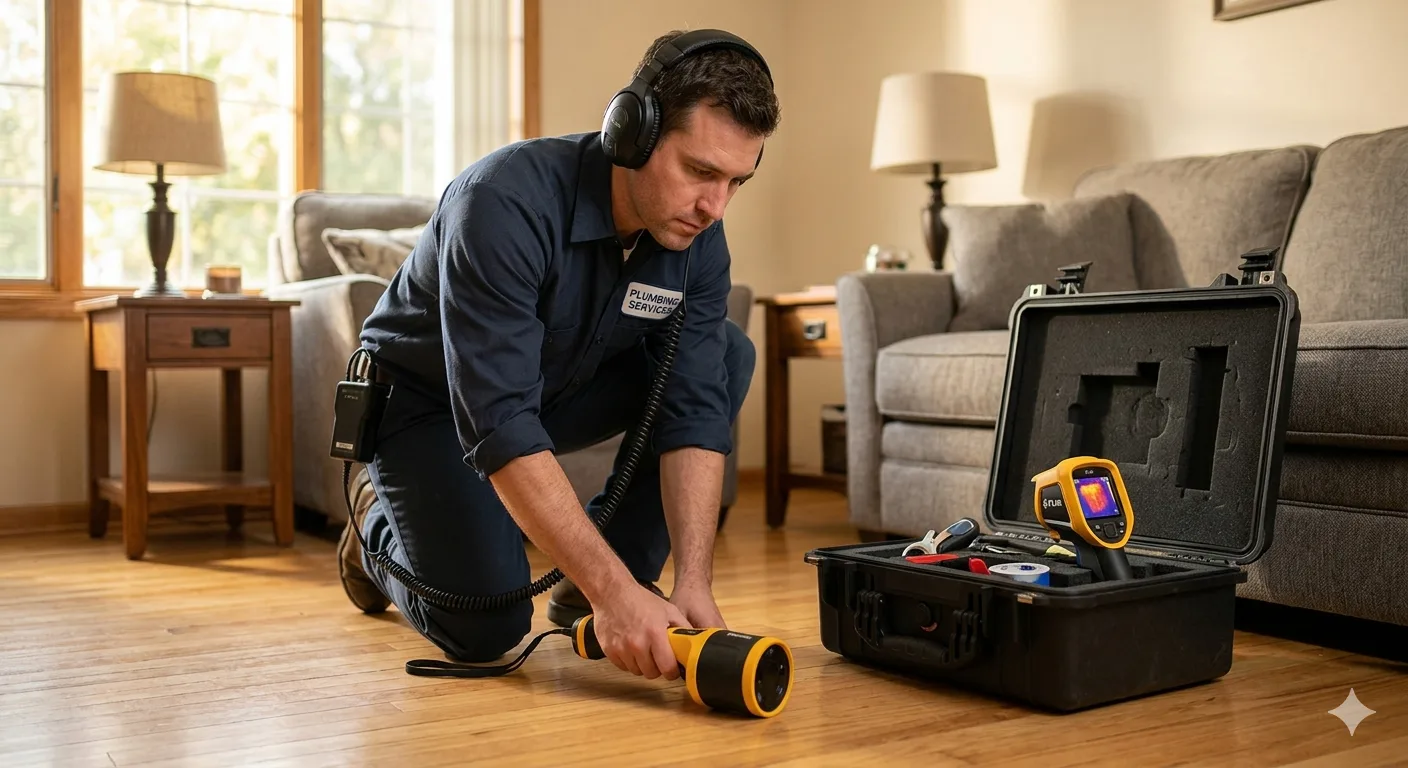
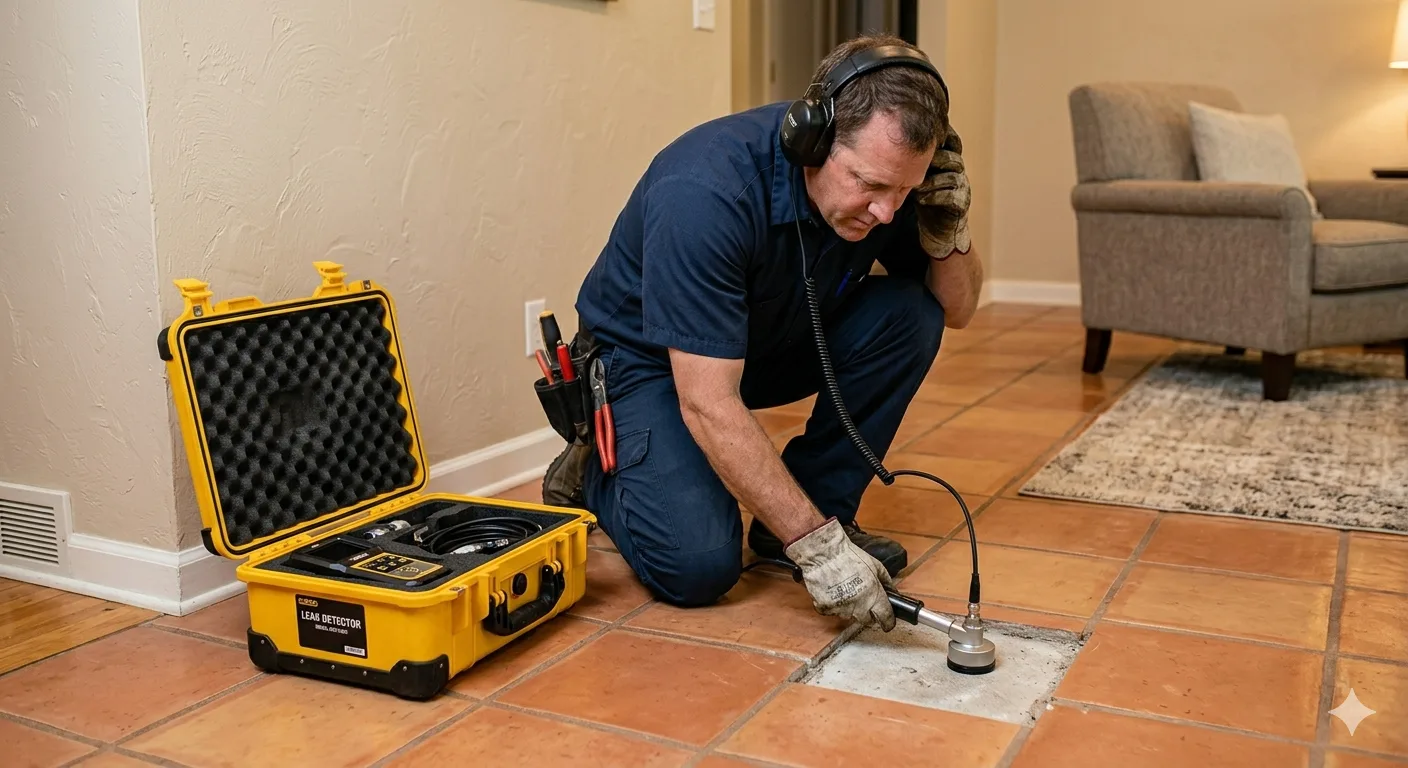
The standard for slab leak repair near me diagnosis is electronic leak detection using acoustic equipment, thermal imaging or tracer gas. These locate the leak to within a few inches before any concrete is touched. A plumber who starts breaking concrete without detection either doesn't have the equipment or doesn't know how to use it. The PHCC identifies non-invasive detection as the professional standard before any slab leak repair.
Step 4: What Are the Three Slab Leak Repair Methods?
Once the leak is pinpointed, the repair method depends on pipe location, material and damage extent. Direct access excavation breaks the slab at the exact leak point, repairs the pipe and patches the concrete. Pipe rerouting abandons the leaking pipe and runs a new supply line through walls and ceiling, bypassing the slab. Epoxy lining coats the pipe interior with resin, sealing the leak without excavation. A legitimate slab leak repair near me provider explains which method applies and why before work begins.
Step 5: Why Should Detection and Repair Be Quoted Separately?
Detection and repair are two separate scopes of work. A flat-fee slab leak repair near me quote that bundles both without knowing the leak location is not based on real information. Detection confirms the location and the extent of damage, which then determines how complex the repair will be. A reputable plumber quotes detection as a defined service, typically $150 to $400 depending on methods used, and then provides a repair quote after detection confirms the scope. Any contractor who refuses to separate these or who quotes a repair before detection has completed is not following a professional process.
How Much Does Slab Leak Repair Cost?
Slab leak detection runs $150 to $400 for a professional electronic detection visit. Direct access excavation and repair costs $500 to $1,500 for the plumbing work alone, plus concrete patching costs of $200 to $600 depending on the area opened. Pipe rerouting costs $1,500 to $4,000 depending on the new line length and routing complexity. Epoxy lining costs $1,000 to $3,000 for a standard residential supply line section.
The CDC classifies foundation moisture from unresolved slab leaks as a primary condition for mold growth. Remediation for a foundation-level infestation adds $2,000 to $6,000 or more. Early detection and repair is consistently less expensive than delayed repair plus remediation.
Frequently Asked Questions About Slab Leak Repair Near Me
How do I know if my slab leak is on a hot or cold water line?
A hot water line leak creates a warm spot on the floor surface that is often the first physical sign noticed. Cold water line leaks don't produce a temperature difference but may cause damp patches or efflorescence. Your plumber can confirm which line is affected during the detection process by isolating the hot and cold supply and monitoring pressure changes in each.
Can a slab leak cause foundation damage?
Yes. Water saturating the soil under a slab creates uneven hydrostatic pressure that can shift the foundation over time. This typically appears as new cracks in interior walls, sticking doors and windows, or uneven floors. A slab leak that has been active for months before detection is more likely to have caused secondary structural effects that need to be assessed after the plumbing repair.
How long does slab leak repair take?
Detection takes one to three hours. Direct access excavation and repair takes one day. Pipe rerouting takes one to two days. Epoxy lining takes one day including curing. Concrete patching adds a second visit once the plumbing is confirmed watertight.
Does homeowner insurance cover slab leak repair?
Many policies cover the concrete breaking and patching to access the leak, but not the plumbing repair itself. Water damage from the leak may be covered under sudden and accidental provisions depending on how long it was active. Document detection findings and get a licensed plumber's report before filing any claim.
How Do You Find a Trusted Slab Leak Plumber Near You?
A slab leak that is detected and repaired early is a manageable repair. One that runs for months before detection is a foundation, flooring and potentially mold remediation event. The right contractor makes the difference between those two outcomes.
Visit PlumberLocator.us to find a vetted licensed plumber in your area experienced with slab leak repair near me diagnosis and repair. For more guidance on protecting your home's plumbing and foundation, browse our plumbing tips section.