Why Your WC Dual Flush Toilet Wastes More Water Than You Realise
The waste is invisible, and that’s what makes it dangerous. A running toilet doesn’t always make a sound. Water seeps past a worn flush valve seal at a slow trickle, bypasses the bowl entirely and flows straight into the drain. According to the EPA, a leaking toilet can waste as much as 200 gallons per day. That’s 6,000 gallons a month gone without a trace.
Dual flush systems were designed to prevent exactly this. By splitting into two volumes, they cut toilet water use by 20 to 30 percent against older single-flush models. But more components means more ways to fail. When any one seal degrades, those savings vanish.
What Are the 5 WC Dual Flush Problems That Cause the Most Damage?
Most serious damage from a failing wc dual flush system comes from problems that develop slowly. By the time there’s a visible sign, the fault has usually been running for weeks.
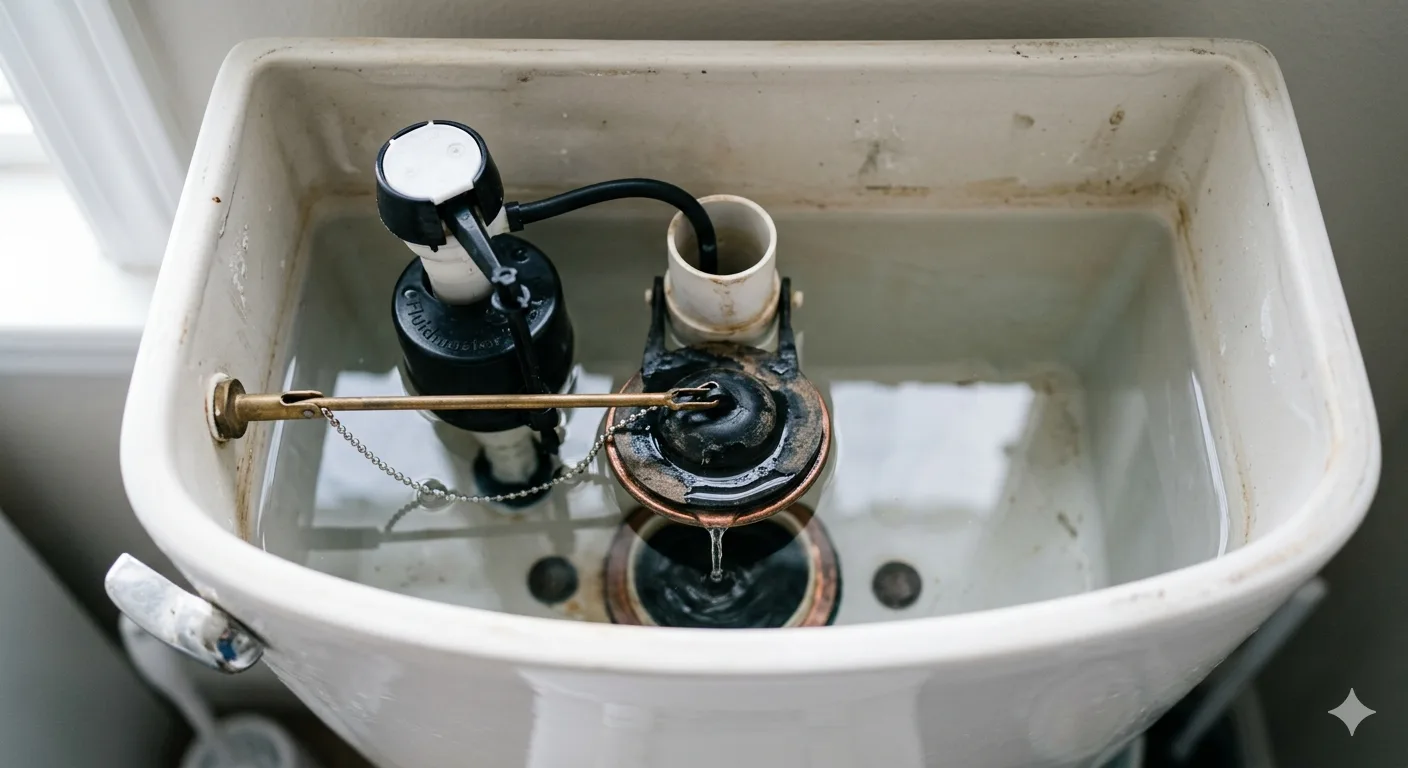
**The flush valve seal has worn through.**This is the most common culprit in any wc dual flush system. The flush valve sits at the base of the cistern and controls water flow into the bowl. It relies on a rubber seal that compresses to hold water back between flushes. Hard water minerals score the rubber surface and stop it seating correctly. Most seals last five to seven years, but water hardness cuts that short in states like Arizona, Texas and Florida. You’ll notice the bowl refilling with nobody having flushed.
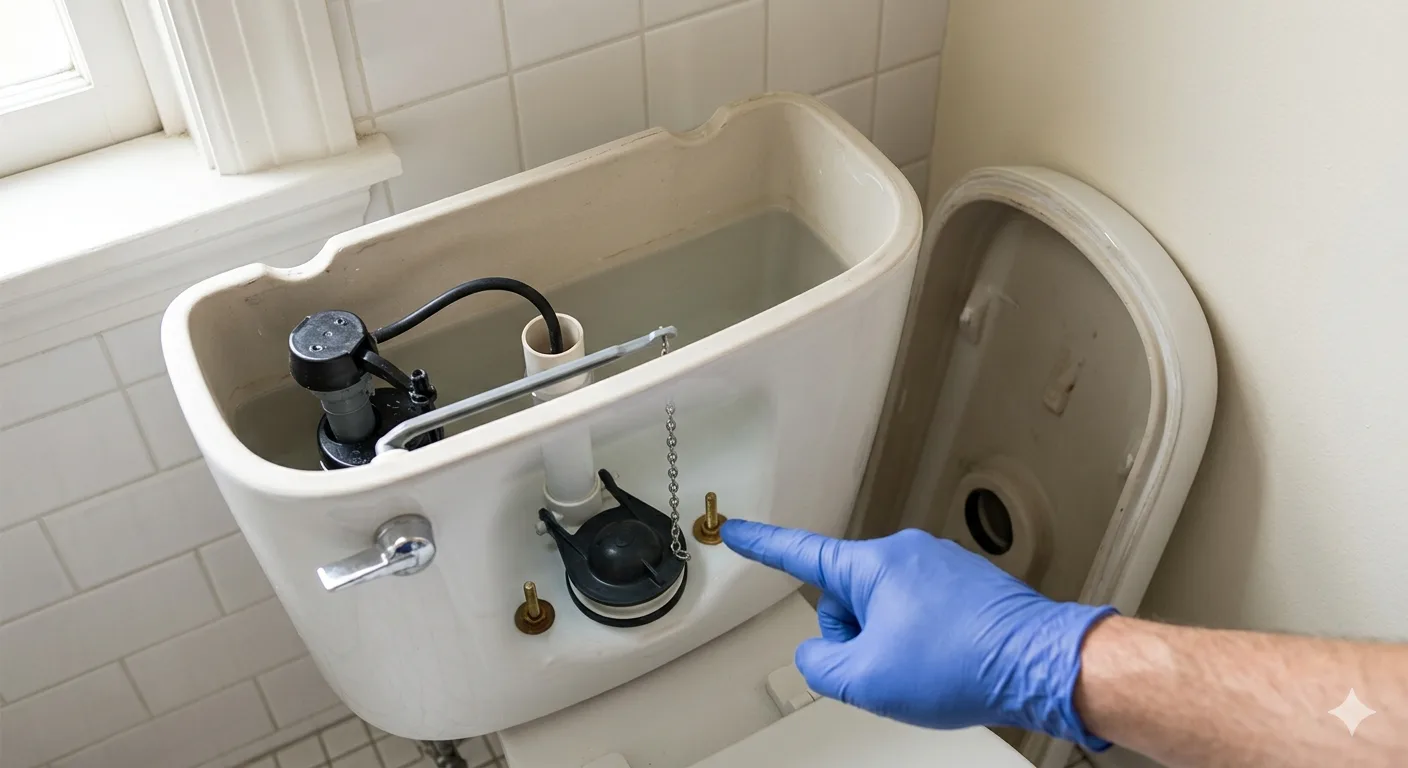
**The fill valve won’t shut off properly.**The fill valve refills the cistern after every flush. When it fails to close, water keeps trickling in and immediately exits through the overflow tube into the bowl. Remove the cistern lid and listen. Hissing with no recent flush is the fill valve telling you it’s done. Failures here are more complex than in standard toilets because the tower valve assembly is taller and the float is built differently.
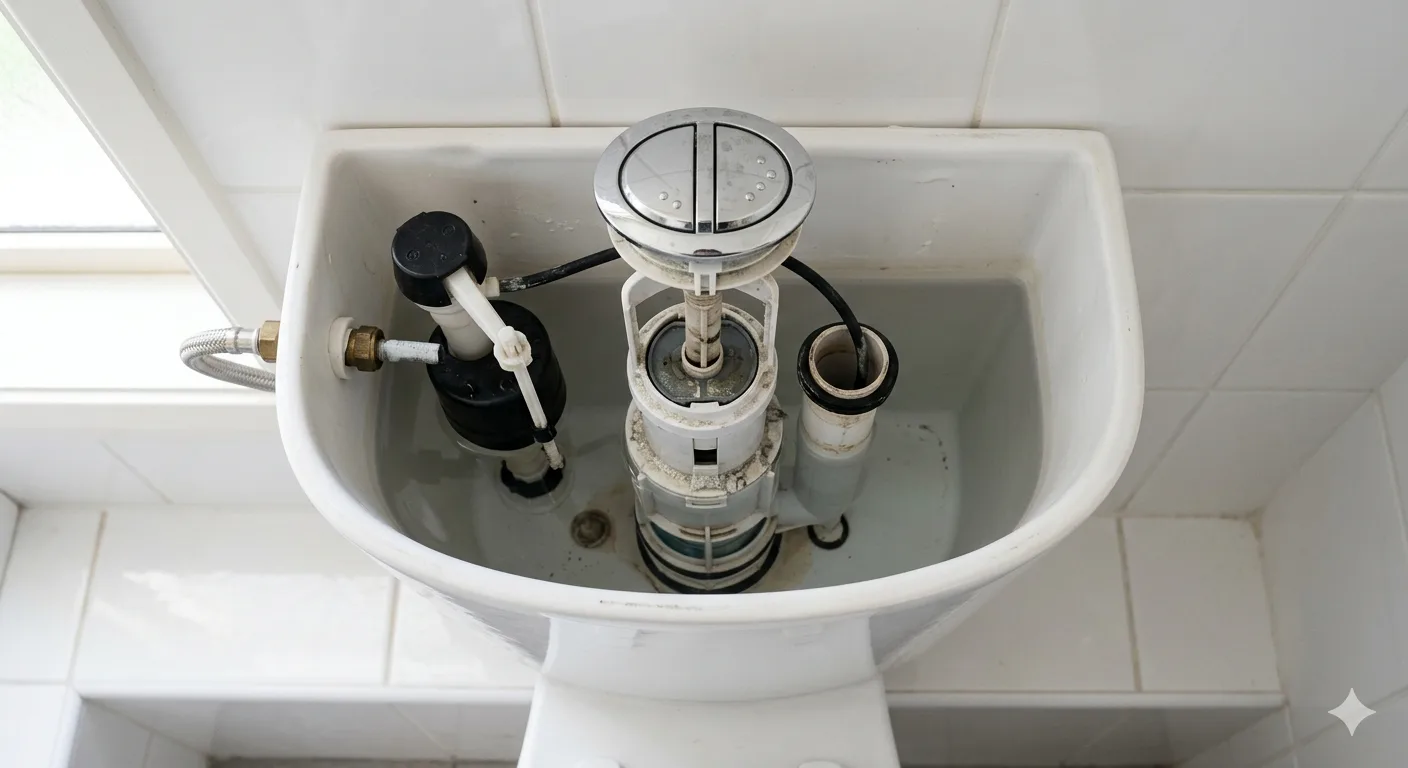
**The button mechanism has cracked or corroded.**The two buttons take direct contact every flush. On cheaper imported units, the plastic frame cracks after a few years, especially in humid bathrooms. A cracked frame lets one button depress without completing the cycle. The valve lifts slightly, lets water through, then fails to reseat. Replacement mechanisms are model-specific, so confirming the manufacturer before ordering matters.
**The overflow tube height is set incorrectly.**Inside the cistern, the overflow tube controls the maximum water level. If a previous repair adjusted the water level without changing the tube height, water sits above the opening and drains constantly. This almost always comes from a DIY attempt. Getting tube height and float adjustment calibrated together requires knowledge of the specific system. Fix one without the other and the problem shifts location, not severity.
**Mineral scale has locked a component in place.**Hard water builds up on every surface inside the cistern. In areas with water hardness above 180 milligrams per litre, calcium deposits can lock a valve into a partially open position within two to three years. The PHCC identifies scale-related toilet faults as among the most reported issues in hard water regions. Forcing a locked component risks snapping the plastic. A plumber will descale first before deciding on replacement.
How WC Dual Flush Repairs Differ From Standard Toilet Fixes
A lot of homeowners call a plumber expecting a standard ballcock replacement and are surprised when the repair takes longer. WC dual flush systems use tower-style float valves and dual-port flush valves that require brand-specific components. Brands like Geberit, Caroma and Fluidmaster manufacture proprietary cistern internals, and substituting parts across brands recreates the fault.
The ASPE recommends any internal cistern work on modern low-flow dual flush systems be carried out by a plumber familiar with the specific valve type. Mismatched components can void the warranty and, in some cases, cause the flush valve to fail open so the cistern empties completely between flushes.
What a WC Dual Flush Service Call Should Cover
When a plumber inspects a wc dual flush system, a thorough visit covers more than the one symptom you called about. The technician should check the flush valve seal, fill valve, float adjustment, overflow tube height and button mechanism in sequence. Replacing only the failing component is a short-term fix. If one seal is worn, the others are close behind.
Expect a standard dual flush repair to run between $150 and $300 depending on the cistern brand and local labour rates. Full rebuild kits typically cost $30 to $80 in parts. If a quote runs well above that range for a single visit with no structural work involved, get a second opinion. For more guidance, visit our plumbing tips section.
Frequently Asked Questions About WC Dual Flush
**Why does my wc dual flush toilet keep running after I flush?**A continuously running toilet almost always means a worn flush valve seal or a fill valve that won’t close. Lift the cistern lid and look for water moving in the bowl with no recent flush, or listen for hissing. Either symptom means the fault is active right now and wasting water by the hour.
**Can I fix a wc dual flush problem myself?**Minor float adjustments are possible for a confident homeowner. Replacing flush valves or fill valves requires brand-specific parts and knowledge of how the tower valve assembly fits together. Using the wrong part or over-tightening plastic fittings can turn a $150 repair into a full cistern replacement.
**How often should dual flush toilet internals be replaced?**Flush valve seals last five to seven years in soft water areas, closer to three to five in hard water regions. Fill valves have a similar lifespan. A proactive service every five years costs far less than a fault running undetected for months.
**How do I know which dual flush brand I have?**Look for a manufacturer mark on the inside cistern wall or on the base of the flush valve tower. Geberit, Caroma and Fluidmaster are the most common brands in US installations. If there’s no visible mark, photograph the internals before calling a plumber so they can bring the correct parts.
How Do You Find a Trusted Local Plumber for WC Dual Flush Problems?
A running toilet won’t fix itself. Every day it goes unrepaired is water and money going straight down the drain. Most wc dual flush faults are quick, affordable fixes when a licensed plumber handles them with the right components.
Use PlumberLocator.us to find a licensed plumber in your area who knows dual flush systems. Our plumbing tips section also has practical guidance on common toilet faults for homeowners across the US.