Most homeowners don't think about their sump pump until water is creeping across the basement floor. By then installation is behind them, and that's where the real problem started. A pump sized wrong, placed in the wrong spot, or wired without a backup sits doing almost nothing until the exact moment you need it most. Sump pump installation near me is one of those searches that feels urgent only when it's already too late.
Quick Answer: Sump pump installation near me means hiring a licensed local plumber to select the right pump size and install it with proper drainage, a check valve, and a backup power source. A submersible pump installation costs $600 to $2,000, with battery backup adding $200 to $500. Correct installation prevents failure during the storms that matter most.
Why Sump Pump Installation Near Me Requires More Than Just Dropping a Pump in a Pit
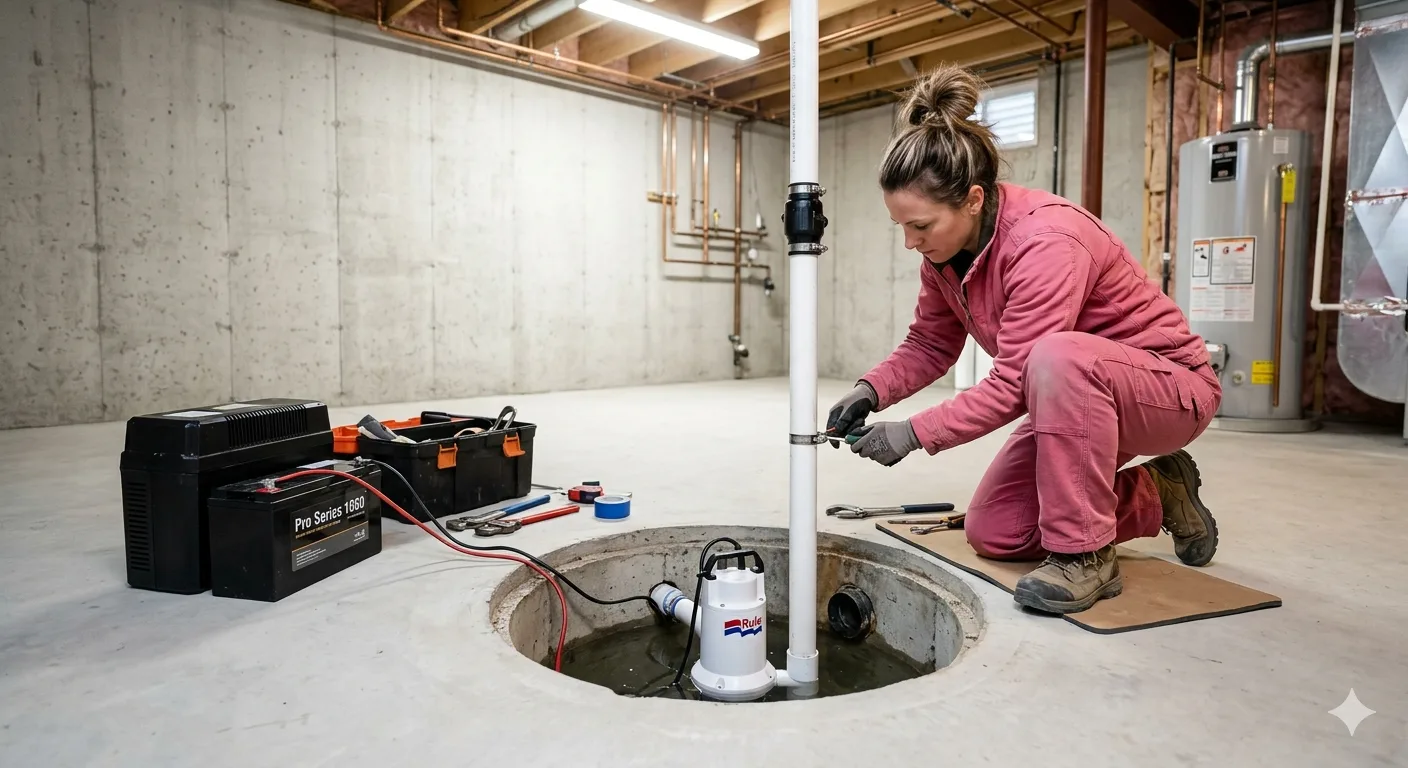
Sump pump installation near me is not a plug-and-play job. The pit needs to be 18 inches in diameter and at least 24 inches deep, and positioned at the lowest point in your basement so water drains into it. A pit that's too shallow fills too fast. One in the wrong location means water flows away from it during a heavy flood rather than toward it.
The discharge line carries water far enough from your foundation that it doesn't drain back, usually 10 to 20 feet depending on your local grade. According to the EPA's stormwater management guidelines, improper discharge routing is one of the most common causes of repeated basement flooding after a pump is already installed. Getting pit placement and discharge routing right at the start is what most DIY installations get wrong.
The Sump Pump Installation Near Me Sizing Mistake That Floods Basements
Choosing the wrong pump for your water volume looks fine for months and then fails spectacularly. Residential sump pumps are rated by horsepower. A 1/3 HP pump handles roughly 35 gallons per minute at a 10-foot head height. A 1/2 HP pump handles around 60 gallons per minute at the same head. In areas with heavy clay soil or high water tables, the smaller pump simply can't keep up when the ground is saturated.
The Plumbing-Heating-Cooling Contractors Association notes that pump sizing should account for drainage area, local rainfall intensity, and soil permeability. A licensed plumber calculates this before recommending a model. If your current pump runs constantly during storms without gaining ground, undersizing is likely the cause, and the only real fix is replacement with the correct unit.
Why Sump Pump Installation Near Me Must Include a Check Valve
A check valve is a one-way valve installed on the discharge line above the pump. When the pump shuts off, water in the discharge pipe falls back into the pit, triggering the pump to kick on again almost immediately. Without a check valve, this cycle repeats dozens of times per hour during heavy rain, burning out the motor in a fraction of its expected lifespan. Most residential submersible pumps are rated for 10,000 to 15,000 hours under normal conditions. Short-cycling without a check valve cuts that down to a few seasons.
The check valve also protects against siphoning, where water gets pulled back through the pump while it isn't running. It's a small part, typically $10 to $30, and installation takes minutes. Yet it's skipped on a surprising number of jobs. Ask whether a check valve is included before any sump pump installation near me begins. Visit plumbing tips for more questions worth asking before you hire.
Sump Pump Installation Near Me Without Backup Power Is a Half-Finished Job
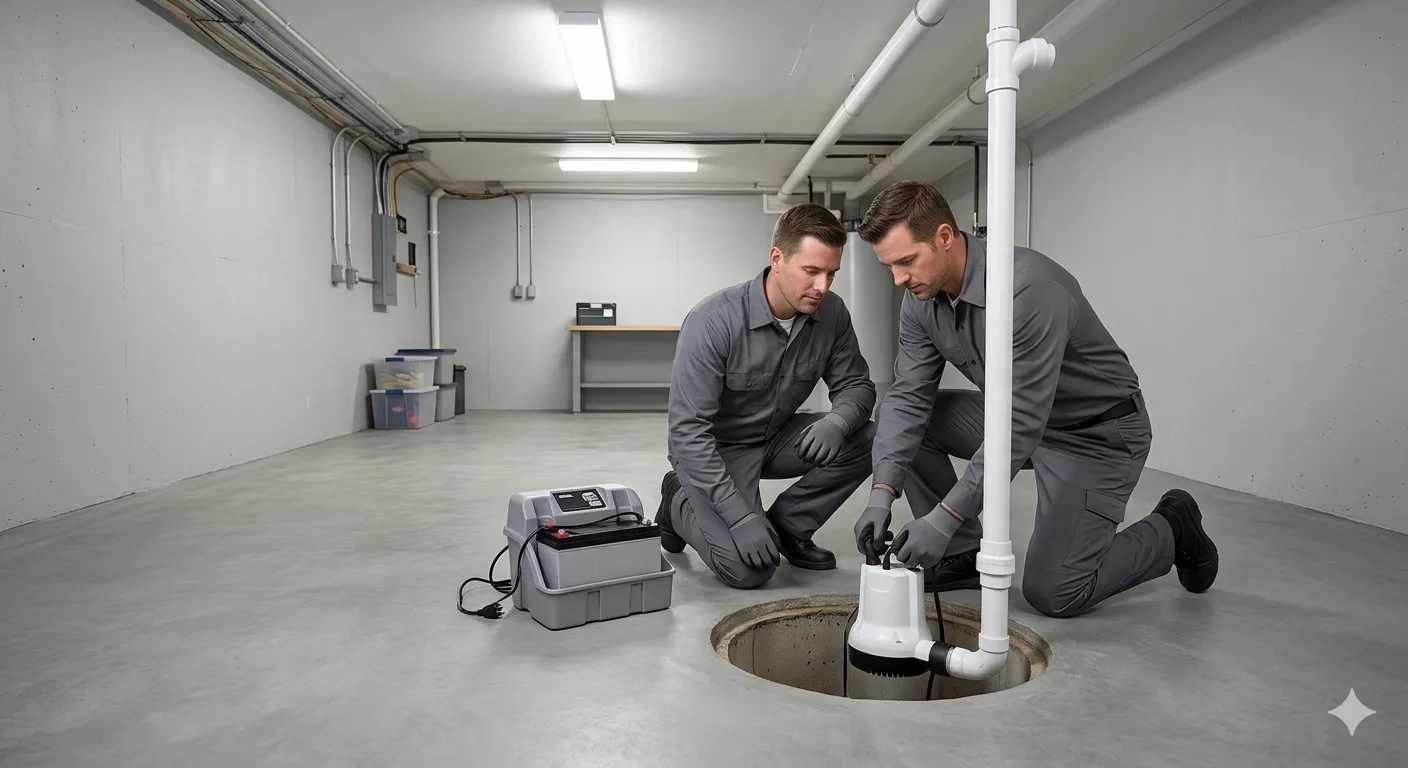
The scenario where you need your sump pump most is a severe thunderstorm, which is also the scenario most likely to knock out your power. A primary pump with no backup is essentially unprotected during the storms that generate the most groundwater. Battery backup systems use a secondary pump connected to a deep-cycle marine battery that activates when the power goes out or the primary pump is overwhelmed. A charged battery backup typically runs a pump for 5 to 7 hours of continuous operation before needing recharge.
Water-powered backup pumps use municipal water pressure rather than a battery to drive a secondary pump. They don't require recharging, but they consume significant water during operation and aren't suitable in all municipalities. The American Society of Plumbing Engineers recommends any complete sump pump installation include at minimum a battery backup with a high-water alarm. A proper sump pump installation near me means both systems are tested before the plumber leaves.
What Sump Pump Installation Near Me Permits Actually Cover
Most homeowners don't realize sump pump installation near me often requires a permit, particularly when the discharge connects to a municipal storm drain or when new drainage tile is added. The permit process ensures the discharge location doesn't violate stormwater ordinances and that the electrical connection meets code. Sump pumps draw 5 to 15 amps and require a dedicated GFCI-protected circuit. Wiring the pump into a general-purpose outlet, common in DIY installs, creates a shock risk and a code violation that surfaces during a home inspection.
The CDC's guidance on home flooding and health risks highlights that improperly managed basement water creates conditions for mold within 24 to 48 hours, which is exactly what a correctly permitted installation is designed to prevent. A licensed plumber pulls the permit, schedules the inspection, and provides documentation that protects you at closing and in any insurance dispute after a flood. Use our plumber directory to connect with licensed plumbers in your area who handle permitting as part of the job.
Frequently Asked Questions About Sump Pump Installation Near Me
How long does sump pump installation near me take?
A standard submersible pump installation in an existing pit takes two to four hours. If a new pit needs to be excavated or drainage tile added, the job can run a full day. Battery backup adds roughly one hour.
What is the average cost of sump pump installation near me?
A basic submersible pump installation runs $600 to $1,200 depending on your region and pump model. Adding a battery backup brings the total to $1,000 to $2,000. Jobs requiring new pit excavation cost more.
How often should a sump pump be replaced?
Most sump pumps last 7 to 10 years with regular maintenance. Pumps that run frequently due to undersizing wear out faster. If your pump is over 8 years old and hasn't been serviced, replacement before the next rainy season is worth considering.
Can I install a sump pump myself?
The physical installation is manageable for experienced DIYers, but the electrical connection, discharge routing, and permit requirements introduce real risk. Professional installation avoids the sizing and check valve errors that cause early failure.
Find a Trusted Local Plumber for Sump Pump Installation Near Me Today
A sump pump sized correctly, positioned right, and backed up against power outages is the difference between a dry basement and a flood claim. Done right the first time, it runs quietly for a decade. Done wrong, it fails when the stakes are highest. Our our plumber directory directory connects you with licensed local plumbers who specialize in basement water management and sump pump installation near me.
Before you call, our plumbing tips page walks through the questions worth asking about pump sizing, backup systems, and what the installation quote should include. The right plumber answers all of them without hesitation.